
Reviewed · TRA QUE VEGETABLE VILLAGE TOURS
From Hoi An: Cooking Class at Organic Farm
Lemon Basil’s cooking class begins where many Vietnamese meals begin: in the garden. At the family-run farm in Tra Que vegetable village, you inspect herbs, water crops, and sometimes help plant greens before heading to the outdoor kitchen. Fresh ingredients and a welcoming family setting give this class more character than a cooking lesson held in a city restaurant.
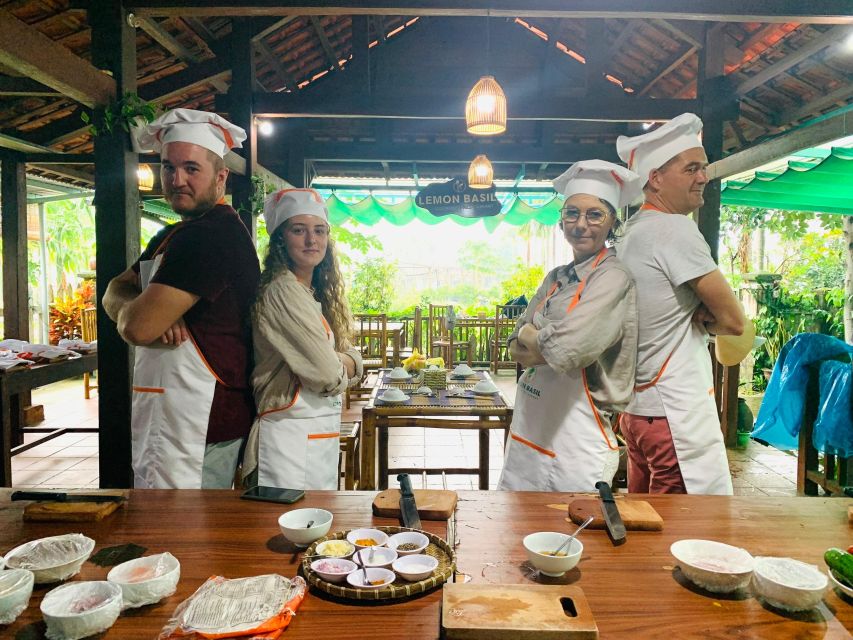
I like two things right away. First, you cook four proper dishes, not just one quick demonstration. Second, the class stays small, with no more than 10 people, so you get real help with rolling, chopping, seasoning, and flipping Bánh Xèo. The main consideration is transport: you must reach Lemon Basil independently, and the class can run three to three and a half hours, so plan the rest of your day around it.
In This Review
- Key points at a glance
- Why the Tra Que setting matters
- Meeting Min and the Lemon Basil family
- Four dishes, four different cooking lessons
- Tra Que spring rolls
- Green papaya salad
- Fish in a clay pot
- Vietnamese crispy pancake, Bánh Xèo
- The meal is part of the lesson
- Dietary needs and cooking level
- Timing, arrival, and planning your Hoi An day
- Is $27 good value?
- Should you book the Lemon Basil cooking class?
- FAQ
- Where does the cooking class meet?
- Is transportation included?
- How long does the activity last?
- What dishes do you prepare?
- Is the class suitable for beginners?
- Can the class accommodate dietary restrictions?
Key points at a glance
- A real Tra Que farm visit: Walk through the family garden, taste herbs, water crops, and learn how the soil is prepared.
- Four Vietnamese dishes: Make Tra Que spring rolls, green papaya salad, fish in clay pot, and crispy Bánh Xèo.
- Small, friendly teaching: The group limit is 10, and Min is known for clear instructions, jokes, and hands-on help.
- Good for beginners: You do not need previous cooking experience, and dietary restrictions can be discussed in advance.
- A full meal at the end: You eat the dishes you prepare together, rather than leaving with only a recipe sheet.
- Useful Hoi An location: The farm is in Tra Que vegetable village, a pleasant place to visit by bicycle or combine with another nearby outing.
Why the Tra Que setting matters
Tra Que vegetable village gives the class a useful sense of place. You are not simply told that Vietnamese cooking uses fresh herbs. You walk among the crops, see what the family grows, and handle some of the produce that goes into your lunch or dinner.
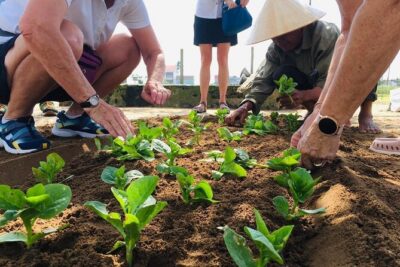
The farm visit includes an introduction to herbs and vegetables, along with a look at local growing methods. Depending on the session, you may help water the crops, plant spinach or other greens, or see how the soil is prepared. These are small tasks, but they make the food feel connected to the land around you.
Several people have especially enjoyed tasting the herbs grown on the farm. That matters because Vietnamese cooking often depends on fresh leaves and sharp contrasts: herbs against salty fish sauce, crisp vegetables beside soft rice paper, and sour ingredients balanced with sweetness. You get a better feel for those combinations when the ingredients are still tied to the garden.
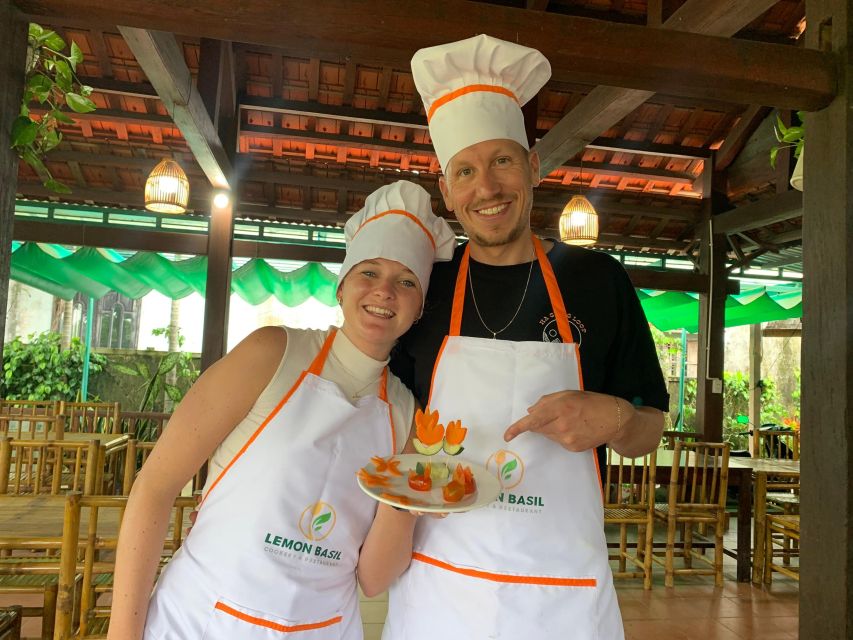
The setting is also part of the value. At $27 per person, this is not just a recipe demonstration followed by a snack. You receive the farm visit, the cooking instruction, the ingredients for four dishes, a shared meal, and a completion certificate. For a three-hour activity in Hoi An, that is a solid package.
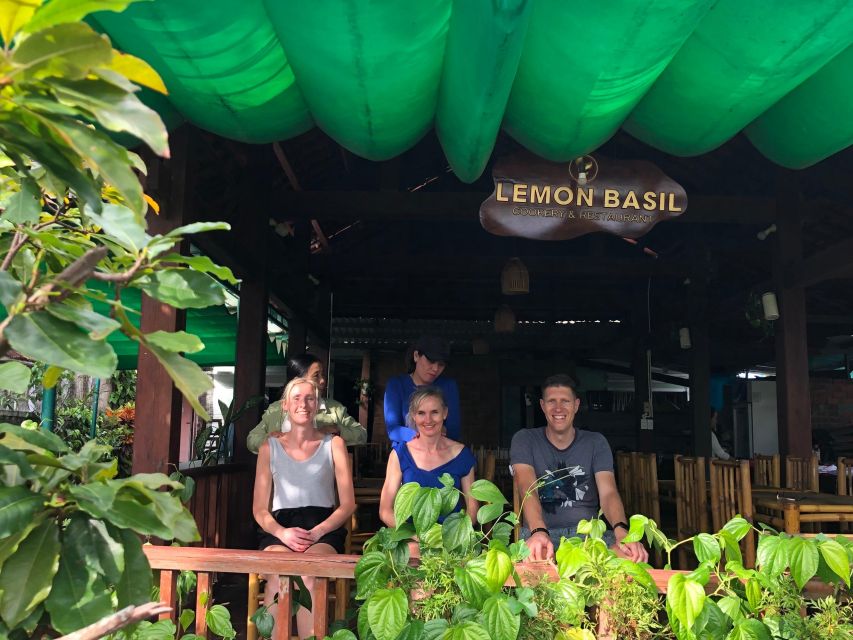
The tradeoff is simple. You do not get hotel pickup. Lemon Basil Cookery and Restaurant is the meeting point in the heart of Tra Que vegetable village, so you need to arrange your own way there and back. The location is easy to combine with a bicycle ride or a visit to the surrounding village, but you should not treat transport as part of the booking.
More Tra Que village mornings:
- Hoi An Countryside Biking Tour(Vegetable village -basket boat – fishing village)
★ 5.0 · 216 reviews - Funny day cycling, Buffalo riding and Basket boat
★ 4.9 · 141 reviews - BUFFALO RIDING -BASKET BOAT & BIKE TOUR-HOI AN
★ 4.7 · 124 reviews
Meeting Min and the Lemon Basil family
The class has a personal feel because Lemon Basil is run as a family business. Min is the guide most often identified by name, and she combines cooking instruction with plenty of humor. Jessica and Minh have also led sessions, so the exact host may vary, but the tone remains friendly and informal.
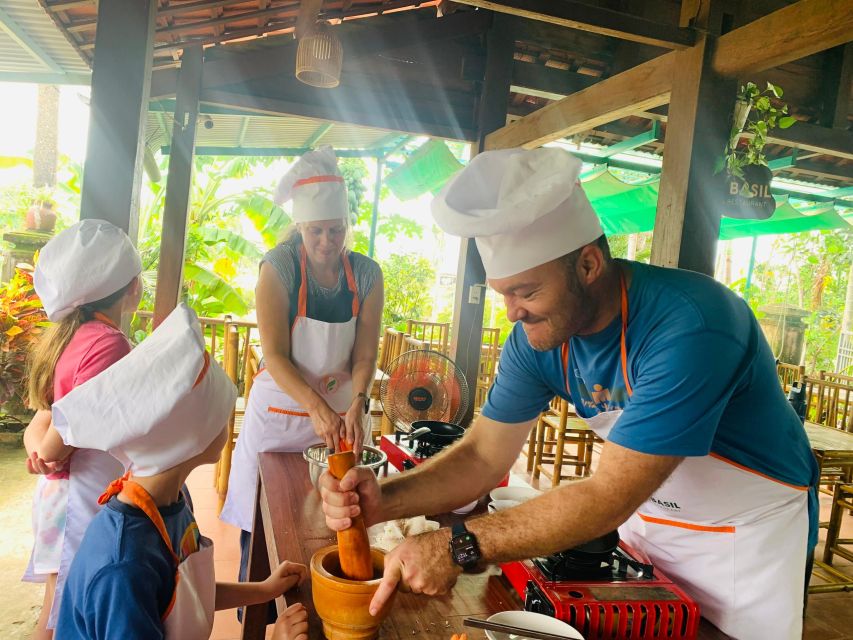
Min’s teaching style suits people who want to take part rather than sit and watch. Instructions are explained in English, and the class is suitable for all cooking levels. You can expect guidance with preparation, shaping, seasoning, and cooking, with room to ask questions as you work.
The humor is not a minor detail. Cooking can feel awkward when you are trying to flip a pancake or fold a spring roll in front of strangers. A relaxed host makes it easier to laugh at a misshapen roll or a pancake that needs a second attempt. You are there to learn, not audition for a restaurant job.
The group limit of 10 is another practical advantage. A class of six can feel especially comfortable, while a full group may be livelier. Either way, the size is small enough for the instructor to move around and offer help. If you prefer a quiet private lesson, this is not that. It is a communal class with other food enthusiasts at the table.
Four dishes, four different cooking lessons
The menu gives you a useful tour of Vietnamese flavors and techniques. You prepare Tra Que spring rolls, green papaya salad, fish in a clay pot, and Bánh Xèo, the crisp Vietnamese pancake.
Tra Que spring rolls
The first dish connects directly to the farm visit. Fresh vegetables and herbs from Tra Que are used in the spring rolls, making this the clearest farm-to-table part of the class.
You learn how to prepare and assemble the ingredients rather than simply eating a finished roll. The process is approachable for beginners, but the technique still takes care. Rice paper can turn sticky or tear, and the filling needs to be arranged so the roll holds together.
This is also a good introduction to Vietnamese balance. Fresh herbs and crisp vegetables give the roll lift, while the dipping sauce supplies the salty, sweet, sour, and savory notes. The precise ingredients can vary with dietary needs, so tell the team about restrictions before the class.
More cooking classes in Hoi An:
- Cooking Class Hoi An:Local Market, Basket Boat, Fishing & Cooking
★ 5.0 · 3,660 reviews - Hoi An Cooking Class(Market,BasketBoat Crabfishing&Cooking Class)
★ 5.0 · 3,386 reviews - From Hoi An: Market Tour, Basket Boat Ride and Cooking Class
★ 4.8 · 2,208 reviews - Hoi An Cooking Class(Local market,Basket Boat,Fishing & Cooking)
★ 5.0 · 1,323 reviews
Green papaya salad
The green papaya salad brings crunch and brightness to the meal. It also shows how Vietnamese food can feel light while still carrying plenty of flavor.
You work with the dressing and learn how the ingredients are balanced. The important lesson is not merely following quantities. It is tasting as you go and adjusting the mix of sour, sweet, salty, and spicy flavors to suit the dish.
This course is useful for vegetarians and for anyone who wants a fresh counterpoint to richer food. The activity is described as flexible for different diets, and several sessions have accommodated requests such as avoiding pork. Still, you should provide those details in advance instead of waiting until the chopping starts.
Fish in a clay pot
Fish in a clay pot gives the meal its more savory, comforting note. It is a different kind of cooking from the fresh rolls and salad, with the seasoning built into the fish rather than added only at the table.
The class uses fish as listed in the menu, though one session used a basa fillet. The exact fish may therefore depend on the day. You learn how the sauce and seasonings work with the fish, then eat the finished dish as part of the shared meal.
This is a useful course if you want to take home a recipe that feels like everyday Vietnamese food rather than a special-occasion showpiece. The class presents these dishes as common foods in Vietnamese life, and the clay-pot course helps round out the menu.
Vietnamese crispy pancake, Bánh Xèo
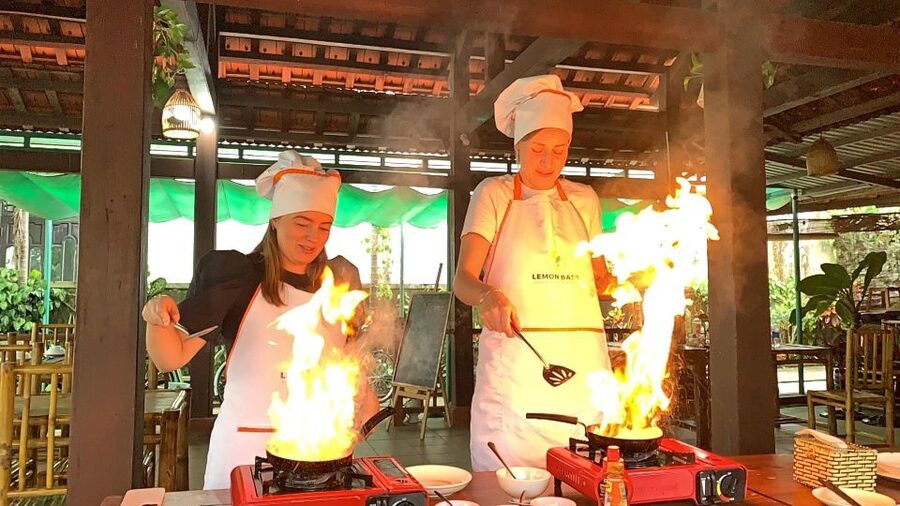
Bánh Xèo is the dish most likely to create a little kitchen drama. The thin pancake must become crisp, and flipping or folding it takes more confidence than the name suggests.
You get hands-on practice instead of watching a chef handle the difficult part. Do not worry if your first pancake is not perfectly shaped. The point is learning how the batter cooks and how the finished pancake is served with herbs and other accompaniments.
This is one reason the class works well for beginners. You are allowed to try, correct, and try again. The instructor can help with the technique, and the result is satisfying even if it looks less polished than a restaurant version.
The meal is part of the lesson
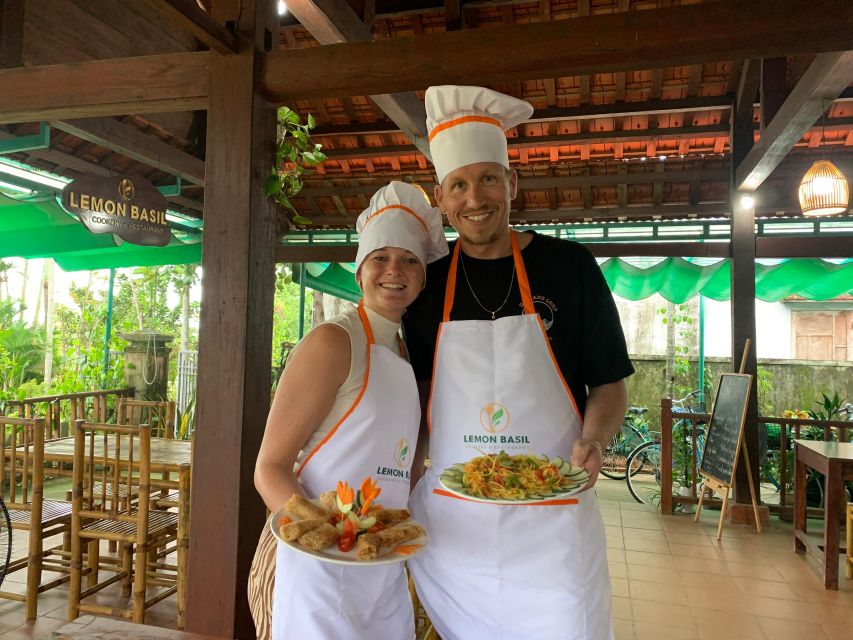
After cooking, everyone sits down to eat the food prepared during the class. This communal meal gives you time to compare results, ask follow-up questions, and understand how the dishes work together.
You should arrive hungry. Four dishes can make this a substantial meal, especially when you add the herbs, vegetables, sauces, and rice-paper components. One session also included fresh mango, pink jackfruit, and lychees, although extra fruit is not listed as a guaranteed inclusion. Do not count on it every time.
The shared table is a strength if you enjoy meeting people. You cook beside fellow participants, then eat together in a relaxed setting. It is less suited to someone who wants to keep entirely to themselves or rush straight back into Hoi An’s old town.
The class also gives you more than a full stomach. You leave with a better sense of how Vietnamese meals are assembled: fresh herbs, contrasting textures, a balanced dressing, and several small dishes eaten together. That is more useful than memorizing a single recipe without understanding how it fits into the wider meal.
Dietary needs and cooking level
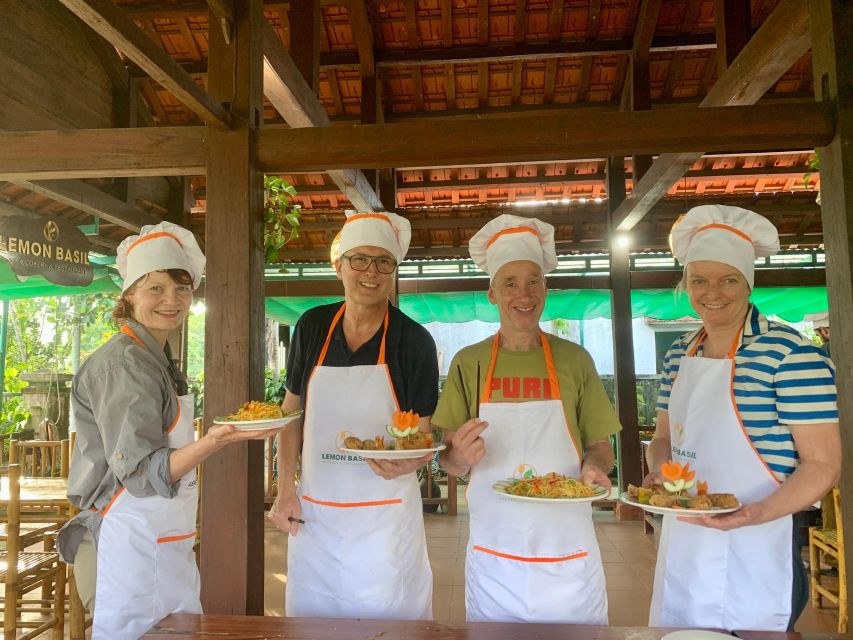
The experience is suitable for beginners, and no prior cooking skill is required. The instructors explain the process in English and can help you through the practical parts, including cutting, rolling, mixing, and pancake preparation.
Dietary flexibility is a real advantage. The team asks about allergies and intolerances, and pork-free requests have been handled. The description also says the class can adapt to different diets. Even so, give clear information when you book and remind the instructor when you arrive.
You should also consider the fish course. If you do not eat seafood, ask in advance what replacement can be provided. The supplied details confirm flexibility, but they do not promise a particular substitute for every restriction.
This class suits couples, families, solo visitors, and small groups of friends. It is especially good for people who want an activity with food at its center but also want some contact with local daily life. It is less ideal if you are looking for a formal culinary school environment with advanced knife skills or professional-level technique.
Timing, arrival, and planning your Hoi An day
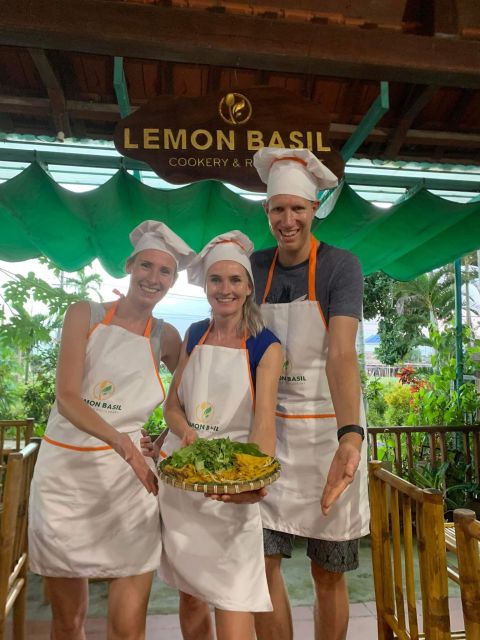
The activity lasts about three hours, though the practical guidance allows three to three and a half hours. Arrive five to 10 minutes before the scheduled start so you have time to find Lemon Basil Cookery and Restaurant and settle in.
The meeting point is clearly identified by Lemon Basil signage in Tra Que vegetable village. Since pickup is not included, check your route before leaving Hoi An. The class can fit nicely into a morning or afternoon plan, and you may want to leave time afterward to explore the village, cycle nearby, or stop for a coffee.
Do not schedule a tight attraction immediately after the class. Farm visits can take a little longer when the group is helping with crops, and cooking four dishes is more involved than a short demonstration. The meal itself is part of the experience, so rushing away would weaken the value.
The booking terms also make planning easier. You can reserve now and pay later, and cancellation is free up to 24 hours before the activity for a full refund. Starting times vary, so check availability for your chosen date.
Is $27 good value?
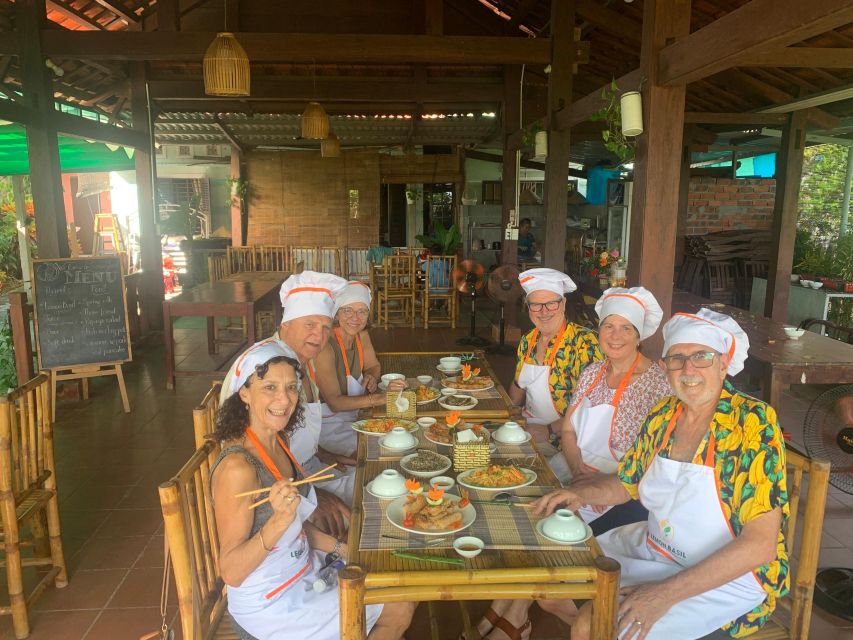
For $27, the class offers a lot of food and activity in one booking. You receive an organic farm visit, English-language instruction, ingredients for four dishes, a shared meal, and a certificate. You also get the social side of a small group, which can be worthwhile if you are traveling alone or want an easy way to meet people.
The value is strongest for anyone who would otherwise pay separately for lunch and a farm visit. It is also a practical choice if you want recipes you can repeat at home. Four dishes give you more to remember than a class focused on one specialty.
The price does not include transportation, extra drinks, insurance, or items not specifically listed. Those exclusions are ordinary, but they matter because the village location requires your own route. Budget a little time and money for getting there independently.
The class earns its price through participation. If you only want to eat Vietnamese food, a restaurant meal may be simpler. If you want to understand the ingredients, prepare the dishes, and eat the result, $27 is a fair deal.
Should you book the Lemon Basil cooking class?
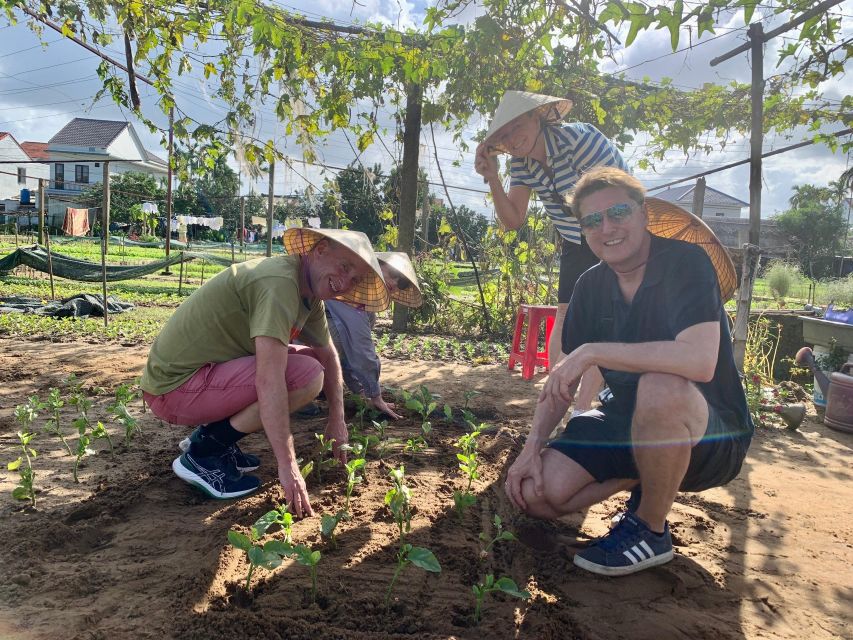
I would book this class if you want a friendly, hands-on introduction to Vietnamese cooking with a real farm setting. The strongest reasons are the family garden, the small group, the four-dish menu, and Min’s relaxed teaching style. You get enough food to make the session feel like a proper meal, not a short tourist demonstration.
Book it with the right expectations. You need to arrange transport to Tra Que, the class is communal rather than private, and the exact host or dish details may vary slightly. Tell the team about dietary needs before arrival, and leave a little time around the three-hour schedule.
Choose Lemon Basil if you value personal contact, simple local food, and practical instruction. Skip it only if you dislike group cooking, do not want a fish-based dish, or need a class with hotel pickup included.
FAQ
Where does the cooking class meet?
It meets at Lemon Basil Cookery and Restaurant in Tra Que vegetable village, near Hoi An. Look for the Lemon Basil signage and welcoming restaurant.
Is transportation included?
No. You must make your own way to the restaurant and arrange your return independently.
How long does the activity last?
The class lasts about three hours, with the practical timing given as approximately three to three and a half hours.
What dishes do you prepare?
You prepare Tra Que spring rolls, green papaya salad, fish in a clay pot, and Vietnamese crispy pancake, known as Bánh Xèo.
Is the class suitable for beginners?
Yes. No previous cooking experience is required, and English-speaking instructors guide you through the hands-on work.
Can the class accommodate dietary restrictions?
Dietary needs can be discussed in advance, and the class is described as flexible for different diets. Inform the team about allergies, intolerances, or foods you avoid before the activity.
More Hands-On Workshops in Hoi An
- Hoi An: Vietnamese Coffee Culture and Coffee Making Class
★ 4.9 · 4,006 reviews - Hoi An: Vietnamese Foldable Lantern Making Class
★ 4.9 · 3,742 reviews - Hoi An Full Lantern Making Class- A special Foldable lantern
★ 5.0 · 2,007 reviews - Hoi An: Basket Boat Ride, Cooking Class by Hangcoconut
★ 4.9 · 802 reviews
More Farms in Hoi An
- Cocolocal Farm Cooking Class with market tour and basket boat
★ 5.0 · 231 reviews - Hoi An countryside cycling Tour,Basket Boat-organic farming-lunch
★ 5.0 · 85 reviews - Rural Hoi An Cycling, Cooking Class at Organic Farm
★ 5.0 · 72 reviews - Farming & Cooking Class in Hoi An – Small Group Tour
★ 5.0 · 71 reviews
Just added around Hoi An
- Da Nang to Hoi An Transfer: Convenient Airport and City Transport★ 3.5 · 3 reviews
- Hoi An City Tour–Boat Ride–Release Flower Lantern on river★ 5.0 · 3 reviews
- Hoian Old Town – Immersive Free Walking Tour★ 4.3 · 3 reviews
- Hoi An to Nha Trang by Private Car with Professional Driver★ 5.0 · 3 reviews
- Hoi An: Pottery Making Workshop With Local Craftsmen★ 5.0 · 3 reviews
- Hoi An:Cycling,Traditional Farming & Fishing Life Experience★ 4.0 · 3 reviews
- My Son Half Day Private Tour From Hoi An★ 4.5 · 3 reviews
- Hoi An/ Da Nang: Hue City Tour with HaiVan Pass★ 4.7 · 3 reviews
Tra Que Vegetable Village Tours, compared.
Hoi An Countryside Biking Tour(Vegetable village -basket boat – fishing village)
Read our review →
Funny day cycling, Buffalo riding and Basket boat
Read our review →
Hoi An Local Market and Vegetable Village Cooking Class
Read our review →
Rural Hoi An Cycling, Cooking Class at Organic Farm
Read our review →
Hoi An countryside biking – Basket Boat – Vegetable village – Local home Cooking
Read our review →
Riding Water Buffalo and Basket Boat Hoi An Private Bike Tour
Read our review →
HOI AN Biking Vegetable Village, Basket Boat, Coconut Forest
Read our review →Browse the lists this tour appears in