
Reviewed · HOI AN ANCIENT TOWN TOURS
Hoian Old Town – Immersive Free Walking Tour
Hoi An’s best introduction is on foot, where a short walk can take you from a Japanese bridge to a Chinese assembly hall, a merchant’s house, and a traditional music performance. This two-hour small-group tour gives you that useful first look with an English-speaking local guide, Quoc Le, and keeps the group limited to five people.
I like the way the walk connects architecture with local stories, rather than treating the old quarter as a string of photo stops. I also like the 45-minute performance, which gives the tour more cultural substance than a quick pass through the streets. The main consideration is cost clarity: the experience is listed at $10, but it also operates on tips, and the $5 UNESCO entrance ticket is extra.
In This Review
- Key details before you book
- Why Hoi An makes a fine walking tour
- Starting at 125 Phan Chu Trinh
- Japanese Covered Bridge, Hoi An’s familiar symbol
- Tan Ky Old House and the merchant town
- Forty-five minutes at the traditional art theater
- Fujian Assembly Hall and Chinese heritage
- Kazik Park, Phung Hung, and possible route changes
- Ending at Hoi An Central Market
- What the $10 price really means
- The guide and the strongest reason to go
- Who should book this walk
- Should you book the Hoi An Old Town walk?
- FAQ
- How long does the Hoi An Old Town walking tour last?
- What is the price of the tour?
- Is the UNESCO entrance ticket included?
- How much should I tip the guide?
- Who is the guide?
- What language is the tour conducted in?
- How many people can join the group?
- Where does the tour start?
- Where does the tour finish?
- Does the tour operate in bad weather?
Key details before you book
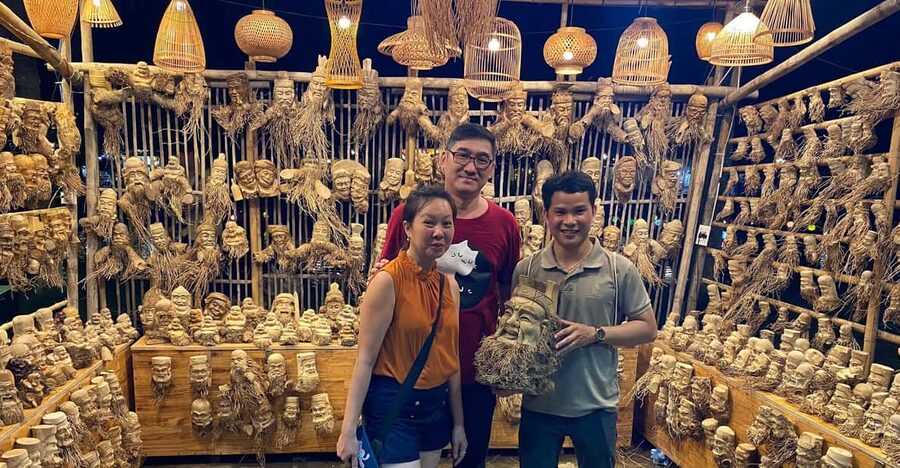
- A compact route through Hoi An’s core: See the Japanese Covered Bridge, Tan Ky Old House, Fujian Assembly Hall, performance theater, and central market in about two hours.
- A local English-speaking guide: Quoc Le leads the walk, with the focus on culture, history, and stories known locally.
- A proper cultural performance: The traditional art theater receives 45 minutes, much longer than the other stops.
- Small groups only: The tour is limited to five participants, making questions and conversation easier.
- Extra costs matter: A $5 UNESCO attraction ticket is required, and the tour notes suggest tipping 250,000 to 400,000 VND per person.
- Rain or shine: Bring comfortable clothing and be ready to walk in changing weather.
Why Hoi An makes a fine walking tour

Hoi An was a trading port from the 16th century, with Chinese, Japanese, Portuguese, and European connections. That mixture is still visible in the old quarter’s buildings, religious halls, covered bridge, and merchant homes.
I find Hoi An easier to understand when someone explains how these pieces fit together. A Chinese assembly hall is not simply an ornate building. An old house is not only a preserved interior. Each place hints at the trading community that helped shape the town.
The old quarter is also compact enough for a walking tour to work well. You do not spend time loading into a vehicle or crossing long stretches of town. Instead, you move from one landmark to the next, with the street itself forming part of the experience.
This is a useful tour to take soon after arriving. The guide can help you get your bearings and offer practical ideas for the rest of your stay, including places to eat and ways to see the surrounding area. The advertised highlights also refer to seafood specialties and nearby scenery, though the timed route is mainly focused on the historic center.
More Ancient Town walks in Hoi An:
- Hoi An Ancient Town Walking Tour with a Local
★ 5.0 · 517 reviews - The Lantern Lady: Traditional Lantern Class in Old Town
★ 4.9 · 444 reviews - Hoi An Ancient Town – Walking Tour with Local Guide
★ 4.9 · 385 reviews
Starting at 125 Phan Chu Trinh
The meeting point is 125 Phan Chu Trinh. The guide wears a white T-shirt and carries a shoulder bag, a simple detail that should make him easier to identify in a busy old-town area.
The walk lasts two hours, so arrive ready to stay on your feet. Comfortable clothing is recommended. Loose and see-through clothing is not allowed, which matters especially when entering religious or historic buildings.
Because the group is limited to five people, this should feel more like a guided conversation than a large procession. That format suits you if you like to ask about local customs, building details, and the meaning behind what you are seeing.
Japanese Covered Bridge, Hoi An’s familiar symbol
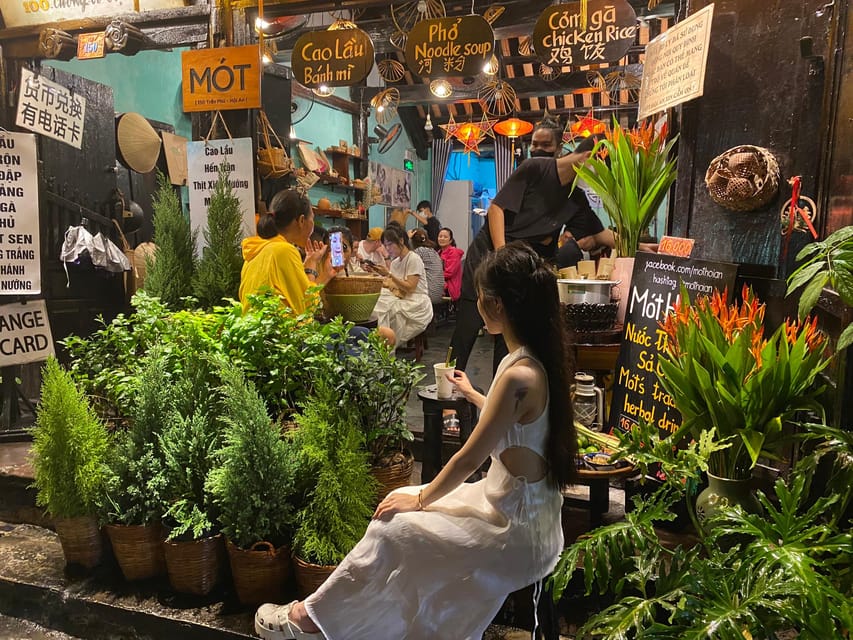
The Japanese Covered Bridge Pagoda is the first major stop, with about 10 minutes set aside for sightseeing. It is one of Hoi An’s most recognizable landmarks and a natural place to begin a discussion about the town’s Japanese connections.
The bridge is valuable as a starting point because it shows how Hoi An’s trading past was not just an abstract idea. Japanese merchants and communities were part of the port’s story, and the bridge remains one of the clearest reminders of that link.
Ten minutes is enough for an introduction and photographs, but not a long architectural study. If you enjoy lingering over details, you may want to return later on your own. The tour’s purpose here is orientation and context, not an extended visit.
The attraction is within the UNESCO-protected old quarter, so the $5 entrance ticket should be part of your budget. The ticket is not included in the tour price.
Tan Ky Old House and the merchant town
The route continues to the Old House of Tan Ky, with another 10-minute visit. The supplied highlights also mention Phung Hung Ancient House and the Japan Culture Ancient House, but the timed route specifically names Tan Ky. If seeing a particular old house matters to you, confirm the exact stops when booking.
Old merchant homes are among Hoi An’s most useful places for understanding daily life in the port. Their appeal is not just age. They show how homes, trade, family life, and commerce could occupy the same narrow building.
A brief stop works well if your guide explains what to look for. You might notice the way the house is organized, the preserved materials, or the signs of different cultural influences. The drawback is simple: 10 minutes passes quickly, and the visit may feel like an introduction rather than a full examination of the house.
Still, this is one of the places where a local explanation adds real value. Without context, an old wooden interior can blur into the next one. With a clear story, you begin to see Hoi An as a working port shaped by merchants and families.
More walking tours in Hoi An:
- Evening Walking Food Tour, folk game and lantern boat
★ 5.0 · 665 reviews - Hoi An Street Food Walking Tour with Tastings
★ 5.0 · 317 reviews - Hoi An Walking Tour
★ 5.0 · 269 reviews - Cham Island: Underwater Walking & Snorkeling Tour
★ 4.4 · 112 reviews
Forty-five minutes at the traditional art theater
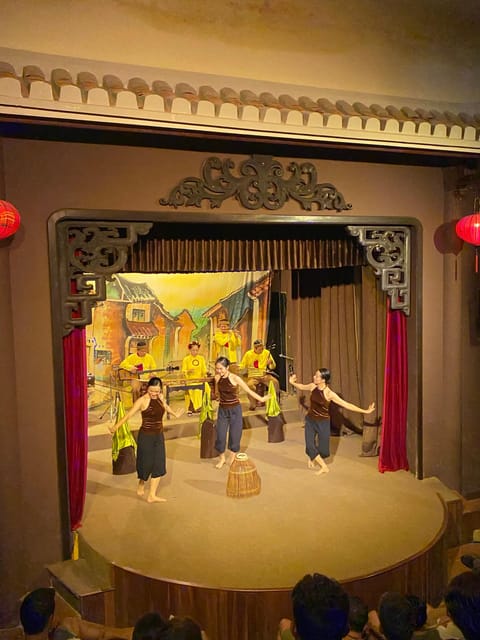
The Hoi An Traditional Art Performance Theatre gets the largest block of time, 45 minutes. That balance is a major strength of the experience.
Many walking tours rush through cultural performances, treating them as a short add-on. Here, the theater receives enough time for a proper concert and dance show. You can sit, listen, and watch without feeling that the guide is hurrying you toward the next street corner.
This stop gives the tour a different rhythm. The bridge and old house are visual history. The performance adds sound and movement, helping you connect with Vietnam through the arts rather than architecture alone.
The exact content of a performance can vary, and the supplied details do not name the individual musicians, dances, or instruments. You should therefore treat this as a traditional cultural show rather than expect a specific program.
For many people, this will be the highlight. It is also a sensible pause during a walking route, especially in warm weather. If you prefer tours that spend every minute outdoors, the 45-minute theater visit may feel long. If you want more than landmarks and photographs, it is one of the most worthwhile parts.
Fujian Assembly Hall and Chinese heritage
The Fujian Assembly Hall is another short stop, with about 10 minutes for sightseeing. The tour information also lists the Cantonese Assembly Hall, so there is a small difference between the advertised collection of places and the timed route. The Fujian hall is the named stop in the schedule.
Assembly halls were important gathering places for Chinese communities in Hoi An. Their design and decorative details help explain how immigrant groups maintained religious and social ties while taking part in the port’s commercial life.
A 10-minute visit is enough for the guide to point out major features and explain the building’s role. It is not enough for a slow look at every carving or altar, so keep your expectations sensible.
This stop pairs nicely with the Japanese Covered Bridge and old house. Together, they show that Hoi An’s identity grew from contact between communities, not from one single tradition. That cross-cultural story is the main reason to choose a guided walk instead of simply following a map.
Kazik Park, Phung Hung, and possible route changes
The broader tour description includes Kazik Park, Phung Hung Ancient House, the Cantonese Assembly Hall, the Japan Culture Ancient House, and Hoi An Central Market. The timed itinerary lists the Japanese Covered Bridge, Tan Ky Old House, theater, Fujian Assembly Hall, and market.
That difference is worth noting before you pay. A two-hour walk cannot give every listed site equal attention, particularly when 45 minutes is reserved for the performance. The guide may adjust the route, or some places may be covered briefly from the outside.
Kazik Park can serve as a short connecting point through the old quarter. Phung Hung Ancient House adds another example of historic domestic architecture. The Cantonese Assembly Hall offers another perspective on Chinese community life. These places are useful, but you should ask Quoc Le at the start which ones are included that day.
This is not a serious flaw if you view the experience as an introduction. It becomes more important if you are choosing the walk because one particular building is your top priority.
Ending at Hoi An Central Market
The walk finishes at Hoi An Market. That is a practical ending because you can continue exploring, look for food, or make your own way to another part of the old town.
The market also connects the historic port with present-day life. The tour information highlights seafood specialties and the surrounding area, but it does not promise a tasting session or a dedicated food tour. Think of the market as a useful place to continue independently, not as an included meal.
Ending here gives you a chance to ask for food suggestions before saying goodbye. It also means you are not left at an isolated departure point. You finish near one of the town’s main places for browsing and eating.
What the $10 price really means
The experience is listed at $10 per person, but its notes also describe it as a tip-based tour. The suggested tip is 250,000 VND per person for a nice tour and 300,000 to 400,000 VND per person for a great tour.
That makes the real cost less straightforward than the headline price. You should clarify how the $10 booking charge relates to the tip before joining. In addition, UNESCO attraction access requires a $5 ticket, or 120,000 VND, and that ticket is not included.
The value can still be good if you want a local introduction to several important sites, especially with only five people in the group. The performance is a useful inclusion, and the guide’s local perspective is the main reason to choose this over walking alone.
If you are trying to keep costs very low, add every required charge before deciding. The tour is not simply a $10 walk once tips and the attraction ticket are considered.
The guide and the strongest reason to go
Quoc Le is the named guide, and the activity is conducted in English. The strongest praise attached to this experience is for learning Hoi An’s history and culture from a native Vietnamese guide while seeing the city’s main landmarks.
That is exactly where this tour should perform best. A local guide can explain the town’s mixed cultural background and connect individual buildings to the larger story of the port. The small group also gives you a better chance to ask questions than you would have on a large coach-style walk.
The available rating is 4.3 from three reviews, so I would not treat it as a broad measure of quality. One verified booking from Ireland, dated September 6, 2024, gave the tour five out of five and praised the enjoyable route, the local guide, and the chance to learn about Hoi An’s history and culture.
That positive assessment matches the tour’s design. You are not signing up for a specialist architecture lecture. You are getting a friendly, practical overview of the old town, with enough detail to make later exploring more meaningful.
Who should book this walk
I would recommend it to first-time visitors who want a clear introduction before exploring Hoi An on their own. It also suits people who prefer a small group, an English-speaking guide, and a mix of buildings, stories, and live performance.
It is a good choice if you enjoy asking questions and want cultural context rather than a checklist of photo stops. The short route makes it manageable for anyone comfortable walking for two hours.
You may want a different experience if you need a fully fixed itinerary, dislike tip-based tours, or want long visits inside every historic building. The extra UNESCO ticket and suggested gratuity also mean the final cost needs careful checking.
The tour operates rain or shine. Bring comfortable clothing and plan for weather rather than expecting a covered route.
Should you book the Hoi An Old Town walk?
Book this tour if you want a short, local-led introduction to Hoi An’s most important historic areas, especially if the traditional art performance appeals to you. The small group, English guide, and central market finish make it easy to fit into a first day.
Before confirming, ask which of the overlapping site lists will be followed and clarify the $10 charge, tip expectation, and $5 attraction ticket. If those terms suit your budget, this is a sensible way to understand Hoi An before setting off to explore its old streets, food, and nearby scenery independently.
FAQ
How long does the Hoi An Old Town walking tour last?
The tour lasts two hours.
What is the price of the tour?
The experience is listed at $10 per person. It also operates on a tip-based model, so confirm how the booking price and tip are handled before joining.
Is the UNESCO entrance ticket included?
No. A required ticket for UNESCO attractions costs $5, or 120,000 VND, and is not included.
How much should I tip the guide?
The suggested amount is 250,000 VND per person for a nice tour, or 300,000 to 400,000 VND per person for a great tour.
Who is the guide?
The named experience provider and guide is Quoc Le.
What language is the tour conducted in?
The tour is conducted in English with a live English-speaking guide.
How many people can join the group?
The group is limited to five participants.
Where does the tour start?
The meeting point is 125 Phan Chu Trinh.
Where does the tour finish?
The walk finishes at Hoi An Market.
Does the tour operate in bad weather?
Yes. The tour operates rain or shine.
Just added around Hoi An
- Da Nang to Hoi An Transfer: Convenient Airport and City Transport★ 3.5 · 3 reviews
- Hoi An City Tour–Boat Ride–Release Flower Lantern on river★ 5.0 · 3 reviews
- Hoi An to Nha Trang by Private Car with Professional Driver★ 5.0 · 3 reviews
- Hoi An: Pottery Making Workshop With Local Craftsmen★ 5.0 · 3 reviews
- Hoi An/ Da Nang: Hue City Tour with HaiVan Pass★ 4.7 · 3 reviews
- Hoi An:Cycling,Traditional Farming & Fishing Life Experience★ 4.0 · 3 reviews
- My Son Half Day Private Tour From Hoi An★ 4.5 · 3 reviews
- Tranfer From Hoi An to Hue visit Marble Mountains, Hai Van Pass★ 5.0 · 3 reviews
Hoi An Ancient Town Tours, compared.


The Lantern Lady: Traditional Lantern Class in Old Town
Read our review →
Hoi An Ancient Town – Walking Tour with Local Guide
Read our review →
Hoi An Night Market – Ancient Town street food tours by Night
Read our review →
Hoi An Ancient Town – Night Market Street Food Tours By Night
Read our review →

PRIVATE Hoi An Ancient Town – Night Market Street Food By Night
Read our review →
Hoi An Ancient Town Walking Street Food Tours with Night Market
Read our review →Browse the lists this tour appears in