
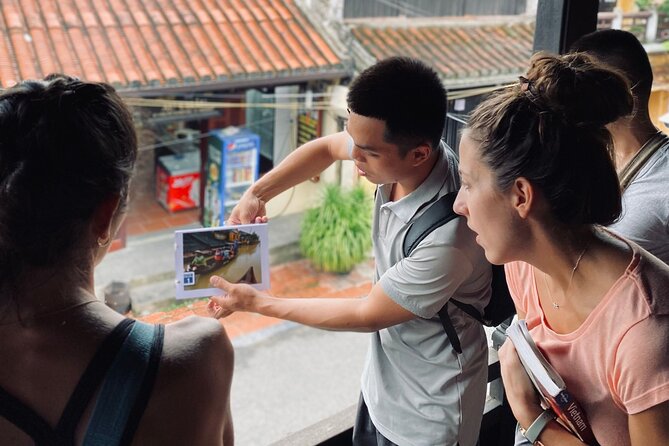
Reviewed · HOI AN ANCIENT TOWN TOURS
Hoi An Ancient Town Walking Tour with a Local
Hoi An’s appeal is not just its yellow-painted streets and lanterns. It is the story of how Japanese, Cantonese, Vietnamese, and other trading communities shaped this small riverside town. This three-hour walk gives you that useful background while taking you inside old buildings you could easily pass without noticing. I especially like the visit to Quan Thang Ancient House, where you can see how a merchant family’s home survived for eight generations and repeated floods.
I also like the small group limit of 10 people, which gives guides such as Kun, Anh, Trang, and Minh room to answer questions and adjust the pace. The stop at the central market adds food and daily life to the architecture lesson. The main drawback is that the 120,000-dong Hoi An UNESCO entrance ticket is not included, so the advertised $9.89 price is not your complete cost.
In This Review
- Key points before you book
- Why this walking tour makes sense in Hoi An
- Starting with Japan at the Culture Gallery
- The Japanese Covered Bridge and its short visit
- Cantonese detail at the Assembly Hall
- Eight generations inside Quan Thang Ancient House
- Traditional music and theatre for 35 minutes
- Finishing at Hoi An Central Market
- The guides are the heart of the experience
- Timing, cost, and what to bring
- Who should book this Hoi An walk
- Should you book it?
- FAQ
- How long does the Hoi An Ancient Town Walking Tour last?
- How much does the tour cost?
- Is the Hoi An UNESCO entrance ticket included?
- What is included in the tour?
- Where does the tour start?
- Where does the tour end?
- How many people can join the tour?
- Can I cancel for a full refund?
- What happens if the weather is poor or the minimum group size is not met?
Key points before you book

- A history walk with local perspective: Learn why Japanese and Cantonese communities settled in Hoi An and how their presence shaped the Old Town.
- Six stops in about three hours: The route covers the Japanese Culture Gallery, Japanese Covered Bridge, Cantonese Assembly Hall, Quan Thang Ancient House, traditional theatre, and central market.
- Small groups capped at 10: This is a more personal setup than a large coach tour, with enough space for questions and conversation.
- A useful food and shopping finish: The market stop lets you examine local snacks, handicrafts, and souvenirs, with tastings and recommendations possible along the way.
- Herbal tea is included: A short tea break gives the walk a pleasant pause, though attraction admission is extra.
- Free cancellation up to 24 hours ahead: Poor weather or failure to meet the minimum group size can lead to a rescheduled tour or full refund.
Why this walking tour makes sense in Hoi An
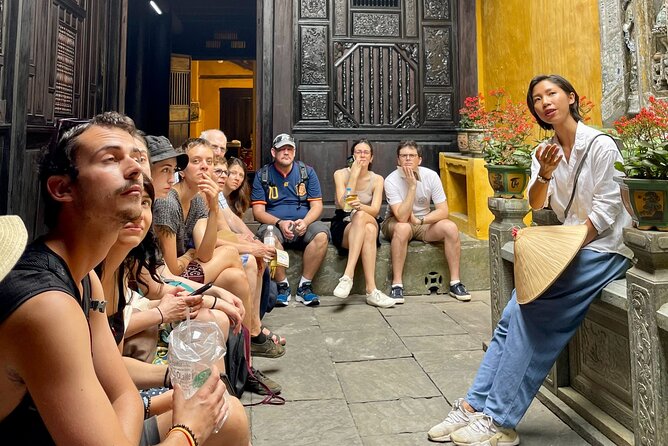
Hoi An is easy to explore on foot, but easy does not mean self-explanatory. A row of wooden shutters, a carved altar, or a painted assembly hall can look decorative until someone explains who built it and why. This tour gives you a framework for the Old Town instead of leaving you with a collection of attractive photographs.
The experience begins at 125 Phan Chu Trinh and ends at Hoi An Market on Tran Phu Street. That point-to-point route is useful because you finish near food stalls and shops rather than returning to the starting location. You should allow about three hours and expect to spend most of that time walking, standing, and entering historic buildings.
The small group format is one of the strongest features. With no more than 10 people, a good guide can keep the walk moving without turning every explanation into a speech for a crowd. The guides praised most highly for warmth, energy, and useful local advice include Kun, Anh, Trang, Karla, Nguyen, Minh, June, Sanh, and Anh. Your assigned guide may differ, but the repeated strength of this experience is the personal approach.
At $9.89 per person, the tour is inexpensive for three hours of guiding. Add the 120,000-dong UNESCO entrance ticket, which is paid separately, and you still get a reasonably priced introduction to Hoi An’s main cultural sights. It is particularly good value if you are arriving without much background and want restaurant, shop, and lantern-ride suggestions for the rest of your stay.
More Ancient Town walks in Hoi An:
- The Lantern Lady: Traditional Lantern Class in Old Town
★ 4.9 · 444 reviews - Hoi An Ancient Town – Walking Tour with Local Guide
★ 4.9 · 385 reviews - Hoi An Night Market – Ancient Town street food tours by Night
★ 5.0 · 165 reviews
Starting with Japan at the Culture Gallery
The Japanese Culture Gallery is a smart first stop because it sets up the rest of the walk. You get a quick timeline of Hoi An, including how the town began and why Japanese merchants and residents were present here. The focus is not only on buildings. You also learn about Japanese artistic traditions and their role in the town’s cultural mix.
The planned visit lasts about 25 minutes. That is enough time for a clear introduction without letting the opening stop consume the whole tour. I would pay close attention here, because the information about Hoi An’s early development helps make the bridge and other buildings easier to understand later.
Admission is not included in the tour price. The general UNESCO ticket is listed separately at 120,000 dong per person, so have that additional cost in mind before booking. The supplied information does not specify separate entrance prices for each stop, so you should treat the listed heritage ticket as the required extra rather than assuming every attraction is included in the $9.89 fee.
The Japanese Covered Bridge and its short visit
The Japanese Covered Bridge is Hoi An’s most recognizable landmark and a natural highlight of the route. Its design reflects the Japanese presence in the trading town, while its role as a symbol of Hoi An makes it an important place to understand rather than just a quick photo stop.
The planned time here is about 20 minutes. That is fairly brief, but a guide can use it well by explaining the bridge’s place in the Old Town and pointing out features you might otherwise overlook. Do not expect a long architectural lecture. This is a focused stop within a larger walk.
The bridge is also the kind of sight that can feel more meaningful after the opening gallery. You have already heard why different groups came to Hoi An, so the structure becomes part of a larger story about trade and cultural exchange.
Cantonese detail at the Assembly Hall
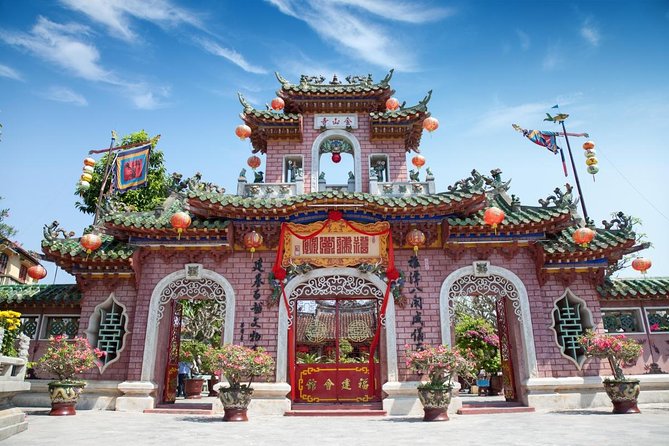
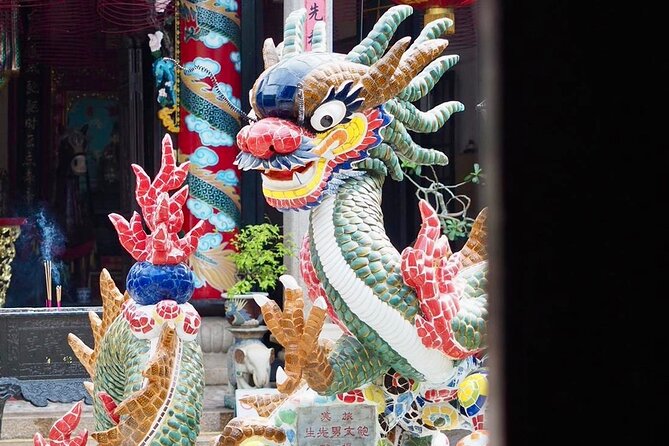
The Cantonese Assembly Hall brings another part of Hoi An’s past into view. Its colorful decoration and detailed design show the influence of Cantonese communities, giving you a useful contrast with the Japanese elements seen earlier.
The visit lasts about 25 minutes. That is enough for an explanation of the building’s cultural role and a look at its design, though the experience will depend heavily on how your guide handles the space. Guides such as Anh and Minh are especially well suited to this kind of stop because their tours are described as clear, engaging, and focused on both local culture and everyday life.
I like the way this part of the route prevents the tour from presenting Hoi An as simply an old Vietnamese town. You see a place shaped by contact between communities. That context is one of the best reasons to take a guided walk instead of only wandering from one photogenic street to another.
More walking tours in Hoi An:
- Evening Walking Food Tour, folk game and lantern boat
★ 5.0 · 665 reviews - Hoi An Street Food Walking Tour with Tastings
★ 5.0 · 317 reviews - Hoi An Walking Tour
★ 5.0 · 269 reviews - Cham Island: Underwater Walking & Snorkeling Tour
★ 4.4 · 112 reviews
Eight generations inside Quan Thang Ancient House
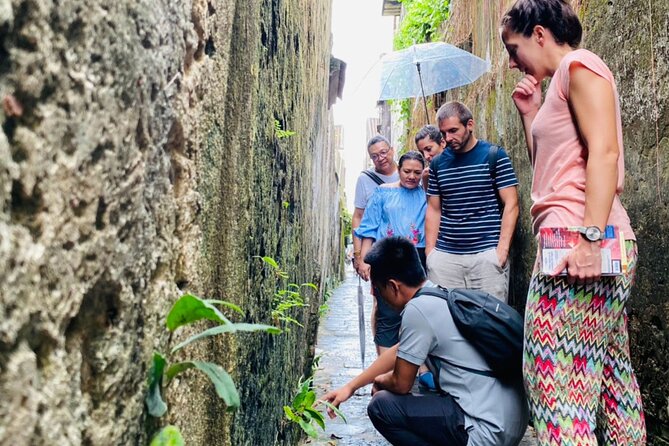
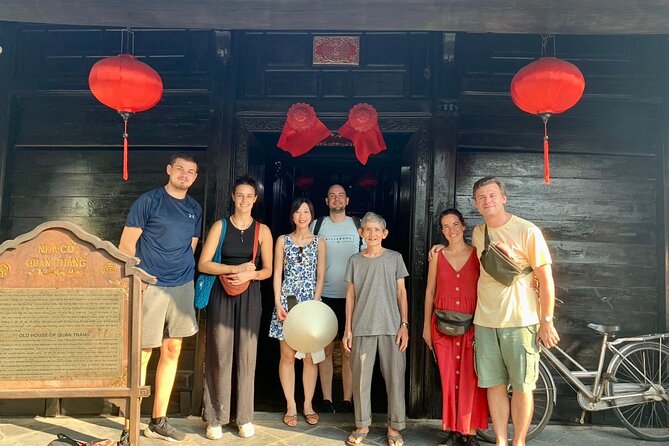
Quan Thang Ancient House is likely to be the most intimate stop. Rather than viewing a public monument from the outside, you step into a preserved merchant family home and get a sense of how a prosperous household lived.
The visit is scheduled for about 25 minutes. A particularly useful detail is the chance to see the working kitchen through the back door of one of the old houses. The house has survived floods across eight generations, giving you a practical connection to Hoi An’s environmental challenges and family continuity.
This stop also shows why a local guide matters. A house with timber, tile, carved details, and a compact layout can look beautiful but mute. An explanation of the family, the home’s use, and its survival makes the building personal. I would ask questions here about flood protection, family ownership, and how the house functions today, since those details help turn architecture into lived history.
Traditional music and theatre for 35 minutes
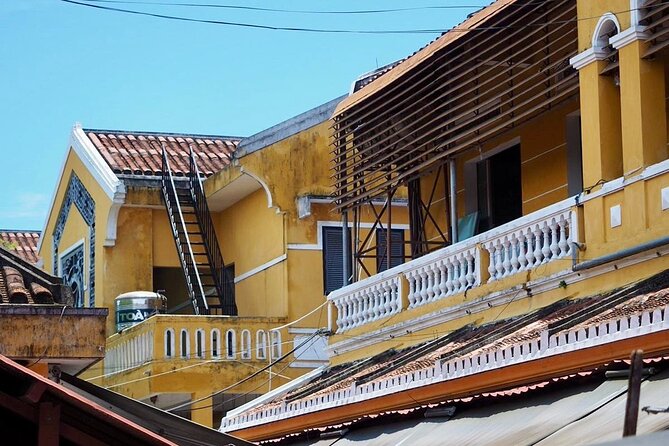
The Hoi An Traditional Art Performance Theatre adds sound and movement to a route that otherwise focuses on buildings. You are scheduled to spend about 35 minutes here, making it one of the longer stops.
The performance features traditional music, dance, and theatre, along with traditional instruments. This is a useful change of pace after several heritage sites. It also gives you a chance to encounter regional culture in performance rather than only through a guide’s explanation.
The exact performance details are not provided, so you should not book this expecting a particular show, cast, or style. Think of it as a planned introduction to local performing arts. If you enjoy music and staged culture, the stop broadens the tour nicely. If you prefer uninterrupted street walking, it may feel like the least flexible part of the afternoon.
Finishing at Hoi An Central Market
The final stop is Hoi An Central Market, with about 35 minutes set aside for stalls, local food, handicrafts, and souvenirs. This is where the tour shifts from heritage buildings to present-day life.
A market visit works best when you are curious rather than committed to buying. You can move from stall to stall, examine local delicacies, and try small tasters when available. One guide also explained local ideas about the habits connected with Hoi An residents’ long lives, adding a human touch to the food stop.
The market is a good place to ask for practical advice. Trang provides restaurant and shop recommendations at the end of her tours, while Karla is noted for offering useful tips for the rest of a visit. Anh also gives suggestions about restaurants, shops, and booking a lantern boat ride. Those recommendations can be worth as much as the formal sightseeing, especially if this is your first day in Hoi An.
The walk ends at 19 Tran Phu, near the market. Since you finish in an area filled with food and shopping choices, you can continue exploring on your own. The tour does not include a full meal, so plan to buy anything more substantial separately.
The guides are the heart of the experience
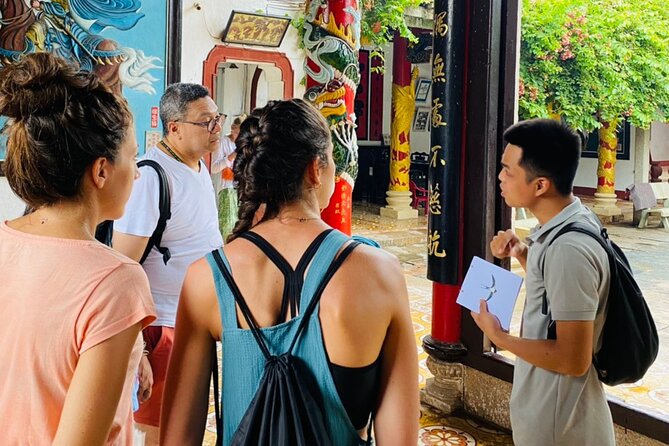
The strongest part of this activity is the guide rather than any single building. Names that appear repeatedly in the supplied material include Kun, Anh, Trang, Nguyen, Minh, June, Karla, and Sanh. Their common strengths are friendly conversation, clear English, local history, and practical advice.
Kun is described as warm, encouraging, energetic, and well informed. Anh combines detailed explanations with a friendly manner and adds insight into Vietnamese culture and life in Hoi An. Trang is noted for good English and for ending the walk with a useful list of places to try independently.
Minh focuses on local history and everyday life, while June leads a leisurely walk centered on architecture, history, and culture. Sanh has also led a satisfying last-minute booking that became a one-person tour. That private result should not be expected every time, but it shows how the group setup can sometimes create a very personal outing.
The guide you receive is not guaranteed from the information provided. Still, the repeated five-star rating and 100 percent recommendation rate point to a consistent strength: personable guiding that keeps the walk informative without making it stiff.
Timing, cost, and what to bring
The tour lasts approximately three hours, with the six planned stops adding up to about 165 minutes. The remaining time allows for walking between sites, transitions, questions, and the tea break. The pace is described as leisurely by one guide’s group, but you should still expect steady walking through the Old Town.
The price is $9.89 per person. The UNESCO entrance ticket costs 120,000 dong per person and is not included. Coffee or tea, specifically a special herbal tea, is included. Group discounts are available, although the supplied details do not state the discount amount.
You receive confirmation when booking, and mobile tickets are supported. Most people can participate, and service animals are allowed. No transport is included, so you need to reach the meeting point at 125 Phan Chu Trinh on your own.
Wear comfortable shoes and bring water. The tour is outdoors for much of its duration, with time spent walking between indoor stops. It requires good weather. If the weather is poor, or if the minimum number of participants is not reached, the activity may be moved to another date or replaced with another experience, with a full refund offered in those circumstances.
You can cancel for a full refund up to 24 hours before the start time. Cancellations or changes made less than 24 hours in advance are not refunded or accepted.
Who should book this Hoi An walk
I would choose this tour early in a Hoi An visit. The route gives you a basic map of the Old Town’s architecture, cultural groups, food areas, and practical places to return to later. The restaurant and shopping suggestions are especially useful if you are staying for more than one day.
It suits first-time visitors, couples, solo participants, and anyone who prefers context over unstructured wandering. The small maximum group also makes it a good fit if you want to ask questions without speaking in front of a large crowd.
Families and older participants should note that this is a walking activity with several indoor visits and no transport between stops. The information says most people can participate, but it does not provide a detailed accessibility assessment. If you need specific assistance, confirm the arrangements before booking.
Food-focused visitors will enjoy the market ending, but this is not a dedicated street-food tour. The market stop includes the chance to explore and try delicacies, yet the main purpose remains the history and culture of the Old Town.
Should you book it?
Book this walk if you want an affordable, human introduction to Hoi An rather than a checklist of landmarks. The best reasons are the small group, the old merchant house, the cultural contrast between Japanese and Cantonese sites, and the practical advice guides provide at the end.
Skip it if you already know Hoi An’s history well or want a tour built around a full meal, extensive shopping time, or private transportation. For most first-time visitors, though, the $9.89 base price plus the separate UNESCO ticket buys a useful three hours and a much clearer understanding of the town.
FAQ
How long does the Hoi An Ancient Town Walking Tour last?
The tour lasts approximately three hours.
How much does the tour cost?
The listed price is $9.89 per person. Group discounts are available.
Is the Hoi An UNESCO entrance ticket included?
No. The UNESCO entrance ticket costs 120,000 dong per person and is not included.
What is included in the tour?
Special herbal tea, listed as coffee and/or tea, is included. The walking tour and local guide are also part of the experience.
Where does the tour start?
The meeting point is 125 Phan Chu Trinh, Minh An Ward, Hoi An, Quang Nam, Vietnam.
Where does the tour end?
The tour ends at Hoi An Market, 19 Tran Phu, Cam Chau, Hoi An, Vietnam.
How many people can join the tour?
The group has a maximum of 10 participants.
Can I cancel for a full refund?
Yes. You can cancel up to 24 hours before the experience starts for a full refund. Cancellations made less than 24 hours before the start time are not refunded.
What happens if the weather is poor or the minimum group size is not met?
The tour may be canceled or moved. You will be offered a different date or experience, or a full refund.
Just added around Hoi An
- Hoian Old Town – Immersive Free Walking Tour★ 4.3 · 3 reviews
- Da Nang to Hoi An Transfer: Convenient Airport and City Transport★ 3.5 · 3 reviews
- Hoi An City Tour–Boat Ride–Release Flower Lantern on river★ 5.0 · 3 reviews
- Hoi An to Nha Trang by Private Car with Professional Driver★ 5.0 · 3 reviews
- Hoi An: Pottery Making Workshop With Local Craftsmen★ 5.0 · 3 reviews
- Hoi An:Cycling,Traditional Farming & Fishing Life Experience★ 4.0 · 3 reviews
- My Son Half Day Private Tour From Hoi An★ 4.5 · 3 reviews
- Hoi An/ Da Nang: Hue City Tour with HaiVan Pass★ 4.7 · 3 reviews
Hoi An Ancient Town Tours, compared.

The Lantern Lady: Traditional Lantern Class in Old Town
Read our review →
Hoi An Ancient Town – Walking Tour with Local Guide
Read our review →
Hoi An Night Market – Ancient Town street food tours by Night
Read our review →
Hoi An Ancient Town – Night Market Street Food Tours By Night
Read our review →

PRIVATE Hoi An Ancient Town – Night Market Street Food By Night
Read our review →
Hoi An Ancient Town Walking Street Food Tours with Night Market
Read our review →
Browse the lists this tour appears in