

Reviewed · WALKING TOURS
Hoi An Walking Tour
Hoi An’s old center is best understood on foot, where a short street can hold a Japanese bridge, a Chinese assembly hall, a family home, and centuries of trade. This private tour gives you a guide to explain what you are seeing instead of leaving you to admire the yellow walls without context.
I like the private format, since your group can ask questions and move at a sensible pace. I also like the practical package: hotel transfers, entrance fees, bottled water, and fresh coconut water are included.
The main consideration is depth. Some stops may rely partly on explanations from staff at the sites, so if you want a long, scholarly account at every doorway, you should tell your guide that at the start.
In This Review
- Key points at a glance
- Why a walking tour suits Hoi An
- Crossing the Japanese Covered Bridge
- Understanding Fukian Assembly Hall
- What your guide adds to the old town
- A private tour with useful transport included
- What the four hours may include beyond the two listed stops
- Starting at 8:00 am in Hoi An
- Who will get the most from this experience
- Cancellation and booking points to keep in mind
- Should you book the Hoi An Walking Tour?
- FAQ
- How long does the Hoi An Walking Tour last?
- What time does the tour start?
- Is hotel pickup available?
- Is this a private tour?
- Which main sights are included?
- Are entrance fees included?
- What happens if the weather is poor?
Key points at a glance
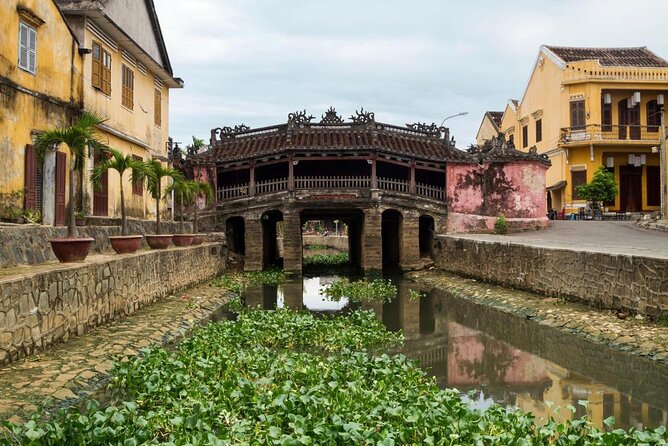
- The Japanese Covered Bridge gives you a compact look at Hoi An’s Japanese merchant past, with free admission.
- Fukian Assembly Hall shows the religious and social life of the city’s Chinese trading community.
- Private guiding means only your group takes part, with room to ask for food, shopping, and sightseeing advice.
- Hotel transfers remove the need to arrange a ride into the old town and back.
- Several named guides have led this experience, including Nini, Huy, Jesmine, Dung, Annie, and Anni.
- The tour costs $69 and lasts about four hours, making it most useful as an orientation walk rather than a full-day historical study.
Why a walking tour suits Hoi An
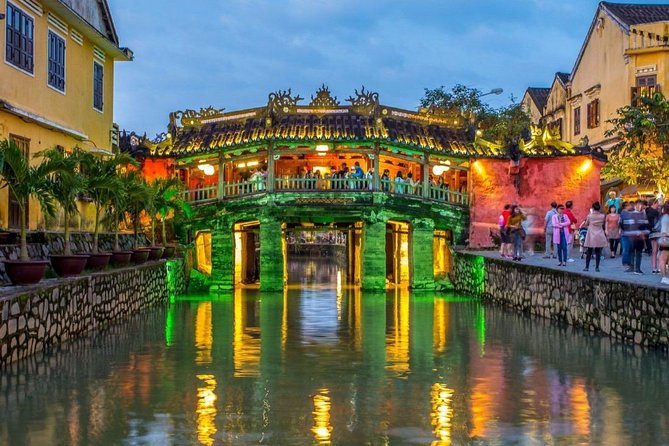
Hoi An rewards slow looking. The old town is compact, but its meaning is not always obvious. A timber doorway may belong to a merchant house. A carved altar may point to a sea goddess. A bridge may reflect the presence of a foreign trading community that once had its own quarter.
That is where a guide earns the fee. You are not simply being taken from one photo stop to the next. You are being given a framework for reading the town. The guide can explain how Japanese and Chinese communities shaped Hoi An, why assembly halls mattered, and how the old center became a place of trade and worship.
The tour lasts about four hours, which is long enough for a useful first look without taking your whole day. I would place it early in a Hoi An visit. Afterward, you can return to the places that caught your attention, browse at your own speed, or use your guide’s suggestions for eating and shopping.
Because this is a private activity, the pace should suit your party better than a large group walk. Families can pause when needed. Couples can ask more questions. A first-time visitor can admit that the difference between an assembly hall, temple, and old house is not yet clear.
More walking tours in Hoi An:
- Evening Walking Food Tour, folk game and lantern boat
★ 5.0 · 665 reviews - Hoi An Ancient Town Walking Tour with a Local
★ 5.0 · 517 reviews - Hoi An Ancient Town – Walking Tour with Local Guide
★ 4.9 · 385 reviews
Crossing the Japanese Covered Bridge
The Japanese Covered Bridge, also called Chua Cau or the Pagoda Bridge, is one of Hoi An’s best-known sights. Japanese craftsmen built it when Japanese merchants formed part of the town’s wider trading community.
The bridge is appealing because it is both useful and symbolic. It is a crossing point, but it also shows how several outside communities left their mark on Hoi An. The covered design gives it a distinctive shape, and the small pagoda association adds a religious note to what might otherwise look like a simple passage.
You receive about 15 minutes here, and admission is free. That is a brief stop, so do not expect a long lecture or an extended chance to study every detail. The value comes from seeing the bridge in its street setting and hearing why Japanese merchants and craftsmen mattered to the town.
This is also a good place to ask your guide to explain the bridge’s name and purpose in plain terms. Hoi An has several layers of religious and commercial meaning packed into a small area. A direct explanation here can make the rest of the walk easier to follow.
For photography, the bridge is a natural pause. Still, I would not judge the tour by this stop alone. It is small, popular, and easy to see from the outside. The guide’s explanation is the part you are paying for.
Understanding Fukian Assembly Hall
The Fukian Assembly Hall, also written as Phuc Kien Assembly Hall, is at 46 Tran Phu Street. It is dedicated to Thien Hau, the goddess of the sea.
This stop lasts about 30 minutes and includes admission. Compared with the bridge, it gives you more time to consider how Hoi An’s Chinese communities organized their religious and social lives. The sea goddess dedication is especially fitting for a port town whose fortunes were tied to movement by water.
An assembly hall was not simply a place to step inside, take a picture, and leave. It connected people from the same regional or cultural background. It could serve religious purposes while also supporting community ties. Your guide can help you see the building as part of Hoi An’s trading society, rather than as an isolated decorative monument.
The 30-minute visit is enough for a focused explanation, though the exact depth will depend on your guide and the activity at the site. If you want more historical detail, say so early. One useful criticism of this experience is that a guide may sometimes lean on site staff for part of the explanation, and the information there may feel basic.
That does not make the assembly hall unimportant. It simply means you should take an active role. Ask about Thien Hau, the Chinese merchant communities, and the building’s role in town life. Good questions can turn a short stop into a much better history lesson.
What your guide adds to the old town
The guide is the heart of this experience. The named guides associated with the tour include Nini, Huy, Jesmine, Dung, Annie, and Anni. You cannot assume which person will lead your walk, but the guide reports consistently point to a warm, helpful style across the team.
Nini has been praised for combining local information with humor and practical help. Huy is described as funny, accommodating, and strong on local knowledge. Jesmine is known for a calm, organized manner and a clear affection for Hoi An.
Dung has led an informative and enjoyable walk, while Annie and Anni have been especially helpful with restaurant and shopping suggestions. One guide also helped with dietary needs during a wider Middle Vietnam trip, which suggests that it is worth raising food concerns before or during your walk rather than waiting until lunch.
These details matter because a guide can shape the feel of a four-hour city walk. You want someone who can answer questions without rushing you, explain local customs without turning the walk into a lecture, and offer useful advice for the rest of your stay.
The praise is not completely one-sided. At least one account found the guide helpful for getting oriented but wished for more history at each stop. That is fair. A private tour can be as detailed as the questions you bring to it, so tell your guide whether you want dates and context, or a lighter introduction with more time for practical recommendations.
Same town, a completely different sort of day:
- Hoi An: Basket Boat Ride in the Coconut Forest
★ 4.9 · 4,956 reviews - Hoi An: Vietnamese Coffee Culture and Coffee Making Class
★ 4.9 · 4,006 reviews - Hoi An: Vietnamese Foldable Lantern Making Class
★ 4.9 · 3,742 reviews - Cooking Class Hoi An:Local Market, Basket Boat, Fishing & Cooking
★ 5.0 · 3,660 reviews
A private tour with useful transport included
The price is $69 for about four hours. The exact value depends on the size of your group, but the private setup makes the comparison different from a basic group walk. You are paying for a guide dedicated to your party, plus hotel transport to the visit area and a return transfer from town to your hotel.
Those transfers are useful if you are staying outside the old center or prefer not to sort out local transport first thing in the morning. They also let you finish the walk without figuring out how to get back. Near public transportation is available, but the included car service is the simpler choice.
Admission fees are included for the paid sites, including Fukian Assembly Hall. The Japanese Covered Bridge has no admission charge. You also receive bottled drinking water and a fresh coconut water, a small but welcome touch in Hoi An’s warm conditions.
Meals, personal spending, and tips are not included. Plan to pay separately for anything you eat, buy, or choose to give your guide. Since the tour ends with you back at your hotel, you can arrange lunch afterward rather than squeezing a meal into the walk.
I see the strongest value here for two kinds of people. First are visitors with limited time who want a quick, guided introduction. Second are those who prefer private attention and practical help over a large scheduled group. If you already know Hoi An well and only want to see the bridge, $69 may feel high.
What the four hours may include beyond the two listed stops
The two clearly described highlights are the Japanese Covered Bridge and Fukian Assembly Hall. The wider purpose of the walk is to introduce Hoi An’s historical and cultural sites, and the tour has also been associated with visits to places such as an old house and a silk-related site.
Because the supplied timing for the two named stops totals only about 45 minutes, the remaining time is likely used for walking, explanations, and additional cultural points. The exact order and selection should be confirmed when you book or with the operator before departure.
This flexibility can be useful. You might want more time around architecture, local religious life, or practical orientation. You can ask for emphasis based on your interests. Just do not assume that every possible old house, workshop, or museum will receive a long, detailed treatment unless it is confirmed in advance.
I would use the walk as a foundation. Note the streets, buildings, and subjects that interest you. Then return later when you can look more closely without needing to keep up with an itinerary.
Starting at 8:00 am in Hoi An
The stated start time is 8:00 am. That early hour is sensible for a walking tour, since it gives you a cooler beginning and puts the town’s major sights first on your day.
Your pickup details should be clear at booking, as the experience offers hotel pickup and transfer. Confirmation is provided when you book. Since the tour depends on good weather, poor conditions can lead to a new date or a full refund.
Wear shoes suitable for several hours on foot and bring protection from sun or rain. The tour supplies water, but you should still dress for the conditions. If the weather turns wet, the walk may continue with adjustments, but the policy allows cancellation when conditions are unsuitable.
The private format also makes the start easier. You are not waiting for a large group to gather at several hotels. The group size is simply your own party, which can make an early pickup less stressful.
Who will get the most from this experience
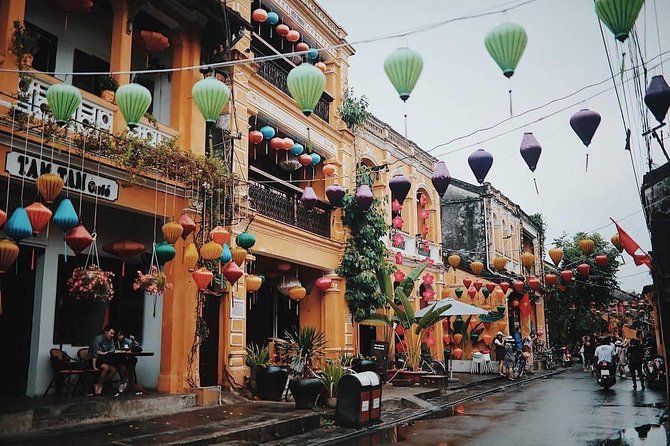
I would recommend this walk to a first-time visitor who wants context before exploring alone. It is also a good fit for couples, families, and small groups who value a private guide and return transport.
It suits you especially well if you enjoy asking questions. Guides have helped people with restaurant choices, shopping suggestions, dietary needs, and general orientation. Those practical conversations can be just as useful as the formal sightseeing.
The tour may be less satisfying if your main goal is a detailed academic account of every building. The itinerary is focused and the named stops are short. Ask for more historical depth at the beginning, particularly if you want the guide to explain each site rather than depend on information supplied inside it.
The walk is also not a food tour. Meals are not included, though you can use the guide’s local recommendations to plan afterward. Personal purchases are separate as well, so budget for shopping if Hoi An’s shops catch your eye.
Cancellation and booking points to keep in mind
You can cancel for a full refund if you do so at least 24 hours before the 8:00 am start time. Cancellations or changes made within 24 hours are not refunded or accepted.
The cut-off follows Hoi An local time. If poor weather forces the operator to cancel, you should be offered another date or a full refund. Confirmation arrives at the time of booking, and the activity is offered as a private experience rather than a shared group tour.
Should you book the Hoi An Walking Tour?
Book it if you want a private introduction to Hoi An with transport, entrance fees, and a guide included. The Japanese Covered Bridge and Fukian Assembly Hall provide a clear starting point, while the guide can help you make sense of the town’s Japanese, Chinese, religious, and trading connections.
The $69 price is easiest to justify when several people share the private tour or when hotel transfers and personal attention matter to you. It is less compelling if you only want quick photographs of the two main sights.
My practical advice is to request the level of history you want at the start. Ask for more explanation at each stop, and ask which additional cultural sites are planned during the remaining time. Do that, and this can be a useful first morning in Hoi An, with enough local guidance to improve the rest of your stay.
FAQ
How long does the Hoi An Walking Tour last?
The tour lasts approximately four hours.
What time does the tour start?
The stated start time is 8:00 am.
Is hotel pickup available?
Yes. Car transfer from your hotel to the visit area and a return transfer from the town to your hotel are included.
Is this a private tour?
Yes. Only your group participates in the activity.
Which main sights are included?
The described stops are the Japanese Covered Bridge and the Fukian Assembly Hall, also called the Phuc Kien Assembly Hall.
Are entrance fees included?
Yes. Admission fees are included. The Japanese Covered Bridge has free admission, while the Fukian Assembly Hall admission is included.
What happens if the weather is poor?
The experience requires good weather. If it is canceled because of poor weather, you will be offered a different date or a full refund.
Just added around Hoi An
- Hoian Old Town – Immersive Free Walking Tour★ 4.3 · 3 reviews
- Da Nang to Hoi An Transfer: Convenient Airport and City Transport★ 3.5 · 3 reviews
- Hoi An City Tour–Boat Ride–Release Flower Lantern on river★ 5.0 · 3 reviews
- Hoi An to Nha Trang by Private Car with Professional Driver★ 5.0 · 3 reviews
- Hoi An: Pottery Making Workshop With Local Craftsmen★ 5.0 · 3 reviews
- Hoi An/ Da Nang: Hue City Tour with HaiVan Pass★ 4.7 · 3 reviews
- Hoi An:Cycling,Traditional Farming & Fishing Life Experience★ 4.0 · 3 reviews
- My Son Half Day Private Tour From Hoi An★ 4.5 · 3 reviews
Walking Tours, compared.

Evening Walking Food Tour, folk game and lantern boat
Read our review →

Hoi An Ancient Town – Walking Tour with Local Guide
Read our review →

Cham Island: Underwater Walking & Snorkeling Tour
Read our review →

Full-day Cham Islands Cruise from Hoi An with Underwater Walking Excursion
Read our review →Browse the lists this tour appears in