

Reviewed · HOI AN ANCIENT TOWN TOURS
Hoi An Ancient Town – Walking Tour with Local Guide
Hoi An reveals itself best on foot, one shaded lane, old wooden doorway, and painted temple at a time. This tour gives you a strong first look at the UNESCO-listed old town, with local guides such as Trung, Duy, Tom, and Tin leading a small group through its main sights and lesser-noticed corners.
I especially like the small group limit of 10, which makes it easier to ask questions and stay together in crowded streets. I also like the practical finish: tea or a local dessert, followed by tips on restaurants, cafés, tailors, and other things to do. The main drawback is that the 120,000 VND heritage entrance fee is extra and must be paid in cash.
In This Review
- Key points at a glance
- Why start Hoi An with a guided walk
- Meeting at 95 Phan Chu Trinh Street
- Ba Mu Temple gate and Hoi An’s first impressions
- Assembly halls and the Chinese trading communities
- The Japanese Covered Bridge and Kazik Park
- Tan Ky Heritage House and old merchant architecture
- Traditional art and folk culture in two indoor stops
- Hoi An Market and the everyday town
- Tea, dessert, and useful local advice
- Is $14 good value for Hoi An?
- Crowds, weather, and the walking pace
- Who should book this Hoi An walk
- Should you book the Hoi An Ancient Town Walking Tour?
- FAQ
- How long does the walking tour last?
- Where does the tour meet?
- Is hotel pickup included?
- Is the entrance ticket included in the price?
- What language is the tour conducted in?
- How large is the group?
- What sights are included?
- Is food or a drink included?
Key points at a glance

- A compact route through Hoi An’s essential sights: See Ba Mu Temple gate, assembly halls, the Japanese Covered Bridge, heritage houses, museums, and the market in one walk.
- Small groups capped at 10 people: The guide can keep the group close and answer questions without shouting across a crowd.
- Local context makes the buildings easier to understand: You learn how Hoi An’s architecture, trade, religion, and daily life fit together.
- Tea or dessert adds a pleasant local pause: The tour may finish with a traditional drink such as the herbal beverage served at Mot.
- Useful advice for the rest of your stay: Guides share suggestions for local food, coffee, tailoring, and other activities.
- Plan for the separate heritage ticket: Bring 120,000 VND per person in cash before you arrive.
Why start Hoi An with a guided walk
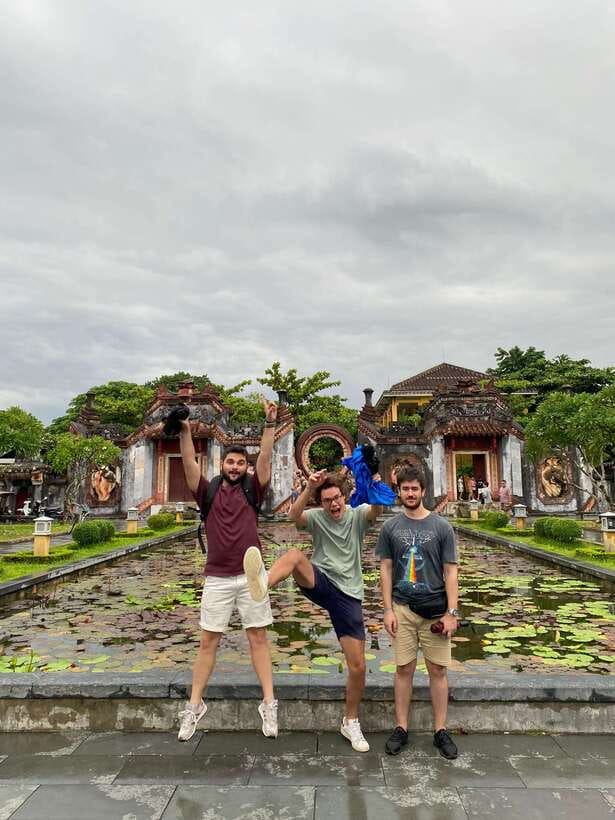
Hoi An is easy to wander, but easy to misunderstand. Its old streets can feel like a collection of photogenic shopfronts unless somebody explains why the buildings look the way they do, how the town grew, and which places deserve more than a quick photograph.
This walk gives you that framework early in your stay. You can then return on your own for shopping, food, lantern-lit streets, or a quieter look at the buildings that caught your eye.
The route is also useful if you have only one day in Hoi An. In roughly two and a half hours, and possibly closer to three depending on the pace and stops, you cover much of the historic center without spending half your day figuring out where to go.
The guides are a major part of the experience. Trung is often praised for his humor, clear English, local pride, and ability to keep a group together. Duy is described as lively, clear, and ready to answer questions about Hoi An and Vietnam. Tom and Tin have also led walks praised for their friendly manner and good explanations.
That variety matters because the route itself is fixed, but the feel of the walk depends on the person leading it. You should expect an English-speaking local guide, though the exact guide is not guaranteed when you book.
More Ancient Town walks in Hoi An:
- Hoi An Ancient Town Walking Tour with a Local
★ 5.0 · 517 reviews - The Lantern Lady: Traditional Lantern Class in Old Town
★ 4.9 · 444 reviews - Hoi An Night Market – Ancient Town street food tours by Night
★ 5.0 · 165 reviews
Meeting at 95 Phan Chu Trinh Street
The meeting point is at 95 Phan Chu Trinh Street, in front of a tailor shop on the corner of the intersection. It is outside the old town sightseeing area, so give yourself enough time to find it rather than arriving at the last minute.
You will not receive hotel pickup or drop-off. This is a walking experience from start to finish, and you are responsible for reaching the meeting point.
Wear comfortable clothes and sensible walking shoes. Hoi An’s historic center includes narrow streets, busy pedestrian areas, and frequent stops inside buildings. Baby strollers are not allowed, and the activity is not suitable for babies under one year old.
Before the walk begins, you should also have the 120,000 VND entrance ticket ready in cash. This is not included in the $14 tour price. The ticket covers access connected with the UNESCO heritage area and its paid sites, so you should treat it as part of the real cost of the outing.
Ba Mu Temple gate and Hoi An’s first impressions
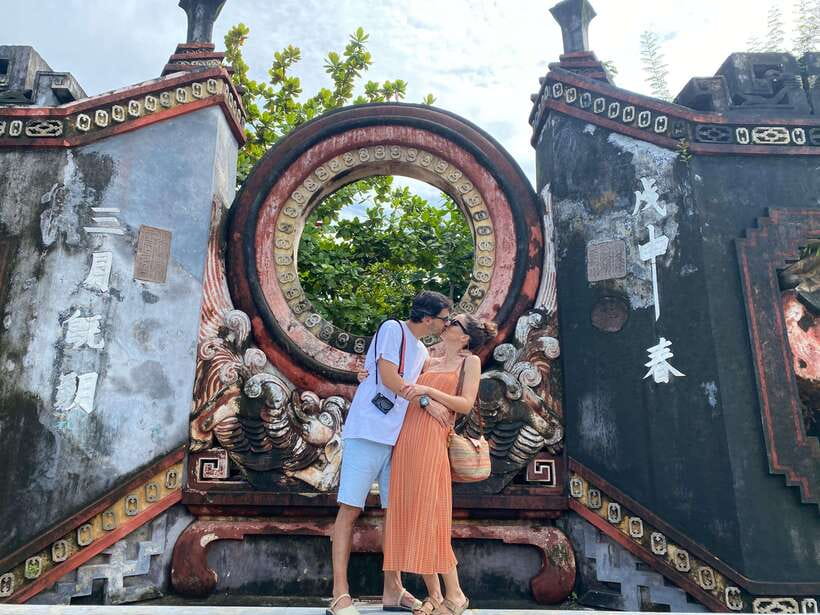
The Ba Mu Temple gate makes a fine opening stop because it gives you an immediate sense of Hoi An’s visual style. Its layered entrance, decorative details, and open setting provide a clear introduction to the town’s religious architecture and one of its popular photo locations.
A guide can point out details you might otherwise pass without noticing. This is one of the better reasons to begin with a local: you get names, background, and a sense of what you are looking at before the walk moves into the more crowded core.
The stop is mainly about orientation and photographs rather than a long indoor visit. If you want quiet pictures, you may need patience, since Hoi An’s central sights can become busy.
Assembly halls and the Chinese trading communities
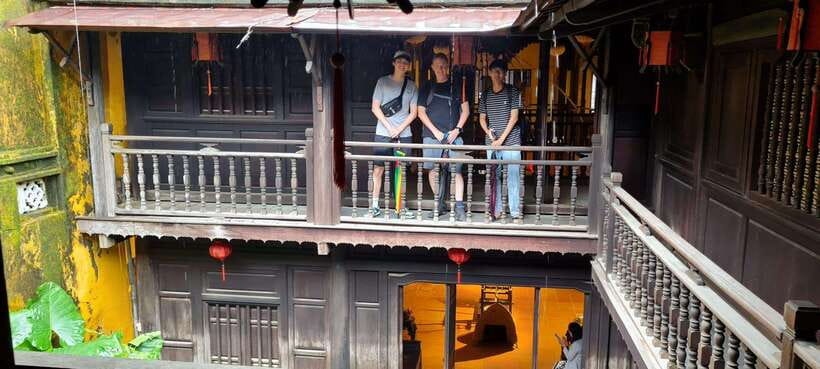
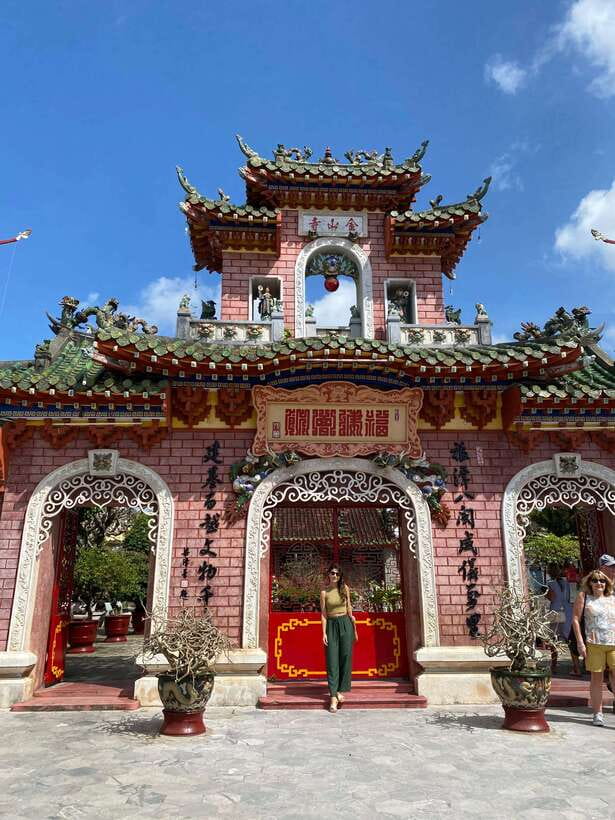
The Fujian and Cantonese Assembly Halls show how strongly Hoi An was shaped by overseas trade and resident Chinese communities. These are not simply ornate buildings added for decoration. Their courtyards, altars, carved details, and religious spaces reflect the way merchant communities organized social and spiritual life.
The tour allows you to compare the character of the different halls rather than seeing just one and moving on. Your guide can explain the local customs and cultural connections that make these spaces more meaningful.
This is also where the tour’s indoor breaks become useful. Hoi An can be hot, humid, or wet, and stepping inside an assembly hall gives you shade while keeping the sightseeing focused. You are not walking continuously for 150 minutes under the sun.
Take your time with the roof decorations and woodwork. The buildings reward close looking, but the guide’s explanation is what turns them from attractive backdrops into places with a story.
More walking tours in Hoi An:
- Evening Walking Food Tour, folk game and lantern boat
★ 5.0 · 665 reviews - Hoi An Street Food Walking Tour with Tastings
★ 5.0 · 317 reviews - Hoi An Walking Tour
★ 5.0 · 269 reviews - Cham Island: Underwater Walking & Snorkeling Tour
★ 4.4 · 112 reviews
The Japanese Covered Bridge and Kazik Park
The Japanese Covered Bridge is Hoi An’s best-known landmark and a required stop for most first visits. It is compact, distinctive, and often crowded, so a guide helps you understand what you are seeing before you move on to the next photo opportunity.
The bridge represents Hoi An’s links with Japanese residents and the town’s wider trading past. You should expect a short visit rather than a long, private look at the structure. The setting is a busy public passage, and the bridge may be surrounded by people taking pictures.
Nearby Kazik Park offers a change of pace. The park and its surrounding streets help connect the famous landmark with the broader old town, rather than treating the bridge as an isolated attraction.
Guides also help with group movement here. Several people specifically appreciated being kept together during crowded periods, including Tet. That is a small but important service in Hoi An, where narrow streets and heavy foot traffic can quickly split an unfamiliar group.
Tan Ky Heritage House and old merchant architecture
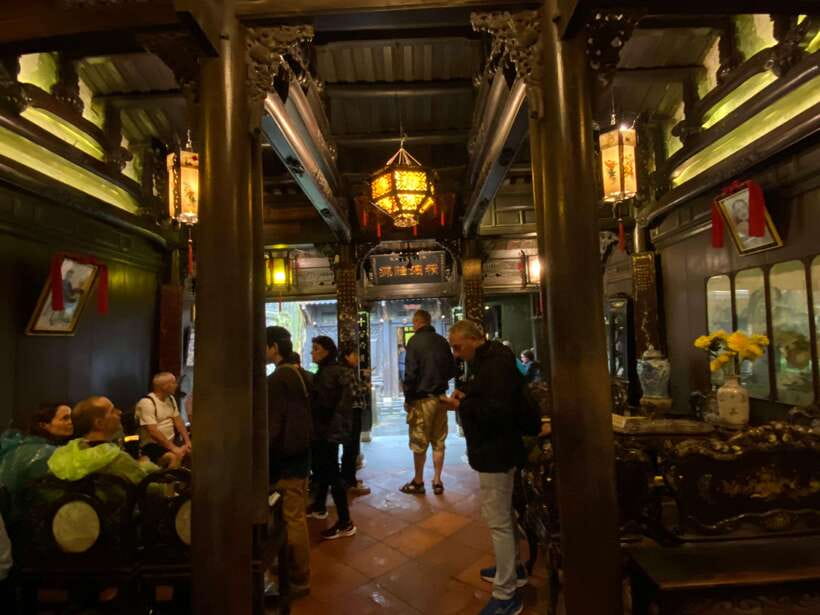
Tan Ky Heritage House is one of the tour’s most valuable indoor stops. The house gives you a closer look at how a prosperous Hoi An merchant home was arranged and how local architecture absorbed outside influences.
Look for the relationship between the narrow street frontage, interior rooms, timber structure, and decorative features. Hoi An’s traditional houses are especially interesting because they reflect both business and family life, with spaces arranged around movement, storage, display, and worship.
This is the sort of place that benefits from a guide’s explanation. Without context, you might admire the woodwork and leave. With a local guide, you can better understand how the building relates to Hoi An’s trading era and the town’s mix of cultural influences.
The practical caution is space. Heritage houses are historic properties, not large museums built for crowds. Stay close to the group and expect the visit to move at a measured pace.
Traditional art and folk culture in two indoor stops

The Hoi An Traditional Art Performance House adds a living cultural element to the route. Instead of only looking at old buildings, you get a chance to connect the town’s past with Vietnamese performance traditions.
The Museum of Folk Culture expands that picture through objects and displays tied to local life. It is a useful stop for understanding daily customs, craft, and the people behind the old facades.
These visits also break up the walking. The tour is active, but it is not simply a long march through the streets. The mix of courtyards, heritage buildings, performance space, and museum rooms gives you regular chances to cool off and reset.
You should keep your expectations realistic. This is a broad introductory walk, not a specialist museum tour. The guide’s explanation supplies the connecting thread, while the time at each indoor stop gives you a manageable look rather than an exhaustive study.
Hoi An Market and the everyday town
Hoi An Market brings the route back to daily life. Here, the town feels less like a preserved historic district and more like a working place where people shop, eat, and conduct business.
A guide can help you read the market without turning the stop into a shopping obligation. You can observe local produce, food stalls, and the flow of ordinary commerce while learning how the market fits into Hoi An life.
The market can be crowded and noisy, so stay aware of your belongings and keep up with the group. This is not the place for a long, leisurely browse during the tour. Instead, use it as a first look, then return later if you want to shop or eat.
That approach is one of the tour’s strengths. It shows you where things are, then gives you the confidence to come back independently.
Tea, dessert, and useful local advice
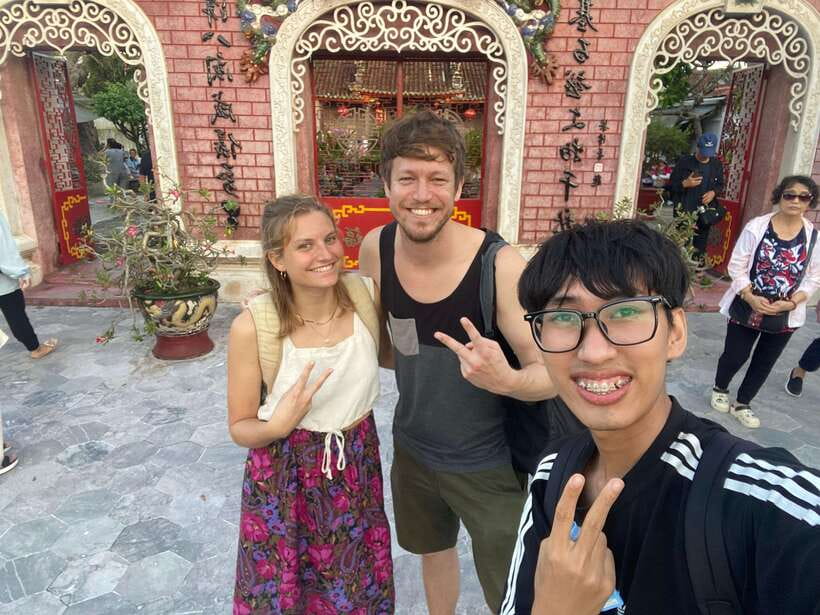
The final refreshment is a modest but welcome touch. The tour includes traditional dessert or local tea, and several participants particularly enjoyed finishing with Mot’s herbal drink.
Do not think of this as a full meal. It is a small local taste and a chance to sit or pause after the walk. For many people, that short break becomes one of the most memorable parts because it adds flavor to the history lesson.
The advice at the end may be even more useful. Guides offer recommendations for local dishes, cafés, tailor shops, and other activities in Hoi An. You can ask about the kind of food you want, the sort of coffee stop you prefer, or what might fit into the rest of your itinerary.
Trung has also followed up with suggestions through WhatsApp in some cases. That is not something you should assume is guaranteed, but it shows the kind of practical local connection this tour can provide.
Use the recommendations as starting points, not commands. Your guide can point you toward places that fit your interests, but you should still check opening times and prices yourself.
Is $14 good value for Hoi An?
At $14 per person, this is a strong-value introduction to the old town, especially when the group has several people and the guide covers many paid heritage stops. The price includes the English-speaking guide, small-group walking tour, visits to key sites, a local drink or dessert, and practical recommendations.
You do need to add 120,000 VND for the heritage entrance ticket. Since it must be paid in cash, bring Vietnamese currency before meeting the group.
The real value is not the number of stops alone. It is the time you save and the meaning you gain. You could walk past Tan Ky House, an assembly hall, or a museum without knowing what makes it important. A good guide helps you spend your limited time in Hoi An with more purpose.
This tour is less suitable if you already know the old town well or prefer to explore every site at your own speed. It is also not a private tour, so you will follow the group’s timing and route.
Crowds, weather, and the walking pace
Hoi An’s old town can be crowded, especially around major holidays such as Tet. The route becomes more demanding when streets are full, but a small group and an attentive guide make it easier to stay together.
The pace is described as manageable, with time for photographs and questions. Still, you should prepare for a genuine walking outing, not a sightseeing ride. Comfortable clothing, water, and protection from the weather are sensible choices, although only comfortable clothing is specifically required.
Rain does not necessarily cancel the experience. A wet-day walk has been completed successfully, but weather can affect comfort and the number of people in the streets. Indoor stops provide some relief, yet you should still dress for the conditions.
The separate entrance and the no-stroller rule are the main practical points to settle before booking.
Who should book this Hoi An walk
I would choose this tour for a first visit, particularly if you are staying only a day or two. It gives you a map in your head, a basic understanding of the town, and ideas for how to spend the rest of your time.
It suits solo visitors, couples, families with older children, and anyone who enjoys history explained in plain English. The small group size is also a good fit if you want some conversation without paying private-tour prices.
It is especially useful before other cultural activities. One participant found that learning about Hoi An first made a later memory show easier to understand. That makes sense: the town’s stories, architecture, and traditions give later performances more context.
I would skip it if your main goal is shopping, eating, or taking independent photographs with no schedule. You can do those things better on your own. But if you want the old town to feel like a place rather than a pretty street set, this walk is a smart start.
Should you book the Hoi An Ancient Town Walking Tour?
Book it if you want a friendly local guide, a broad look at Hoi An’s main heritage sights, and useful advice for the rest of your stay. The combination of a 10-person maximum, indoor stops, local refreshment, and a moderate price makes it particularly appealing for first-time visitors.
Before booking, remember the extra 120,000 VND cash ticket, the lack of hotel transfers, and the fact that the exact guide may vary. If you are comfortable walking for 150 minutes and want history, architecture, and local orientation in one outing, I consider this a worthwhile way to begin Hoi An.
FAQ
How long does the walking tour last?
The stated duration is 150 minutes, or two and a half hours. The itinerary also describes the old town visit as three hours, so you should allow roughly two and a half to three hours.
Where does the tour meet?
The meeting point is 95 Phan Chu Trinh Street, Hoi An, in front of a tailor shop on the corner of the intersection.
Is hotel pickup included?
No. Pickup and drop-off are not included, so you must reach the meeting point yourself.
Is the entrance ticket included in the price?
No. The UNESCO heritage site entrance ticket costs 120,000 VND per person and must be paid in cash.
What language is the tour conducted in?
The tour is conducted in English with a live English-speaking local guide.
How large is the group?
The activity is a small-group tour limited to 10 participants.
What sights are included?
The route includes Ba Mu Temple gate, the Fujian or Cantonese Assembly Hall, the Japanese Covered Bridge, Kazik Park, Tan Ky Heritage House, Hoi An Traditional Art Performance House, the Museum of Folk Culture, and Hoi An Market.
Is food or a drink included?
Yes. The tour includes a traditional dessert or local tea. A local herbal drink at Mot may be part of the refreshment stop.
Just added around Hoi An
- Hoian Old Town – Immersive Free Walking Tour★ 4.3 · 3 reviews
- Da Nang to Hoi An Transfer: Convenient Airport and City Transport★ 3.5 · 3 reviews
- Hoi An City Tour–Boat Ride–Release Flower Lantern on river★ 5.0 · 3 reviews
- Hoi An to Nha Trang by Private Car with Professional Driver★ 5.0 · 3 reviews
- Hoi An: Pottery Making Workshop With Local Craftsmen★ 5.0 · 3 reviews
- Hoi An:Cycling,Traditional Farming & Fishing Life Experience★ 4.0 · 3 reviews
- My Son Half Day Private Tour From Hoi An★ 4.5 · 3 reviews
- Hoi An/ Da Nang: Hue City Tour with HaiVan Pass★ 4.7 · 3 reviews
Hoi An Ancient Town Tours, compared.

The Lantern Lady: Traditional Lantern Class in Old Town
Read our review →
Hoi An Night Market – Ancient Town street food tours by Night
Read our review →
Hoi An Ancient Town – Night Market Street Food Tours By Night
Read our review →

PRIVATE Hoi An Ancient Town – Night Market Street Food By Night
Read our review →
Hoi An Ancient Town Walking Street Food Tours with Night Market
Read our review →
Browse the lists this tour appears in