
Reviewed · HOI AN
Hoi An Ghosts, Death, Mystery Unveiled
Hoi An’s first ghost tour is less about jump scares than about seeing the town through its beliefs about death, spirits, and memory. You’ll visit a grave in the old town, hear about 108 murdered traders, and learn why incense links the living with the dead. The real surprise is the culture lesson hidden inside the spooky theme.
I like the small groups, which make it easier to ask frank questions, and I like the guides’ storytelling. Nhat is calm and thoughtful, while Kun, Vinh, Sanh, and others have been praised for warmth, humor, and clear English. The main drawback is simple: if you want a nonstop supernatural show, this may feel more historical and spiritual than scary.
In This Review
- Key points to know before you book
- Hoi An after dark, without the usual lantern postcard
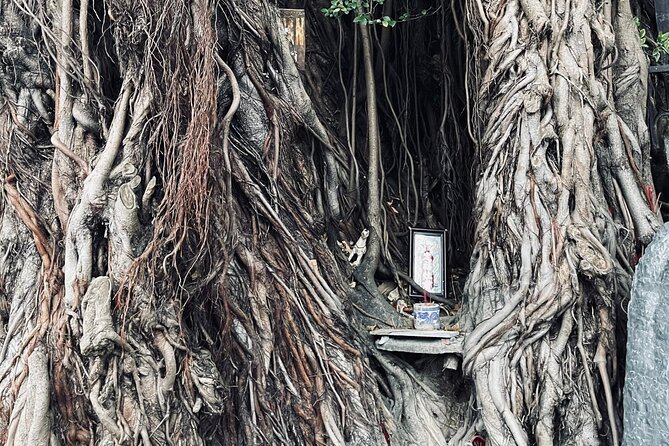
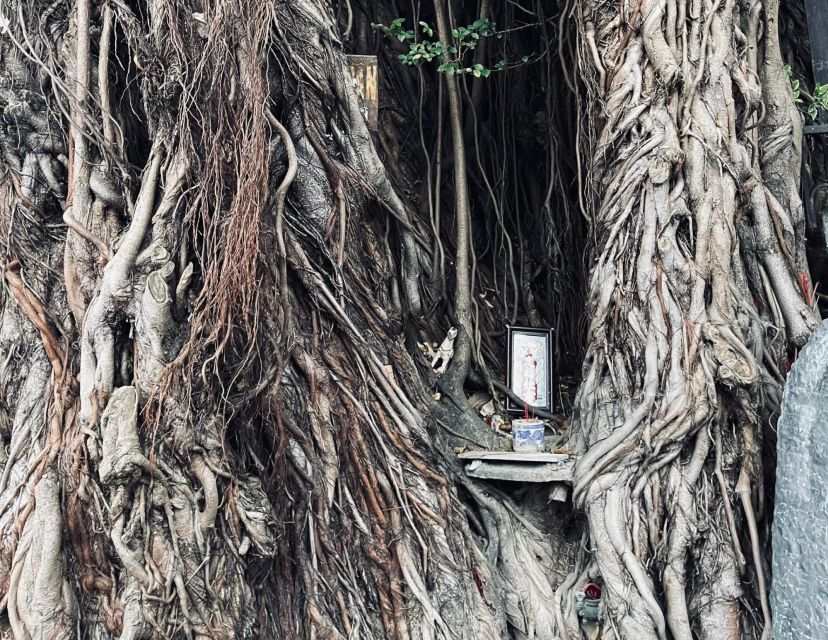
- The 400-year-old tree begins the story
- Graves, incense, and the Vietnamese relationship with death
- The story of 108 traders and a king’s apology
- The oldest house and the war that emptied it
- House protection, taboos, and the full moon
- The mystery monster and the quieter alleys
- What the small group changes
- Is $20 a fair price?
- Who should book this Hoi An ghost tour?
- Should you book it?
- FAQ
- How long does the Hoi An Ghosts, Death, Mystery Unveiled tour last?
- How much does the tour cost?
- Where is the meeting point?
- What language is the tour conducted in?
- What will I see during the walk?
- Is the tour mainly about supernatural scares?
- Does the tour run in bad weather?
- Can I cancel the booking?
Key points to know before you book
- A ghost walk with a cultural purpose: Death rituals, incense, spirits, and taboos are central to the evening.
- About 1.5 km on foot: The walk takes roughly 1.5 hours within a two-hour activity window.
- Small groups of up to 10: You get a more personal chance to ask questions.
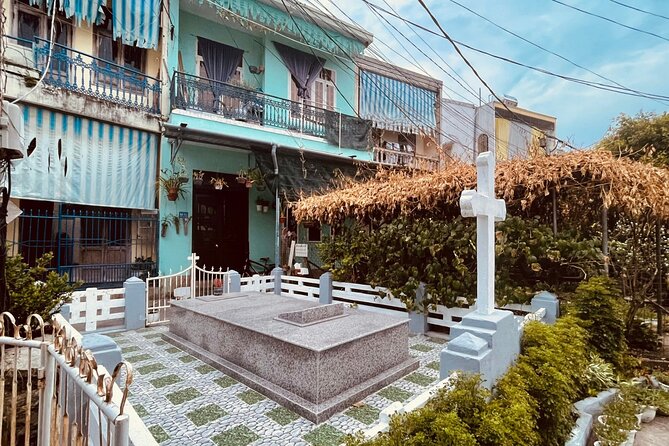
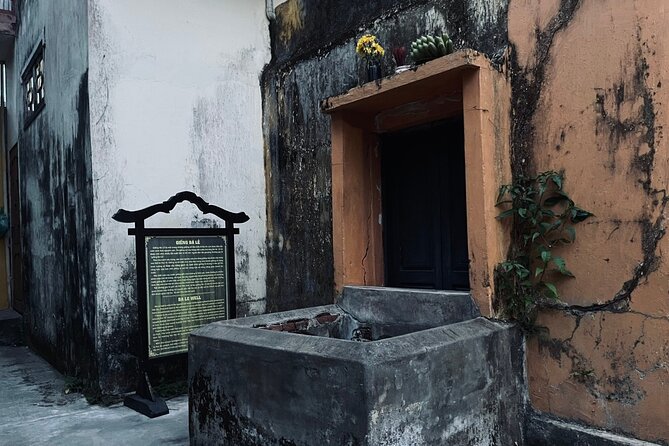
- Unusual Hoi An sights: Expect ancient wells, old houses, dark alleys, and a grave in the middle of town.
- Guides shape the experience: Nhat, Kun, Vinh, Sanh, and other English-speaking guides have received praise for storytelling and friendly conversation.
- Rain or shine: Bring suitable clothing and shoes, since the walk continues in wet weather.
Hoi An after dark, without the usual lantern postcard
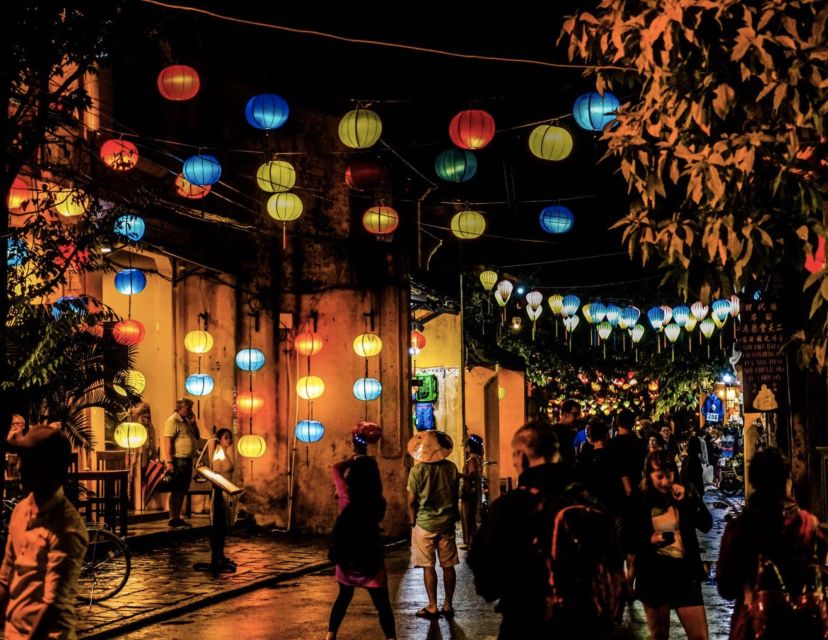
Hoi An is famous for lantern-lit streets, yellow walls, riverside walks, and tailor shops. This experience takes a different route through the same old town. Instead of focusing on pretty facades, it asks you to consider what happened behind them, who lived there, who left, and how local people deal with the dead.
That change in viewpoint gives the tour its value. You are not simply collecting ghost stories. You are learning how Vietnamese ideas about spirits, family, ritual, and bad luck shape daily life. The evening also brings out parts of Hoi An that can be easy to miss in daylight, including quieter lanes, old wells, graves, and ancient homes.
I would describe the tone as curious, respectful, and occasionally eerie. The experience can be entertaining, but it treats death as a serious part of Vietnamese culture rather than a cheap prop.
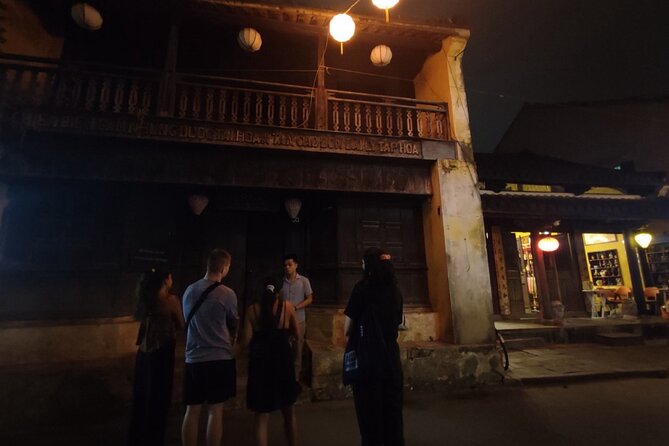
You meet beside a 400-year-old tree near Starbucks Hoi An. The meeting point is easy to recognize, but arrive ready to walk. The tour covers around 1.5 kilometres, and the full activity lasts about two hours, with the walking portion described as roughly 1.5 hours.
Other Hoi An days people book alongside this one:
- Hoi An: Basket Boat Ride in the Coconut Forest
★ 4.9 · 4,956 reviews - Hoi An: Vietnamese Coffee Culture and Coffee Making Class
★ 4.9 · 4,006 reviews - Hoi An: Vietnamese Foldable Lantern Making Class
★ 4.9 · 3,742 reviews
The 400-year-old tree begins the story
The old tree is more than a practical meeting point. It sets the mood at once: you begin beside something that has watched Hoi An change for centuries. From there, your guide leads you into darker lanes and less familiar corners of the old town.
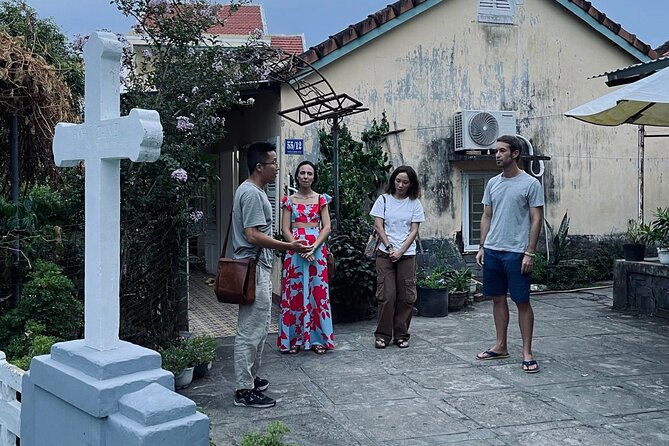
The guides are a major part of the experience. Nhat has been praised for a calm manner, gentle conversation, and detailed answers. Kun is known for warmth, humor, personal stories, and an easy way of making people feel comfortable. Vinh brings passion for Hoi An’s past and local beliefs, while Sanh has been praised for his storytelling.
The guide you receive may vary, so you should not book solely for one particular person. Still, the pattern is clear: the experience depends heavily on the guide’s ability to explain sensitive subjects in good English and keep the group involved. This is not a walk where you simply follow a script from one stop to the next.
Graves, incense, and the Vietnamese relationship with death
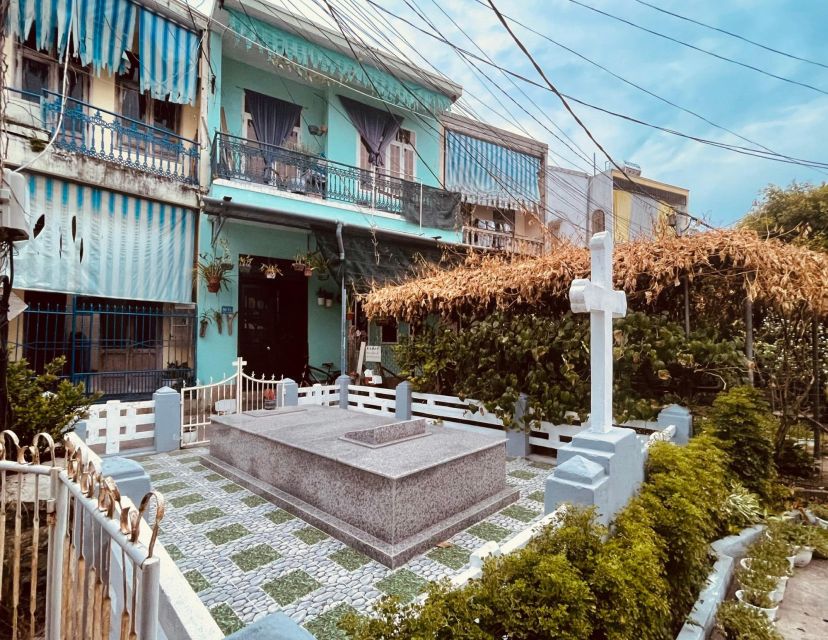
One of the most important stops is a grave located in the middle of town. That detail may seem startling to visitors used to seeing cemeteries placed well away from busy streets. Here, the grave helps explain how the living and the dead remain connected.
You learn about death rituals and the role of incense. Incense is not just a pleasant smell or a decoration in a temple. It can serve as a way for living people to show respect, remember the dead, and maintain a relationship with ancestors or spirits.
This part of the tour breaks through a common misunderstanding. The word ghost can suggest horror-film monsters, but Vietnamese spiritual beliefs are often tied to family, unsettled deaths, ritual duty, and respect for places. Your guide explains those ideas in a way that makes the old town feel more human.
I especially like that the subject is not treated as a joke. The tour can make you laugh, and the guides often use humor to keep the mood light, but it also gives you room to think. If you are interested in religion, family customs, or the meaning of everyday rituals, this section may be the most rewarding part of the night.
The story of 108 traders and a king’s apology
The walk then turns toward one of Hoi An’s darker stories: the murder of 108 traders. The supplied details do not give the full historical setting, so your guide becomes important here. Listen for the details of who these traders were, what happened, and how the story fits into Hoi An’s role as a trading town.
The tale is presented alongside the apology of a king. That combination of violence and royal regret gives the story a different shape from a simple ghost legend. It connects personal loss with power, responsibility, and the way communities remember wrongs.
This is where the tour works best as local storytelling. You are not being asked to memorize dates or names for a test. Instead, you hear a story attached to a real town, real streets, and the people who once used them. The dark material gives you another way to picture Hoi An as a place shaped by trade, conflict, and migration.
Some visitors may want clearer historical separation between documented events and folklore. You can solve that by asking questions. Guides such as Vy, Tom, Kun, and Vinh have been praised for answering questions and discussing the stories rather than rushing through them.
Same town, a completely different sort of day:
- Cooking Class Hoi An:Local Market, Basket Boat, Fishing & Cooking
★ 5.0 · 3,660 reviews - Hoi An Cooking Class(Market,BasketBoat Crabfishing&Cooking Class)
★ 5.0 · 3,386 reviews - Hoi An: My Son Sanctuary Early Morning w. Champa Food Brunch
★ 4.9 · 2,750 reviews - Hoi An/ Da Nang – Ba Na Hills – Golden Bridge Deluxe Small group
★ 5.0 · 2,613 reviews
The oldest house and the war that emptied it
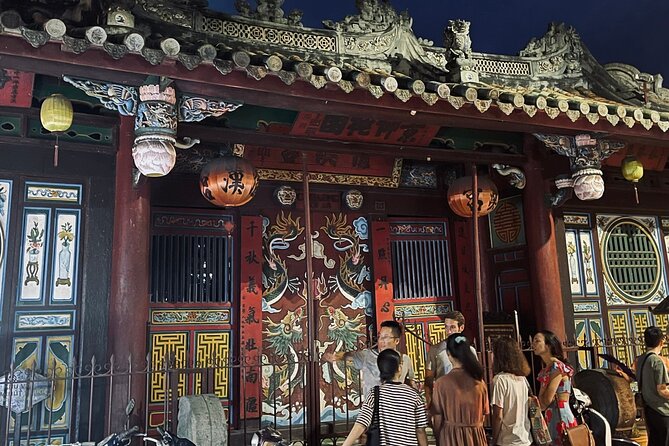
In the shadow of Hoi An’s oldest house, the tour examines a war that caused immigrants to abandon their homes. This is one of the strongest reminders that Hoi An’s old streets are not an untouched stage set. Houses have belonged to families and immigrant communities, and political violence has changed who lives in them.
The stop gives the ghost theme a practical human meaning. An empty house can feel haunted because of a supernatural presence, but it can also carry the memory of people forced to leave. The story encourages you to think about absence, displacement, and the way old buildings hold layers of personal history.
You might find this part less spooky than the alleys or monster story, but it adds much-needed balance. Without it, the tour could become a collection of eerie anecdotes. With it, the old town becomes a place where trade, war, belief, and family life overlap.
House protection, taboos, and the full moon
The walk also explains how local people protect their homes from dark spirits. You learn about taboos and actions that are not allowed during the full moon and new moon. These details are useful because they show how spiritual beliefs can affect ordinary behavior.
The value here is not deciding if the beliefs are true. It is seeing how customs give people a way to deal with uncertainty, danger, grief, and the unknown. A rule about a doorway, a household practice, or a lunar date can carry meaning even for someone who does not share the belief.
Your guide may explain these traditions through stories and personal examples. Ask questions, but do so with respect. Death and spiritual practice are not just entertainment topics for local families. The tour’s best guides keep the discussion open and friendly while avoiding a mocking tone.
The full moon and new moon material also gives the evening a useful connection to the wider rhythm of life in Vietnam. You are not hearing about ghosts in isolation. You are hearing about calendars, homes, rituals, and community habits.
The mystery monster and the quieter alleys
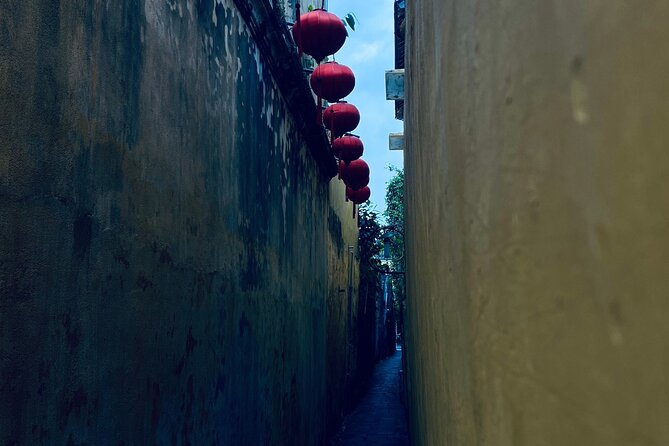
At some point, you hear about a mystery monster living in Hoi An. This is the part most likely to satisfy your wish for a traditional ghost-tour moment. The story adds suspense, especially as you move through shadowy lanes and places associated with old graves, wells, and houses.
Do not expect a theme-park production. There is no indication of actors, staged effects, or sudden scares. The atmosphere comes from the setting and the guide’s voice. A narrow alley, a dark corner, or an old well can feel different when you know the story attached to it.
The walk is short enough to remain manageable, but you should wear shoes suited to uneven urban streets and bring clothing for the weather. The tour runs rain or shine. The supplied information does not describe a specific shelter plan, so a light rain layer is a sensible choice.
This is also a good activity for an evening when you want to see Hoi An beyond the busiest lanes. The route focuses on places rarely shown in a standard sightseeing walk. You will still be in town, but the mood and subject make familiar surroundings feel unfamiliar.
What the small group changes
The group limit is 10 people, and that matters here. Subjects such as death rituals and spiritual beliefs work better when you can hear the guide clearly and ask direct questions. A small group also makes the walk feel more like a conversation than a public performance.
The guide names attached to the experience include Nhat, Sanh, Goon, Kun, Sinh, Tom, Vy, Vinh, Karla, and others. Their styles differ. Some bring calm energy, some use more humor, and some focus strongly on historical detail. The most consistent strength is the personal connection between guide and group.
You should expect to participate by listening and asking questions, not by acting out scenes. The guides have been praised for keeping people engaged for nearly two hours, explaining unfamiliar customs, and adding personal anecdotes.
The small group does not guarantee a private tour. Ten people can still feel like a proper group, especially in a narrow lane. But it is a useful middle ground between a private walk and a large sightseeing crowd.
Is $20 a fair price?
At $20 per person, this is good value if you want interpretation rather than a simple walk. The English-speaking guide is the main inclusion, and the experience uses the old town itself as the setting. You are paying for stories, explanation, access to a different point of view, and a structured evening activity.
The price is less compelling if you only want theatrical scares. There are no listed special effects, transport services, meals, or entrance extras. Hotel pickup and drop-off are not included, and gratuities are separate.
For many visitors, the value comes from what the tour adds to the rest of a Hoi An visit. After seeing the lantern streets and historic buildings, you get a better sense of why local customs matter and how old places can carry memories. That makes the tour more useful than a standard ghost story session.
Free cancellation up to 24 hours before the start gives you some flexibility, and you can reserve now and pay later. The tour is listed as wheelchair accessible, though the route includes alleys, old houses, wells, and other historic places. If you use a wheelchair, confirm that the specific route and weather conditions will work for you before setting out.
Who should book this Hoi An ghost tour?
I would choose this experience if you enjoy local beliefs, oral history, unusual walking routes, and respectful discussion of death. It suits couples, solo visitors, and small groups who want an evening activity with more substance than a standard night walk.
It is also a good fit if you have already seen Hoi An’s main sights. The tour gives you a fresh way to look at streets and buildings you may have passed earlier. History fans should enjoy the stories of traders, immigrants, war, and old houses.
Families should use their judgment. The subject includes murder, graves, spirits, and death rituals, so it may not suit young children or anyone uncomfortable with these themes. At the same time, the tone is not described as graphic, and the guides balance serious material with humor and conversation.
You may want to skip it if your main goal is a fast, frightening attraction. The experience is more about spirituality and culture than a sequence of shocks. Go in expecting a thoughtful night walk with eerie moments, not a haunted-house show.
Should you book it?
Book it if you want to understand Hoi An through stories about the dead, the displaced, and the unseen. The 1.5-kilometre route is manageable, the group is limited to 10, and $20 is a fair rate for a guide-led cultural walk with a genuinely different focus.
My main advice is to set your expectations correctly. You will hear ghost stories, but you will also learn about incense, household protections, lunar taboos, old graves, war, and the way Vietnamese people connect memory with place. If that sounds more interesting than a staged scare, this unusual Hoi An evening belongs on your plan.
FAQ
How long does the Hoi An Ghosts, Death, Mystery Unveiled tour last?
The activity lasts two hours. The walking portion covers about 1.5 kilometres and takes roughly 1.5 hours.
How much does the tour cost?
The listed price is $20 per person.
Where is the meeting point?
Meet next to a 400-year-old tree beside Starbucks Hoi An. The host will be waiting there.
What language is the tour conducted in?
The tour is conducted in English by a live English-speaking guide.
What will I see during the walk?
The tour visits dark alleys, graves, ancient houses, ancient wells, and cultural sites connected with local beliefs and stories.
Is the tour mainly about supernatural scares?
The tour includes ghost stories and a mystery monster, but much of the experience focuses on Vietnamese spirituality, death rituals, incense, history, and local customs.
Does the tour run in bad weather?
Yes. The tour takes place rain or shine.
Can I cancel the booking?
You can cancel up to 24 hours in advance for a full refund. The activity also allows you to reserve now and pay later.
Just added around Hoi An
- Da Nang to Hoi An Transfer: Convenient Airport and City Transport★ 3.5 · 3 reviews
- Hoi An City Tour–Boat Ride–Release Flower Lantern on river★ 5.0 · 3 reviews
- Hoian Old Town – Immersive Free Walking Tour★ 4.3 · 3 reviews
- Hoi An to Nha Trang by Private Car with Professional Driver★ 5.0 · 3 reviews
- Hoi An: Pottery Making Workshop With Local Craftsmen★ 5.0 · 3 reviews
- Hoi An:Cycling,Traditional Farming & Fishing Life Experience★ 4.0 · 3 reviews
- My Son Half Day Private Tour From Hoi An★ 4.5 · 3 reviews
- Hoi An/ Da Nang: Hue City Tour with HaiVan Pass★ 4.7 · 3 reviews