Reviewed · MORNING
Hoi An Sunrise Tour to Hidden Local Villagers
At 5:00 am, while Hoi An is still quiet, you head beyond the old town to see family trades that rarely appear on a standard sightseeing route. Fish sauce, noodles, and woven mats are not museum displays here. They are working products made by local households, with guides explaining how these occupations keep going.
I like the small maximum group of eight, which makes conversations at the village stops easier. I also like the human touch from guides such as Billy, Hoa, Tham, Nhat, and Huong, who are described as warm, flexible, and eager to explain local life. The main drawback is the early start. You need to be ready by 5:00 am, and the stops are simple working communities rather than polished attractions.
In This Review
- Key points at a glance
- Why this early Hoi An tour feels different
- Duy Vinh and the work behind fish sauce
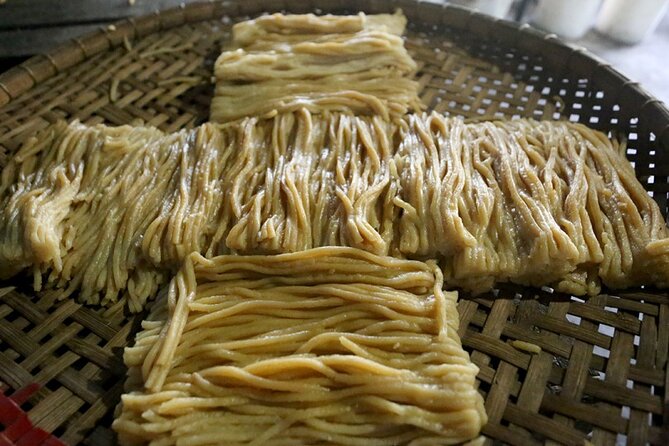
- Cam Kim Island and Vietnam’s noodle tradition
- Cua Dai Bridge over the Thu Bon River
- Cam Kim Island’s mat-weaving families
- Guides who make the morning work
- Is $49 a fair price?
- What to know before the 5:00 am start
- Who should book this Hoi An village tour?
- Should you book the Sunrise Tour to Hidden Local Villagers?
- FAQ
- What time does the tour start?
- How long does the experience last?
- How many people can join the tour?
- Is pickup offered?
- What places are visited?
- What local activities are included?
- Can I cancel for a full refund?
Key points at a glance
- 5:00 am departure: You get an early look at village life and avoid spending the whole day on a tour.
- Four local experiences: See fish sauce processing, noodle production, mat weaving, and the Thu Bon River near Cua Dai Bridge.
- Small group of up to eight: The size is useful for questions and easier contact with local producers.
- Four to five hours: The morning is full but not exhausting, leaving your afternoon open in Hoi An.
- $49 per person: The price is reasonable if you value direct contact with working families and a guide rather than major monuments.
- Free cancellation: Cancel at least 24 hours before the 5:00 am start for a full refund, subject to weather and minimum-group conditions.
Why this early Hoi An tour feels different
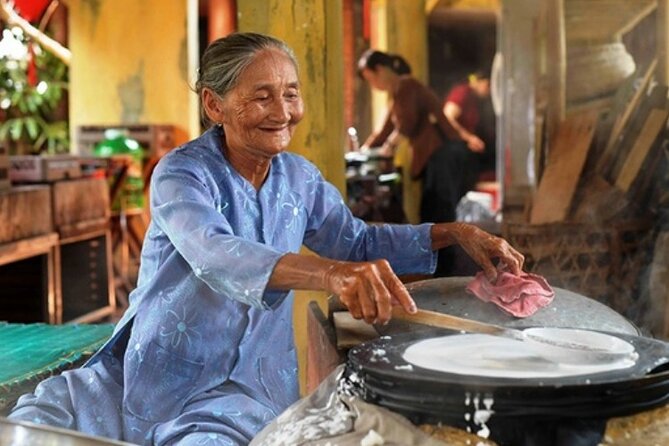
Hoi An is famous for its old town, lanterns, tailor shops, and riverside restaurants. Those are worthwhile, but they show only one side of the area. This morning trip takes you into nearby communities where work still follows family routines passed from one generation to the next.
The focus is not on grand sights. It is on small details: how fish sauce is prepared, how noodles are made, and how mats are woven in a village where most households depend on the craft. You get a better sense of how local people earn a living and why traditional skills need support even when they are not part of the main tourist circuit.
The early hour matters. At 5:00 am, you are seeing the day begin rather than arriving after everything has been arranged for visitors. The tour lasts about four to five hours, so you can still enjoy Hoi An later without giving up a full day.
The group limit of eight is another practical advantage. A large bus would change the mood at these family workplaces. With fewer people, the guide can explain more, and you have a better chance to ask about the work without turning each stop into a rushed photo call.
A few more Hoi An half-days to weigh up
- Hoi An: My Son Sanctuary Early Morning w. Champa Food Brunch
★ 4.9 · 2,750 reviews - My Son Sanctuary Morning Tour & Early Morning with Boat Trip
★ 5.0 · 645 reviews - Early Morning My Son Sanctuary Trip w. Champa Food & Coffee
★ 5.0 · 629 reviews
Duy Vinh and the work behind fish sauce
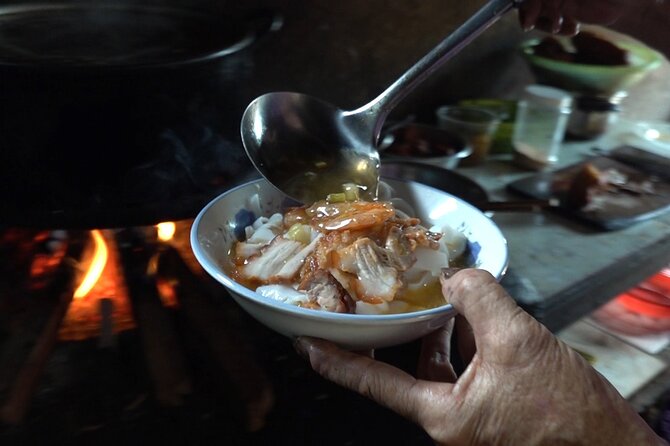
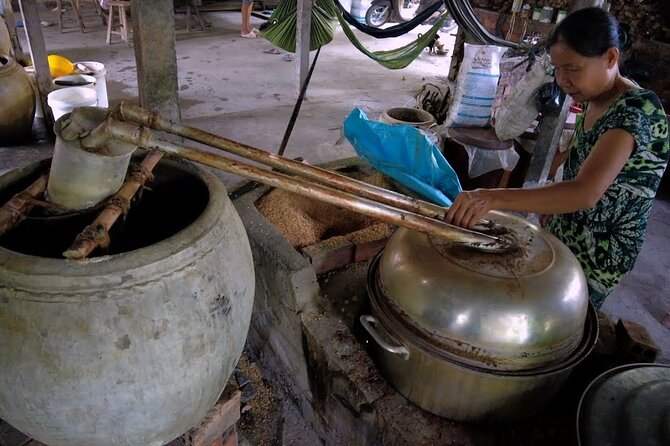
The first stop is Duy Vinh, where your guide introduces the making of fish sauce and the special processing used to produce its strong, savory flavor. This is a useful first lesson because fish sauce is one of the central tastes in Vietnamese cooking, yet many visitors encounter it only as a bottle on a restaurant table.
Here, the food is connected to a livelihood. You learn how a familiar condiment is prepared and why the method matters. The experience is likely to be most interesting if you enjoy food culture, local production, or the practical side of daily life.
Do not expect a staged cooking class or a long tasting session based on the information provided. The stop is built around explanation and observation. Fish sauce has a powerful smell, so you should be ready for a very direct sensory experience. That is part of the point, but it may not suit anyone sensitive to strong food aromas.
The guide’s role is important here. Billy and the other local guides are praised for explaining traditions in clear English and for helping visitors feel at ease around the people they meet. That makes a difference at a working site, where respectful behavior and a few well-timed questions are more valuable than simply taking pictures.
Cam Kim Island and Vietnam’s noodle tradition
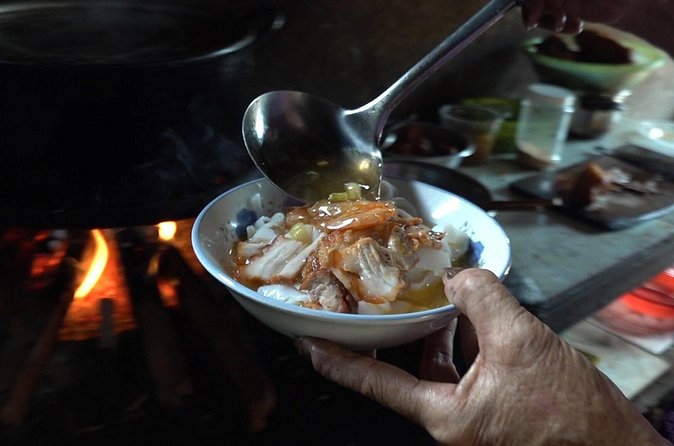
The next stop on Cam Kim Island looks at noodle making. Vietnam has many kinds of noodles, and this visit gives you a chance to connect that everyday food with the people who produce it.
The attraction is the process, not a famous landmark. You may see how a family occupation fits into the rhythm of village life and how a product sold across the country begins in a small local setting. The supplied details do not specify the exact noodle variety or promise a hands-on session, so you should treat this as a guided look at production rather than book it expecting a cooking lesson.
This is one of the tour’s strongest ideas: food is presented as work and tradition, not just something served to visitors. You can ask the guide about ingredients, methods, and the place of noodles in Vietnamese meals, though the exact depth of the discussion may depend on the guide and the people working that day.
The setting on Cam Kim Island also helps shift your attention away from Hoi An’s busy center. You are still close to town, but the subject is local enterprise rather than architecture and shopping. If you have already spent time in the old quarter, this stop gives your morning a useful change of pace.
Cua Dai Bridge over the Thu Bon River
The tour then includes an hour at Cua Dai Bridge. The bridge crosses the Thu Bon River and connects Hoi An City with Duy Xuyen District along a coastal road in Quang Nam Province.
This stop provides a break from the production visits. You get a chance to look across the river and understand the connection between Hoi An and the surrounding districts. It also gives the morning some visual variety after the more focused visits to food and craft workplaces.
The bridge is not presented as a major monument, and that is worth keeping in mind. You should not book this experience mainly for a landmark visit or a long sightseeing session here. Its value is in showing how the area is linked geographically and economically, with the river and road tying Hoi An to nearby communities.
The one-hour listing for each stop may not mean every minute is spent in a formal activity. Timing can vary depending on transport, conversations, and the pace of the morning. Still, Cua Dai Bridge helps prevent the experience from feeling like a series of indoor or workshop visits.
Same town, a completely different sort of day:
- Hoi An: Basket Boat Ride in the Coconut Forest
★ 4.9 · 4,956 reviews - Hoi An: Vietnamese Coffee Culture and Coffee Making Class
★ 4.9 · 4,006 reviews - Hoi An: Vietnamese Foldable Lantern Making Class
★ 4.9 · 3,742 reviews - Cooking Class Hoi An:Local Market, Basket Boat, Fishing & Cooking
★ 5.0 · 3,660 reviews
Cam Kim Island’s mat-weaving families
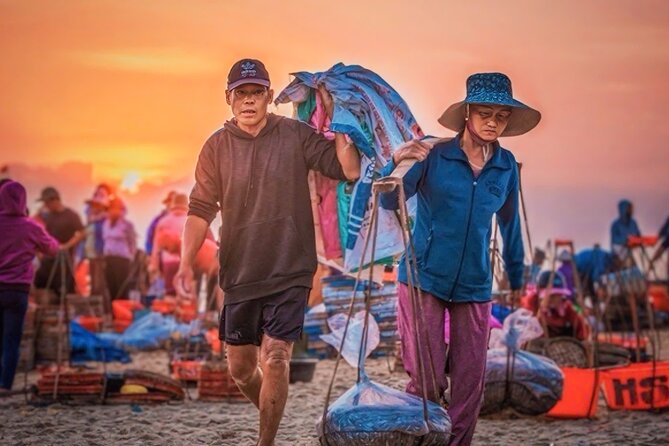
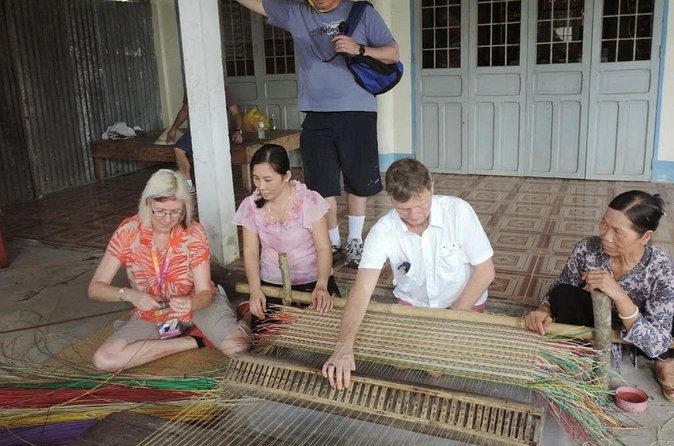
The final listed stop returns to Cam Kim Island, this time for traditional mat weaving. The village has about 200 households, and around 80 percent work in mat weaving. Together, they supply millions of mats each year in different designs and decorative patterns.
That scale makes the craft more than a small souvenir activity. Mat weaving is a major local occupation, and seeing it in that setting gives you a clearer idea of how a traditional skill can support a whole community. You are not just looking at an old technique preserved for display. You are seeing a product made for the market.
This stop should appeal to anyone interested in handmade goods, family businesses, and the practical side of Vietnamese culture. The patterns and designs also give the visit a visual element, but the real point is the labor behind them: repetition, skill, and a trade shared across many households.
The information does not say that you will make a mat yourself, so do not assume a craft workshop. Instead, expect the guide to explain the village’s work and introduce the people involved. The best approach is to watch closely and ask before photographing anyone or their workspace.
Guides who make the morning work
The guide can shape this experience more than any individual stop. Names associated with the tour include Billy, Hoa, Tham, Nhat, and Huong. The descriptions of their guiding style point to friendly communication, strong local connections, and a willingness to adjust when needed.
Hoa is singled out for kindness and a welcoming manner. Tham is described as helpful and clear in explaining the stops. Nhat is noted for being attentive and well informed about the local way of life. Billy is presented as an energetic host with strong English and broad knowledge of the area.
The operator has also arranged motorbike versions when requested, including two guides for a pair of guests. You should confirm the exact transport arrangement before booking, since the standard details only say that pickup is offered and do not spell out the vehicle used for every departure.
The most useful quality is the personal connection. The goal is not to rush you through a list of photo stops. It is to help you understand why these occupations still matter. That requires a guide who can translate not just language, but also local customs and working habits.
Is $49 a fair price?
At $49 per person, this is not the cheapest way to spend a morning in Hoi An. You are paying for pickup, a guide, a small group, and access to several local experiences over four to five hours. Admission is listed as free at each stop, so the value comes from the organization and the introductions rather than entrance tickets.
I think the price works best for you if you want context and conversation. If you only want a scenic ride or a quick list of sights, you may find better value by exploring independently. But arranging visits to family workplaces, reaching several communities before breakfast, and having a guide explain the work would be less simple to organize on your own.
The maximum group of eight strengthens the value. A small group allows more room for questions and avoids the detached feel of a large coach tour. It also makes the experience more respectful for the families you meet.
The tour has a five-star rating from 46 supplied ratings and a 100 percent recommendation figure. Those numbers suggest strong satisfaction, especially with the personal service and local focus, though you should still weigh the early start and the modest nature of the stops.
What to know before the 5:00 am start
The start time is the biggest practical issue. You need to be ready very early, and the tour is best suited to you if you can manage an early morning without turning the rest of your day into a recovery session.
Pickup is offered, and confirmation arrives when you book. The activity is near public transportation, and most people can participate. The group is capped at eight, which is helpful if you prefer a quieter outing and want a better chance to speak with the guide.
The exact meeting point details should be checked at booking because the supplied information gives the start time but does not name a single street address. It is also sensible to confirm the transport method, particularly if you are interested in the motorbike option mentioned by some participants.
Plan for a morning of observation rather than a formal attraction circuit. Wear practical clothing, bring a phone or camera if you want photos, and ask permission before photographing people at work. The point of the visit is to support understanding of local trades, so courtesy matters.
Free cancellation is available if you cancel at least 24 hours before the start time. Changes or cancellations inside that window are not refunded. The tour depends on good weather and a minimum number of people, so a cancellation by the operator can result in another date or a full refund.
Who should book this Hoi An village tour?
I would choose this for you if you have already seen the old town or want to pair famous Hoi An sights with a more personal morning. It suits people who enjoy food traditions, craft work, small communities, and conversations with local people.
It is also a good fit if you want a short excursion rather than a full-day trip. The four to five-hour length leaves time for lunch, shopping, or another activity. Families, couples, and solo visitors can all take part, since most people are able to participate and the group stays small.
You may want to skip it if you dislike early starts, strong food smells, or visits to working environments that are simple rather than polished. It is not designed around grand architecture, luxury transport, or a packed schedule of major attractions.
Should you book the Sunrise Tour to Hidden Local Villagers?
Book it if you want to understand how people around Hoi An work, not just how the town looks. The fish sauce stop in Duy Vinh, noodle production on Cam Kim Island, the Thu Bon River crossing, and the village’s large mat-weaving trade create a useful picture of local life.
The best reason to go is the combination of small size and human contact. Guides such as Billy, Hoa, Tham, Nhat, and Huong bring warmth and local understanding, while the early hour helps the visit feel connected to the working day.
Skip it if 5:00 am sounds punishing or if you want a conventional sightseeing tour. For everyone else, $49 buys a focused morning that reaches beyond Hoi An’s well-known center and leaves you with a clearer idea of the family trades supporting the region.
FAQ
What time does the tour start?
The tour starts at 5:00 am.
How long does the experience last?
It lasts approximately four to five hours.
How many people can join the tour?
The maximum group size is eight people.
Is pickup offered?
Yes, pickup is offered.
What places are visited?
The tour includes Duy Vinh, Cam Kim Island, and Cua Dai Bridge. Cam Kim Island appears twice in the schedule, once for noodle production and once for mat weaving.
What local activities are included?
You learn about fish sauce processing, Vietnamese noodle making, and traditional mat weaving. The tour also includes a visit to Cua Dai Bridge over the Thu Bon River.
Can I cancel for a full refund?
Yes. You must cancel at least 24 hours before the experience starts for a full refund. Cancellations within 24 hours are not refunded. If bad weather or an insufficient number of bookings causes the operator to cancel, you will be offered another date or a full refund.
Just added around Hoi An
- Hoi An City Tour–Boat Ride–Release Flower Lantern on river★ 5.0 · 3 reviews
- Hoian Old Town – Immersive Free Walking Tour★ 4.3 · 3 reviews
- Da Nang to Hoi An Transfer: Convenient Airport and City Transport★ 3.5 · 3 reviews
- Hoi An to Nha Trang by Private Car with Professional Driver★ 5.0 · 3 reviews
- Hoi An: Pottery Making Workshop With Local Craftsmen★ 5.0 · 3 reviews
- Hoi An:Cycling,Traditional Farming & Fishing Life Experience★ 4.0 · 3 reviews
- My Son Half Day Private Tour From Hoi An★ 4.5 · 3 reviews
- Hoi An/ Da Nang: Hue City Tour with HaiVan Pass★ 4.7 · 3 reviews
Morning, compared.

My Son Sanctuary Early Morning w. Champa Food Brunch
Read our review →
My Son Sanctuary Morning Tour & Early Morning with Boat Trip
Read our review →
Early Morning My Son Sanctuary Trip w. Champa Food & Coffee
Read our review →

My Son Early Morning with Banh My and Coffee 6 am
Read our review →
My Son Sanctuary Early Morning Tour 6 am w Banh my and Coffee
Read our review →