
Reviewed · HOI AN ANCIENT TOWN TOURS
Hoi An Ancient Town Tour: Japanese Covered Bridge & Old House from Hoi An
Hoi An’s famous Japanese Covered Bridge is the headline here, but it may not look like the picture you have in mind. Recent restoration work has covered much of the bridge and its approaches with steel construction, so you may see only small sections of the old structure. That is the main thing to know before you book.
I like the early start, which puts you at Hoi An Market while local sellers are handling fresh produce and seafood. I also like the small group limit of nine, plus the mix of architecture, pottery, and working handicrafts rather than a tour made up only of photo stops. The drawback is clear: if the bridge is your reason for coming, the current renovation can leave you disappointed.
In This Review
- Key points to know before booking
- Why the Japanese Bridge needs a reality check
- Starting early at Hoi An Market
- Cantonese Assembly Hall and the old Chinese quarter
- The Pottery Museum and local craft traditions
- Walking to the bridge and finishing with handicrafts
- What the six-hour format really gives you
- Group size, pickup, and practical value
- Is the listed price really free?
- The bridge problem and how to plan around it
- Who should book this Hoi An tour?
- Cancellation and weather notes
- Should you book it?
- FAQ
- What time does the tour start?
- How long does the experience last?
- Is pickup included?
- How large is the group?
- Is transportation provided?
- Is an English-speaking guide included?
- Is bottled water included?
- Is lunch included?
- Are entrance fees included?
- Can I cancel for a full refund?
Key points to know before booking
- The Japanese Covered Bridge may be under heavy restoration: Check its condition before paying, since recent construction has blocked much of the view.
- The 8:00 am start has a purpose: Hoi An Market is best visited early, when fresh goods are arriving and the heat is less tiring.
- The group is capped at nine people: That should make walking and asking questions easier than on a large coach tour.
- You see more than the bridge: The route includes a Chinese assembly hall, pottery museum, market, and handicraft workshop.
- Central Hoi An pickup is included: An air-conditioned vehicle, English-speaking guide, and bottled water are provided.
- Extra entrance fees are not covered: Budget separately for Hoi An Old Town, the Pottery Village, Basket Boat Ride, and Cam Thanh Village fees listed for the activity.
Why the Japanese Bridge needs a reality check

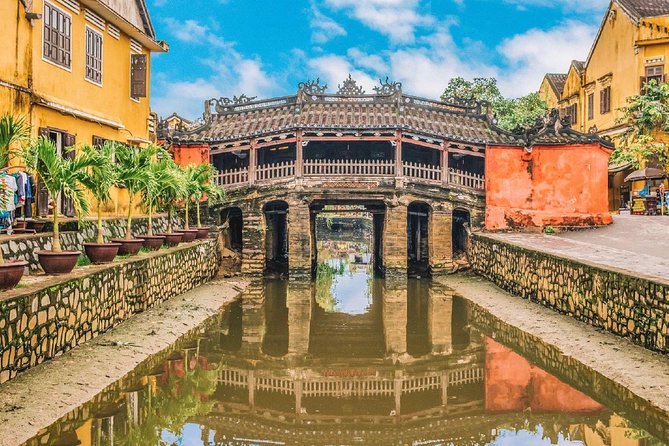
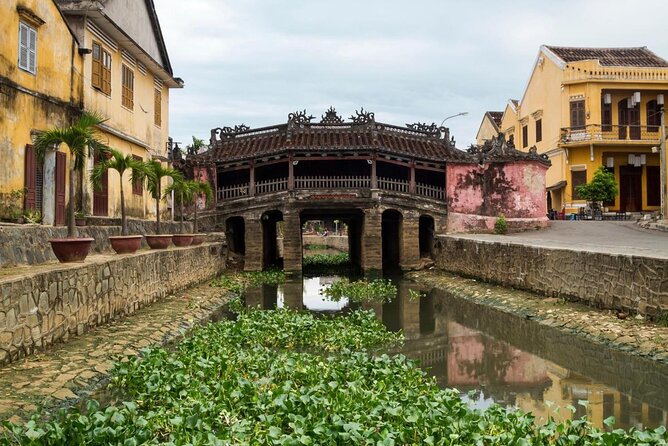
The Japanese Covered Bridge is one of Hoi An’s best-known sights. Its compact wooden form and covered roof make it an easy symbol of the old town, and the tour gives you time to reach it on foot, hear its story, and take photos.
The problem is not the bridge itself. It is the timing of your visit. Recent work has placed steel construction on both sides and obscured much of the monument. You can still pass through and catch glimpses of the structure, but the full view may be missing.
That matters because the tour presents the bridge as its central attraction. If restoration is still underway when you visit, treat this as a chance to see an important building in an imperfect moment, not as a guaranteed postcard stop. I would ask the operator about current conditions before booking, especially if you are visiting Hoi An for only a day.
The bridge’s story still gives the walking route useful context. It was built during the period of Japanese influence and once marked a division within the town. Today, that old line has become one of Hoi An’s most photographed meeting points. The contrast is interesting, even if construction limits the photographs.
More Ancient Town walks in Hoi An:
- Hoi An Ancient Town Walking Tour with a Local
★ 5.0 · 517 reviews - The Lantern Lady: Traditional Lantern Class in Old Town
★ 4.9 · 444 reviews - Hoi An Ancient Town – Walking Tour with Local Guide
★ 4.9 · 385 reviews
Starting early at Hoi An Market
The tour begins at 8:00 am, with pickup from central Hoi An. That early hour works well for the market stop. Local sellers start early, and the stalls feature fruit, vegetables, and seafood gathered that same morning.
I like market visits because they show how a place functions before the day is arranged for sightseeing. Here, you can look at the produce, watch local buying and selling, and get a feel for everyday Hoi An before moving into the preserved old quarter.
The market visit lasts about 30 minutes. That is enough time to look around without letting the first stop take over the morning. It is also short enough to suit you if you are not keen on markets or find the smells and close quarters tiring.
The admission fee is not included. The supplied information does not give the amount, so ask about the current cost before you set out. Bring small cash if the guide advises it, but do not assume any particular payment method unless confirmed.
Because the tour later includes several old-town sights, wear shoes you can walk in comfortably. The route is built around walking, and Hoi An’s appeal comes from moving through its lanes rather than simply being dropped beside each attraction.
Cantonese Assembly Hall and the old Chinese quarter
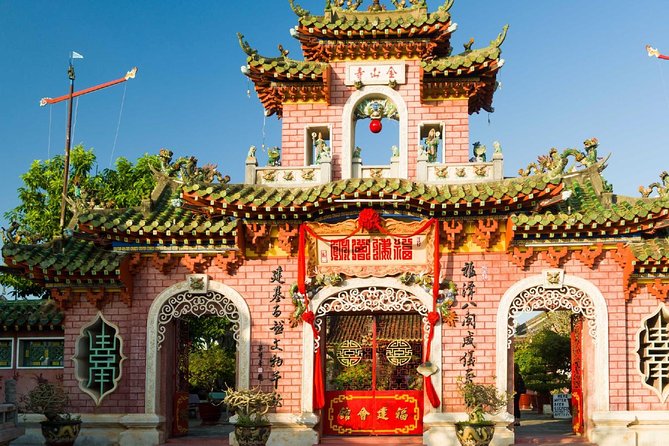
The next major stop is the Cantonese Assembly Hall, one of several Chinese and Japanese halls found around Hoi An. These buildings were created as gathering places for overseas communities and are known for traditional decoration and formal layouts.
Your English-speaking guide explains the building’s background and points out details that might otherwise blur together. That guidance is useful here. An assembly hall can look like a quick photo stop if you do not know what you are seeing, but its design reflects the community that built and used it.
You have about an hour for the assembly hall and the pottery museum visit. The exact split is not stated, so expect a compact introduction rather than a long, quiet museum session.
This is one of the stronger parts of the tour for anyone who wants some cultural context without committing to a full-day heritage program. You get architecture, stories, and a chance to ask questions. The small group size should help, since a group of nine is easier to keep together inside a decorated historic building than a large busload.
The entrance fee is not included. Hoi An Old Town admission is also listed separately, so confirm precisely which tickets your guide will collect or recommend. The price details supplied for this tour do not state the current amounts.
The Pottery Museum and local craft traditions
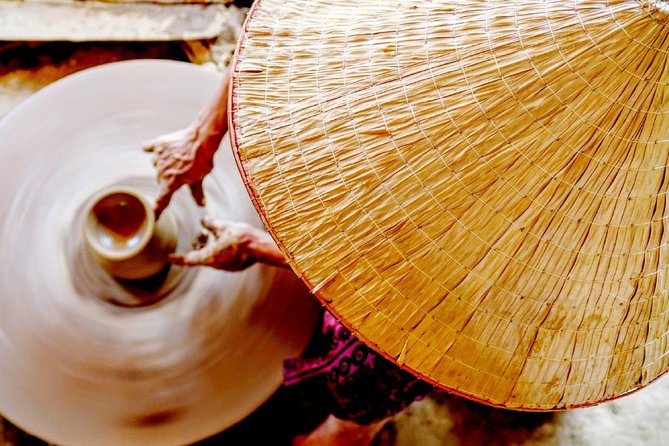
The pottery stop adds a hands-on trade to the morning. At the traditional pottery museum, you can learn about Hoi An’s ceramics industry and watch local people at work.
That is valuable because it connects the old town’s buildings to the people who make and sell goods today. Instead of seeing Hoi An only as a collection of restored façades, you get a look at a trade that supports the town’s identity and economy.
The wording for this stop refers to both a pottery museum and a Pottery Village admission fee. Make sure you understand whether the fee applies to the museum, a wider village visit, or both. The activity information does not spell out the exact ticket arrangement.
You may also have the chance to buy pottery or other souvenirs. Keep purchases practical. The tour includes a later handicraft visit, so you will have more than one opportunity to shop, and carrying bulky items for the rest of a six-hour outing is not ideal.
Same town, a completely different sort of day:
- Hoi An: Basket Boat Ride in the Coconut Forest
★ 4.9 · 4,956 reviews - Hoi An: Vietnamese Coffee Culture and Coffee Making Class
★ 4.9 · 4,006 reviews - Hoi An: Vietnamese Foldable Lantern Making Class
★ 4.9 · 3,742 reviews - Cooking Class Hoi An:Local Market, Basket Boat, Fishing & Cooking
★ 5.0 · 3,660 reviews
Walking to the bridge and finishing with handicrafts
The Japanese Covered Bridge stop and the handicraft tour together take about 1 hour and 45 minutes. This is the longest section in the stated route, giving you time to walk through the old town, see the bridge, and learn how local crafts are made.
The handicraft visit is not simply a shopping break. You learn how local people earn a living and can look at colorful souvenirs if you choose. That distinction matters. You can take part in the buying side, but the main point is seeing the work behind the objects.
The guide’s role is important here. With an English-speaking guide, you can ask what an item is used for, how it is made, and which parts are traditional. No guide name is supplied, so you should not expect to request a particular person.
The shopping element may not suit everyone. If you prefer museums and architecture, the craft portion can feel commercial. If you want a useful souvenir or like seeing local skills in action, it gives the morning a more grounded finish.
The tour also lists entrance fees for a Basket Boat Ride and Cam Thanh Village among the exclusions. Those activities are not described as part of the three main stops, so do not assume either is included in the standard program. Ask before booking if you are hoping to add them.
What the six-hour format really gives you
The listed stops account for roughly 3 hours and 15 minutes: 30 minutes at the market, 1 hour for the assembly hall and pottery museum, and 1 hour 45 minutes for the bridge and handicraft visit. The full experience lasts about six hours, so the remaining time likely allows for pickup, transport, walking between sites, and the pace of the group.
That makes this a broad introduction rather than a tightly packed museum tour. You see several sides of Hoi An, but you should not expect long visits at each place.
I see the timing as a good fit for a first look at the town. You get an early market, historic buildings, a famous bridge, and working crafts in one outing. It is less suitable if you want extended time for independent shopping, slow café stops, or close study of every hall and museum.
The air-conditioned vehicle is useful for pickup and any transfers, especially in warm weather. Much of the sightseeing is on foot, though, so the vehicle does not remove the need for comfortable clothing and shoes. Bottled water is included, but lunch is not.
Since no meal is provided, plan to eat after the tour or carry something suitable if your schedule requires it. Personal expenses are also excluded, including souvenirs and any other purchases.
Group size, pickup, and practical value
The maximum group size is nine. That is a meaningful feature in Hoi An, where narrow lanes and popular old-town sights can make a large group awkward. A small group also gives you a better chance to hear the guide and ask about details at the assembly hall or craft stop.
Pickup and drop-off are offered from central Hoi An. The exact meeting point and drop-off boundaries should be confirmed when you book, since central-area service does not necessarily mean every hotel or neighborhood is covered.
The tour begins at 8:00 am. Be ready before then, since a late start could shorten the market visit or create delays for everyone else. Confirmation is provided at booking, and the activity is near public transportation, which gives you another way to reach the starting area if needed.
Most people can take part, according to the supplied information. Still, this is a walking-focused outing with several stops in the old town. If you have specific mobility needs, ask the operator about the route before booking rather than relying only on the general participation note.
Is the listed price really free?
The supplied price shows $0.00 per person. That is unusual for a six-hour guided tour with central pickup, an air-conditioned vehicle, an English-speaking guide, and bottled water.
I would not treat the zero price as a final assumption. Confirm the live price and ask which costs are charged separately. Entrance fees for Hoi An Old Town and the Pottery Village are excluded, as are the Basket Boat Ride and Cam Thanh Village fees listed in the exclusions. Lunch, personal spending, and souvenirs are also extra.
If the tour is genuinely free at the time you book, the included transport and guide would make it exceptional value, even with admission fees added. If the displayed amount is only a placeholder, compare the final total with other small-group Hoi An tours that cover similar sights.
Value here depends less on the number of stops than on what you want from Hoi An. You are paying, if a charge applies, for a guided overview and easy transport. You are not paying for a long, private visit at the bridge or a meal.
The bridge problem and how to plan around it
All three available comments focus on the same issue: the bridge was difficult to see because of renovation. One description notes steel construction on both sides, while another says only small pieces of the monument were visible.
That consistent warning deserves more weight than a generic promise of bridge photos. Ask these questions before booking:
- Is the bridge still covered in construction equipment?
- Can the group walk through it?
- Will the guide substitute another old-town sight if the view is blocked?
- Are entrance fees adjusted if access changes?
The operator’s responses acknowledge the disappointment but do not provide a restoration end date or a replacement plan. You should therefore book for the full old-town route, not for a guaranteed clear view of the bridge.
The good news is that the wider town remains the stronger part of the experience. You can still walk the lanes, visit the assembly hall, see the market, learn about pottery, and browse handicrafts. One comment also highlights the pleasure of simply getting lost among Hoi An’s alleys, shops, museums, pagodas, temples, tea stops, coffee shops, and local food. This tour gives you a guided version of that wider experience.
Who should book this Hoi An tour?
I would recommend it to a first-time visitor who wants an organized introduction and prefers a small group. It suits you if you want a guide to explain the old town rather than spending the morning figuring out each building alone.
It is also a sensible choice for anyone interested in local trades. The pottery and handicraft stops add more substance than a simple walk from one photo point to another.
Families and mixed-age groups may appreciate the six-hour format, central pickup, air-conditioned vehicle, and bottled water. The fact that most people can participate is reassuring, though you should still confirm route details if walking is difficult.
I would hesitate if your top priority is a perfect Japanese Bridge photograph. Renovation has already caused major disappointment, and the current condition is not guaranteed to improve by your visit.
I would also hesitate if you want a food-focused tour. The market offers a look at ingredients and daily trade, but lunch is not included, and no tasting program is described.
Cancellation and weather notes
You can cancel free of charge up to 24 hours before the 8:00 am start for a full refund. Changes or cancellations made less than 24 hours before departure are not accepted for a refund, and the cut-off follows local Hoi An time.
The activity requires good weather. If poor weather causes the operator to cancel, you are offered another date or a full refund. That policy is useful in Hoi An, where a wet morning can make a walking tour less pleasant.
Should you book it?
Book this tour if you want a practical six-hour introduction to Hoi An, value a group of no more than nine, and are happy to combine historic buildings with market life and local crafts.
Do not book it solely for the Japanese Covered Bridge. Restoration has obscured the structure, and the available information gives no firm date for a clear view. Before paying, confirm the current bridge condition, the final price, and all admission fees.
For the right visitor, the bridge is only one piece of a useful morning. The market, assembly hall, pottery work, and handicrafts give you a better sense of how Hoi An lives beyond its most famous photograph.
FAQ
What time does the tour start?
The tour starts at 8:00 am.
How long does the experience last?
The tour lasts approximately six hours.
Is pickup included?
Yes. Pickup and drop-off are offered from central Hoi An.
How large is the group?
The maximum group size is nine people.
Is transportation provided?
Yes. An air-conditioned vehicle is included.
Is an English-speaking guide included?
Yes. The tour includes an English-speaking guide.
Is bottled water included?
Yes. Bottled water is included.
Is lunch included?
No. Lunch is not included.
Are entrance fees included?
No. Entrance fees are excluded. The listed exclusions include Hoi An Old Town, Pottery Village, Basket Boat Ride, and Cam Thanh Village fees.
Can I cancel for a full refund?
Yes, if you cancel at least 24 hours before the experience start time. Cancellations made less than 24 hours before the start are not refunded. If poor weather causes the operator to cancel, you are offered another date or a full refund.
Just added around Hoi An
- Hoian Old Town – Immersive Free Walking Tour★ 4.3 · 3 reviews
- Da Nang to Hoi An Transfer: Convenient Airport and City Transport★ 3.5 · 3 reviews
- Hoi An City Tour–Boat Ride–Release Flower Lantern on river★ 5.0 · 3 reviews
- Hoi An to Nha Trang by Private Car with Professional Driver★ 5.0 · 3 reviews
- Hoi An: Pottery Making Workshop With Local Craftsmen★ 5.0 · 3 reviews
- Hoi An:Cycling,Traditional Farming & Fishing Life Experience★ 4.0 · 3 reviews
- My Son Half Day Private Tour From Hoi An★ 4.5 · 3 reviews
- Hoi An/ Da Nang: Hue City Tour with HaiVan Pass★ 4.7 · 3 reviews
Hoi An Ancient Town Tours, compared.


The Lantern Lady: Traditional Lantern Class in Old Town
Read our review →
Hoi An Ancient Town – Walking Tour with Local Guide
Read our review →
Hoi An Night Market – Ancient Town street food tours by Night
Read our review →
Hoi An Ancient Town – Night Market Street Food Tours By Night
Read our review →

PRIVATE Hoi An Ancient Town – Night Market Street Food By Night
Read our review →
Hoi An Ancient Town Walking Street Food Tours with Night Market
Read our review →Browse the lists this tour appears in