
Reviewed · HOI AN CRAFT VILLAGE WORKSHOPS
Hoi An: Experience Pottery Making With Local Craftsmen
Thanh Ha pottery village gives you something Hoi An’s lantern-lined streets cannot: a chance to make an object with your own hands. For about $7, you sit with local craftspeople, shape clay on a turntable, and leave with a personal souvenir rather than another shop-bought trinket.
I like the family-home setting, which feels relaxed and personal, and the chance to paint your finished pieces after shaping them. The main catch is timing: 20 minutes is the advertised class length, but it may not leave enough room for painting, so keep an hour or more free.
In This Review
- Key points to know
- Why this small pottery class is worth your time
- Arriving at Nguyen Sau Experience House
- Watching the local pottery method
- Making your own mug, bowl, or small piece
- Painting turns the class into a proper keepsake
- Exploring Thanh Ha after the workshop
- What the $7 price really gives you
- Who will enjoy this workshop most
- Practical advice before you book
- Should you book this Hoi An pottery experience?
- FAQ
- Where does the pottery-making activity meet?
- How long does the pottery class last?
- What will I make during the workshop?
- Can I paint the pottery I make?
- Is a souvenir included in the price?
- Is the Thanh Ha Village entrance fee included?
- Is the activity conducted in English?
- Can wheelchair users join the activity?
Key points to know
- You work in a local family workshop: The activity takes place in the home of local craftspeople in Thanh Ha pottery village.
- The 20-minute session can become much longer: Many people stay 45 to 90 minutes while making and painting several pieces.
- You receive a handmade souvenir: Your own mug, bowl, or other pottery piece is included.
- English is limited: Instruction is in Vietnamese, but demonstrations and hands-on help make the process accessible.
- Village admission costs extra: Thanh Ha Village entrance is 35,000 Vietnamese dong per person.
- The best value comes from taking your time: A rushed visit may cover shaping but leave no time to paint.
Why this small pottery class is worth your time
Thanh Ha is only a short distance from Hoi An Ancient Town, yet the mood changes quickly. Instead of shops and sightseeing crowds, you find a traditional craft village with quiet lanes, family workshops, and the steady work of clay being shaped by hand.
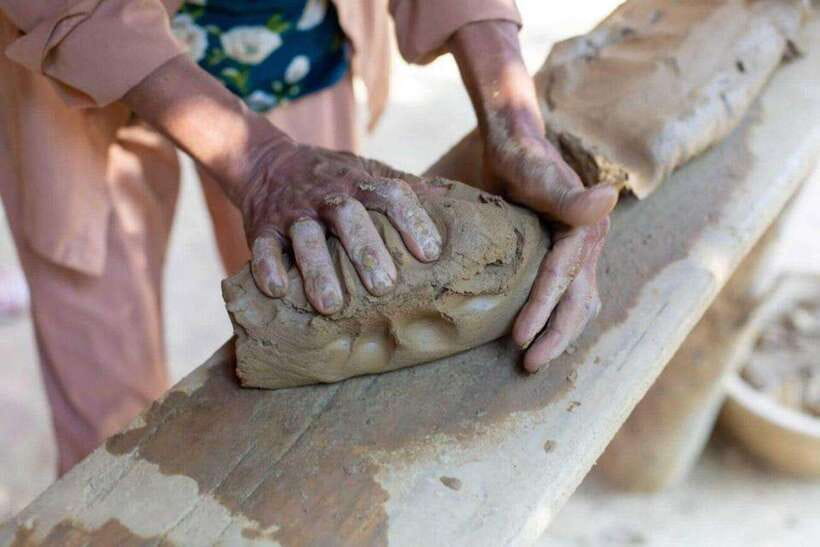
I like this experience because it gives you a plain, useful look at local life. You are not only looking at finished pottery on a shelf. You sit beside the person who makes it, watch the method, and try the same basic movements yourself.
The price is modest. At $7 per person, the class costs little compared with many organized activities around Hoi An. The value improves if you stay long enough to make and paint more than one piece. You are paying for instruction, clay, use of the equipment, and a souvenir you helped create.
The setting also suits people who want a break from formal sightseeing. You sit, concentrate, laugh at uneven shapes, and work at a slower pace. It is a particularly good choice for families, couples, and anyone who prefers a hands-on activity to another temple or museum visit.
The experience is not a full pottery course. You will not master the craft in one short session, and the advertised 20 minutes is better viewed as the minimum time for the activity. If you have a tight schedule, you may need to leave before your work is painted.
More craft village workshops in Hoi An:
- Thanh Ha Village: Pottery Workshop with Locals
★ 4.4 · 223 reviews - Hoi An: Thanh Ha Village Tour with Pottery Making and Gift
★ 4.8 · 78 reviews - Hoi An: Handmade Leather Crafts Workshop (Starter Course)
★ 4.9 · 71 reviews
Arriving at Nguyen Sau Experience House
Your meeting point is Nguyen Sau Experience House in Thanh Ha pottery village. Hotel pickup and drop-off are not included, so you arrange your own way there. You also need to pay the separate village entrance fee of 35,000 Vietnamese dong per person.
Bring the WhatsApp number you use when booking. It is requested for easier contact, which is helpful when you are finding a small workshop rather than a large tour office.
At the workshop, a local craftsperson welcomes you into the family home. The atmosphere is informal. You are not entering a polished classroom with rows of equipment and a formal lecture. Instead, you sit close to the people who make the pottery and learn by watching what their hands do.
English communication is limited, and the instructor is Vietnamese-speaking. That matters if you expect a detailed spoken explanation of clay types, kiln temperatures, or the history of every pottery form. The practical lesson works better because the demonstration is clear and help is given directly as you shape the clay.
I recommend arriving with patience. Watch the demonstration closely, copy the movement, and use gestures when needed. The language gap is part of the character of the visit, but it can also slow down instructions if you need a lot of verbal explanation.
Watching the local pottery method
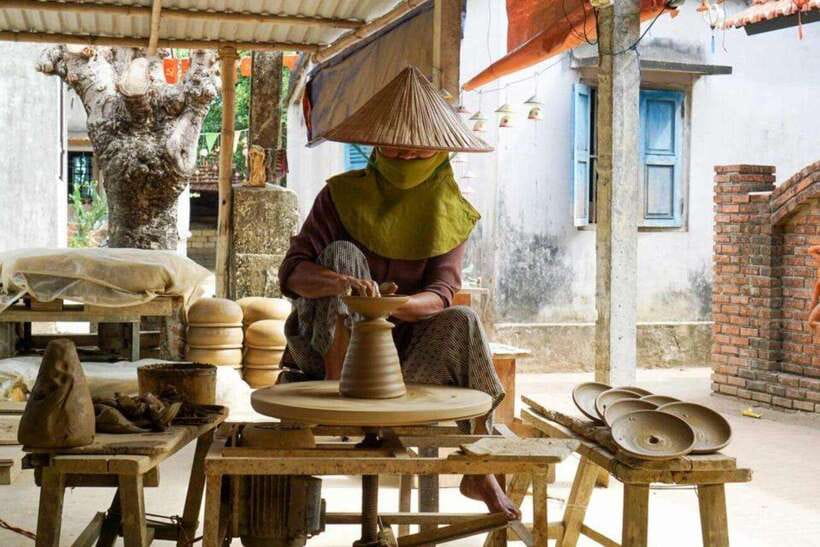
The class begins with an introduction to local pottery products. You can then watch the craftsperson demonstrate different shapes before choosing what to make.
Reported finished pieces include mugs, bowls, and other small pottery products. You may also be shown several styles and forms, then select one to try. The exact result depends on your hands, the help you receive, and how much time you spend at the turntable.
The important point is that you are not left to struggle alone. The local craftsperson guides your hands and helps correct the shape. That makes the class suitable for children and first-time pottery makers, including people who do not normally choose craft activities.
Do not expect your first bowl to come out perfectly even. That is part of the fun. A small tilt or lopsided rim gives the piece a personal mark, while the local maker’s help keeps the result recognizable and usable as a souvenir.
One practical consideration is that the time at the turntable can feel short if you are trying to make several items. One person found the pottery-wheel portion rushed. If using the turntable is your main reason for booking, avoid adding another tightly scheduled activity immediately afterward.
Making your own mug, bowl, or small piece
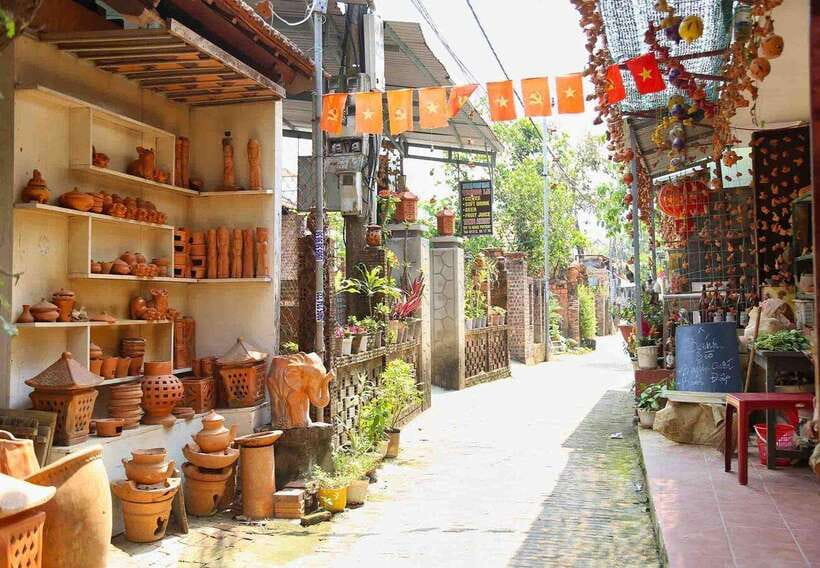
Once you begin, the activity becomes more physical than it first appears. You have to pay attention to pressure, shape, and balance. Too much force can change the form quickly, while too little may leave you unsure how to build it.
The craftsperson steps in when needed. You might start with one shape, then make another if time allows. Some people have made three pieces and painted them during a longer visit. Others have taken home two pieces each after spending about an hour at the workshop.
The class is well suited to mixed-age families. Children can see an immediate result from their work, while adults get a pleasant, low-pressure task. Older children and teenagers may enjoy choosing shapes and colors, and younger children can take part with close help from an adult and the craftsperson.
You should also know that the included arrangement is one souvenir made by yourself. Extra pieces may involve an additional payment. Clarify this at the workshop if you want to keep several items, since the basic price should not be treated as a promise that every piece you make is included.
The most enjoyable approach is not to chase a perfect object. Let the local maker show you the basic method, then accept that your piece will look handmade. That is exactly why it makes a better memory than a standard souvenir from a market stall.
Same town, a completely different sort of day:
- Hoi An: Basket Boat Ride in the Coconut Forest
★ 4.9 · 4,956 reviews - Hoi An: Vietnamese Coffee Culture and Coffee Making Class
★ 4.9 · 4,006 reviews - Hoi An: Vietnamese Foldable Lantern Making Class
★ 4.9 · 3,742 reviews - Cooking Class Hoi An:Local Market, Basket Boat, Fishing & Cooking
★ 5.0 · 3,660 reviews
Painting turns the class into a proper keepsake
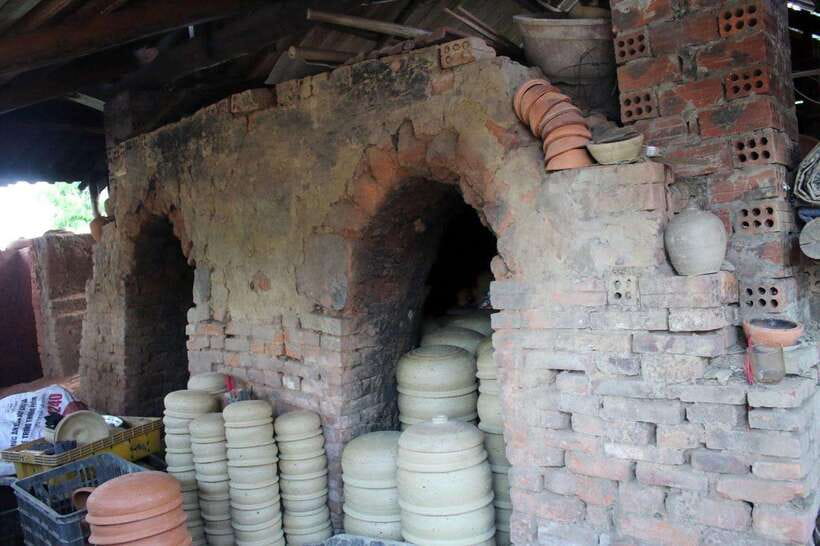
Shaping the clay is only half the appeal. After making your piece, you may have the chance to paint it. The painting stage is where you can add a personal touch, especially if your first shape looks simple.
Allow enough time for this part. A 20-minute booking may cover the introduction and basic pottery work, but it can leave little room for painting. People who stayed 45 minutes to 90 minutes had time to make more objects and work on the finish without being hurried.
If you have another booking afterward, tell yourself that the pottery session may run beyond the stated duration. The workshop is relaxed, and the craftsperson may let you continue painting rather than pushing you out at the 20-minute mark. That is a benefit, but it requires space in your schedule.
The activity information promises a little gift as well as the piece you make. The central souvenir, though, is the pottery you shape yourself. Keep in mind that drying or firing details are not specified, so ask locally if you need to know exactly how and when a piece can be taken home.
Exploring Thanh Ha after the workshop
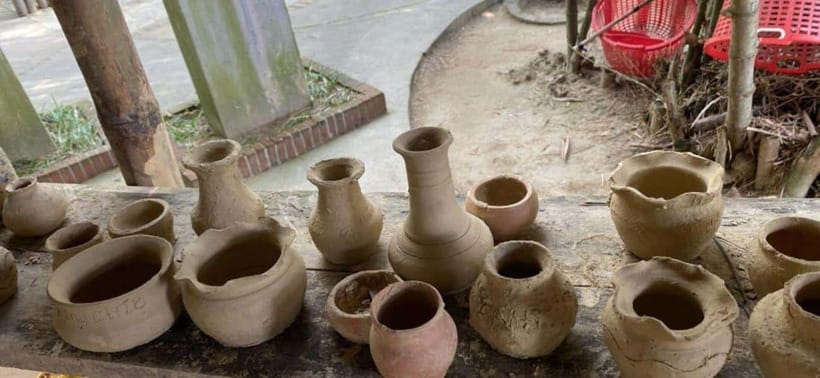
When your class ends, you can walk around the pottery village on your own. This is a good reason not to treat the session as a quick stop with no time on either side.
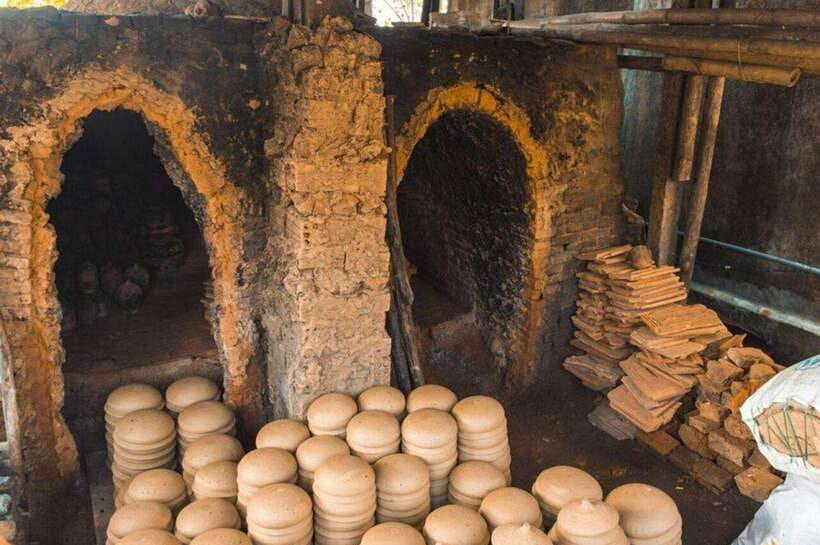
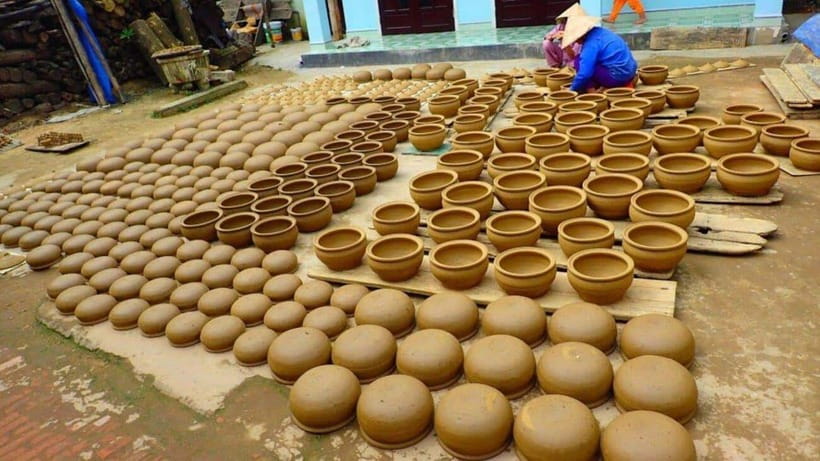
Thanh Ha has existed as a pottery village for centuries, and its value comes from seeing craft as part of daily community life rather than as a staged performance. You can look at local pottery products, enjoy the quiet, and watch the village’s traditional craft setting.
Two nearby religious and community sites are specifically suggested for a self-guided visit: Xuan My Communal House and Nam Dieu Temple, associated with the founders of the pottery tradition. These stops add context to the workshop, though entrance arrangements and visiting details are not provided here.
I would plan the pottery session as part of a wider village visit. The class itself may take 20 minutes at minimum, but the village deserves a slower pace. If you rush in, make one object, and rush out, you miss much of what makes the setting different from a craft demonstration inside Hoi An town.
What the $7 price really gives you
At $7 per person, this is an inexpensive activity. The cost covers the pottery-making experience and one souvenir made by you. That is strong value if you want a simple cultural activity with something tangible to take home.
The price does not include admission to Thanh Ha Village, which costs 35,000 Vietnamese dong per person. It also excludes transport, food, drinks, personal spending, and anything else not listed.
The activity becomes especially good value for families. Each person can take part, and the workshop does not depend on advanced skills. It is also a useful option on a day when you want something short and affordable, provided you understand that the actual visit may run well beyond 20 minutes.
You should not book it purely for speed. The stated duration is useful when checking availability, but it is not a reliable limit. If you want to make several items or paint carefully, budget about an hour or more.
The flexible cancellation policy also reduces the risk of booking ahead. You can cancel up to 24 hours before the activity for a full refund, and the reserve-now, pay-later option lets you keep your plans open. Starting times depend on availability, so check the current schedule when booking.
Who will enjoy this workshop most
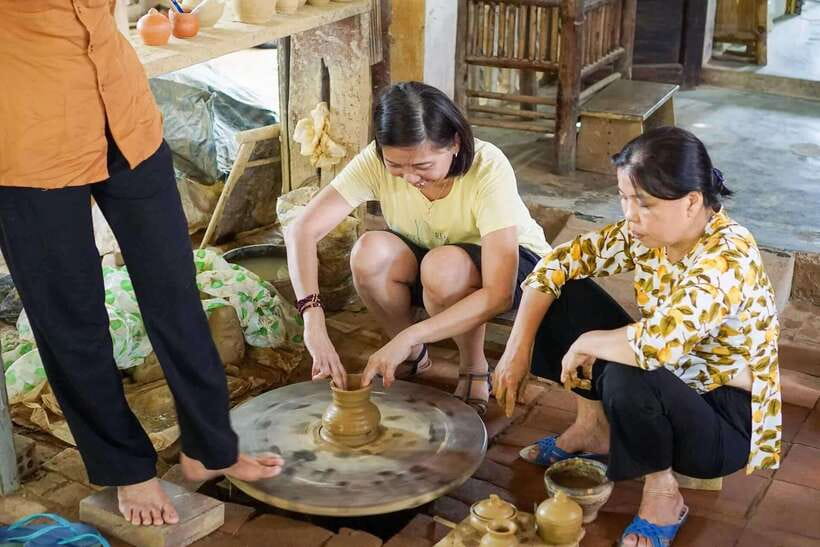
I would recommend this experience to:
- Families with children and teenagers who enjoy making things
- Couples looking for a quiet shared activity
- First-time pottery makers
- People seeking an affordable souvenir with a personal story
- Anyone who wants to see a traditional craft in a local home
- Visitors with enough free time to stay beyond the listed 20 minutes
It is less suitable if you need a fast, highly structured class in fluent English. The instructor speaks Vietnamese, and the workshop relies on demonstration and hands-on guidance. You may need to watch carefully and communicate with gestures.
It is also not suitable for wheelchair users, according to the activity information. No detailed accessibility information is provided beyond that restriction, so contact the provider if you have other mobility needs.
Practical advice before you book
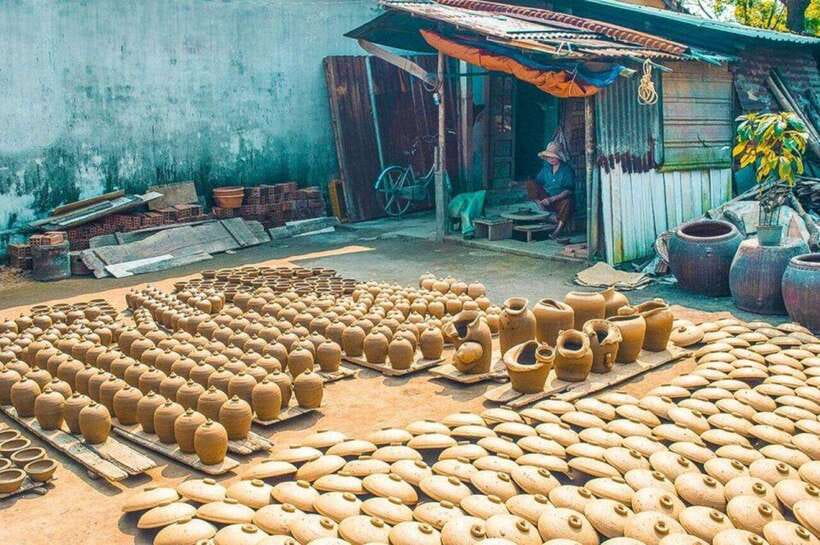
Leave a clear block of time after the official start. I would allow at least 45 minutes if painting matters to you, and longer if you want several pieces. Families in particular should avoid scheduling this directly before a meal, transfer, or ticketed attraction.
Wear clothes you do not mind getting dusty or marked with clay. The supplied details do not promise aprons or other protective clothing, so it is sensible to dress for a hands-on craft session.
Bring your WhatsApp contact details and confirm the meeting point before setting out. Since there is no hotel pickup, you are responsible for reaching Nguyen Sau Experience House.
Ask about the souvenir arrangement if you make several objects. One piece is included, while extra items may cost more. Also ask about painting and collection arrangements if you need to leave at a fixed time.
Most of all, do not judge the experience by the 20-minute label alone. The shortest version is a quick introduction and a basic pottery attempt. The better version gives you time to watch, try different shapes, paint, and enjoy the family workshop without looking at your phone every few minutes.
Should you book this Hoi An pottery experience?
Yes, if you want a low-cost, personal activity near Hoi An and can spare more than the advertised 20 minutes. The strongest parts are the family-home setting, patient hands-on help, and the chance to leave with pottery you made and painted yourself.
Book it with realistic expectations. English is limited, the class is informal, the turntable time may feel brief, and the village entrance fee is extra. If you need a polished lesson with detailed English instruction, this may not be the right fit.
For families, couples, and curious first-time makers, I think it is an easy choice. Keep your schedule loose, pay the village admission fee, and treat the finished piece as a charming reminder of time spent learning a local craft.
FAQ
Where does the pottery-making activity meet?
The meeting point is Nguyen Sau Experience House in Thanh Ha pottery village, near Hoi An Ancient Town.
How long does the pottery class last?
The listed duration is 20 minutes. You can extend your time if you want to finish your product, and the visit may last 45 to 90 minutes when you make and paint several pieces.
What will I make during the workshop?
You can make a pottery product such as a mug, bowl, or another small item. The local craftsperson demonstrates different shapes and helps you during the process.
Can I paint the pottery I make?
Yes. Painting is available after you shape your piece, but you should allow extra time beyond the listed 20-minute duration.
Is a souvenir included in the price?
One souvenir made by yourself is included. Additional pieces may require an extra payment.
Is the Thanh Ha Village entrance fee included?
No. The entrance ticket costs 35,000 Vietnamese dong per person and is paid separately.
Is the activity conducted in English?
The instructor speaks Vietnamese, and English communication is limited. You learn mainly through demonstrations and direct hands-on help.
Can wheelchair users join the activity?
No. The activity is listed as unsuitable for wheelchair users.
Just added around Hoi An
- Hoi An City Tour–Boat Ride–Release Flower Lantern on river★ 5.0 · 3 reviews
- Hoian Old Town – Immersive Free Walking Tour★ 4.3 · 3 reviews
- Da Nang to Hoi An Transfer: Convenient Airport and City Transport★ 3.5 · 3 reviews
- Hoi An to Nha Trang by Private Car with Professional Driver★ 5.0 · 3 reviews
- Hoi An: Pottery Making Workshop With Local Craftsmen★ 5.0 · 3 reviews
- Hoi An:Cycling,Traditional Farming & Fishing Life Experience★ 4.0 · 3 reviews
- My Son Half Day Private Tour From Hoi An★ 4.5 · 3 reviews
- Hoi An/ Da Nang: Hue City Tour with HaiVan Pass★ 4.7 · 3 reviews
Hoi An Craft Village Workshops, compared.
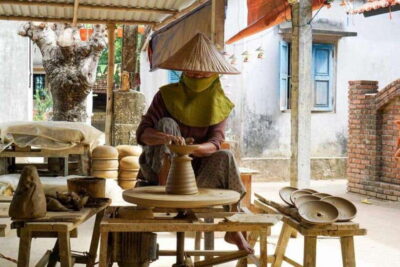
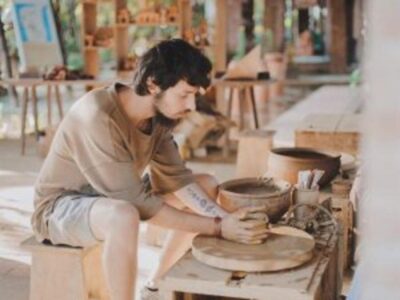
Thanh Ha Village Tour with Pottery Making and Gift
Read our review →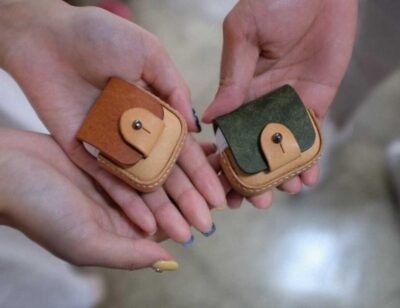
Handmade Leather Crafts Workshop (Starter Course)
Read our review →
Discover Traditional Silk Process in Hoi An Silk Village
Read our review →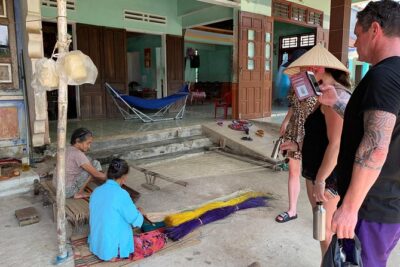
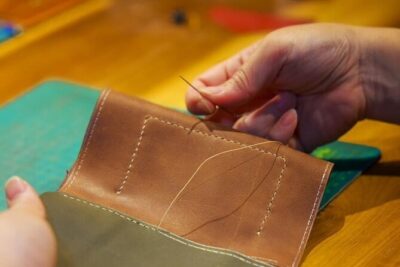
Discover Leather Workshops Experience in Old Town Hoi An
Read our review →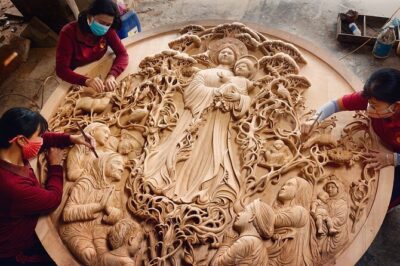
Hoi An Wood Carving: Create Your Art Wood with Master Artisan
Read our review →
Hoi An Ceramic/Pottery/Lantern Making Class Cafe & Basket Boat
Read our review →Browse the lists this tour appears in