
Reviewed · HOI AN CRAFT VILLAGE WORKSHOPS
Hoi An: Thanh Ha Village Tour with Pottery Making and Gift
Thanh Ha’s appeal is simple: you do not just look at Vietnamese pottery behind glass, you get clay under your fingers. This two-hour visit takes you through a 500-year-old pottery village, its Terracotta Park, local workshops, and Xuan My Temple before handing you a small piece of clay to shape and decorate.
I like the mix of museum learning and village walking, which gives the craft a cultural setting instead of treating pottery as a stand-alone workshop. I also like the cheerful pot-breaking game and the included drink, cookies, and terracotta gift. The main consideration is that this is a beginner activity, not a serious pottery course, and the village roads and museum areas are not suitable for wheelchair users.
In This Review
- Key points at a glance
- Why Thanh Ha is worth your Hoi An time
- Starting at Terracotta Park
- Walking the old pottery village
- Xuan My Temple and the village’s beliefs
- Coconut coffee, cookies, and a short pause
- Making a simple pottery piece
- The traditional pot-breaking game
- What the $23 price really includes
- Who will get the most from this tour
- Practical tips before you go
- Should you book the Thanh Ha Pottery Village tour?
- FAQ
- How long does the Thanh Ha Pottery Village tour last?
- How much does the tour cost?
- Where do I meet the guide?
- Is hotel pickup included?
- What places are included in the visit?
- Do I need pottery-making experience?
- Can I take home the pottery I make?
- Are food and drinks included?
- Is the tour suitable for wheelchair users?
Key points at a glance
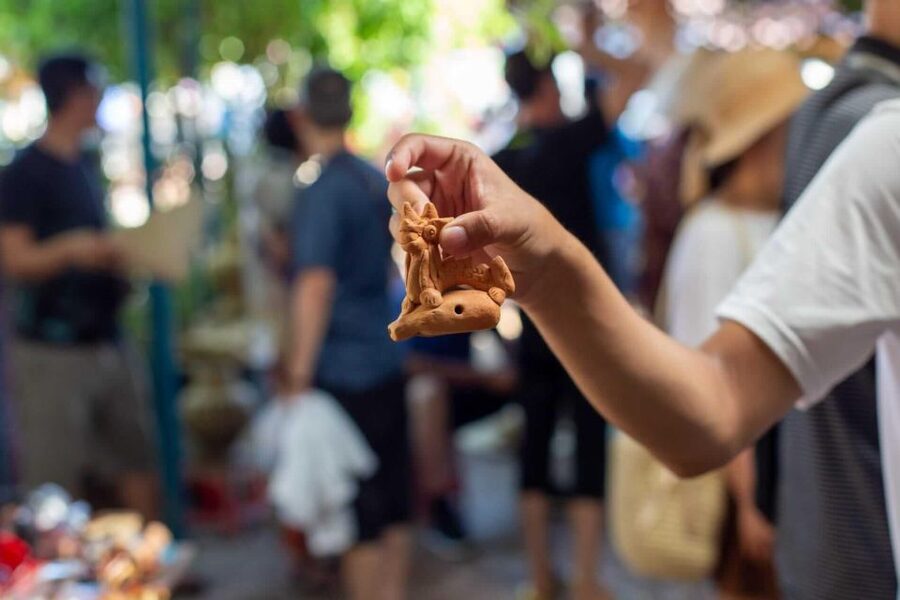
- A hands-on pottery session: Shape a simple piece with help from a local potter, then decorate it and take it home.
- A 500-year-old village setting: Walk along narrow brick roads and alleys while seeing pottery made in local homes and workshops.
- More than a workshop: The visit includes Terracotta Park, the Terracotta Gallery and Museum, the Thanh Ha Village Museum and History, and Terracotta Mini Square.
- Xuan My Temple adds local meaning: Learn why this community temple matters to the villagers and their beliefs.
- A playful finish: Try the traditional pot-breaking game, an easygoing activity that gives the tour some comic relief.
- Strong value at $23: Tickets, an English-speaking guide, pottery making, refreshments, a gift, and the game are all included.
Why Thanh Ha is worth your Hoi An time
Hoi An is famous for its old town, lantern-lit streets, tailor shops, and riverside dining. Thanh Ha gives you a different view of local life. Here, the focus is not on restored merchant houses or busy sightseeing streets, but on an old craft that still shapes the identity of a community.
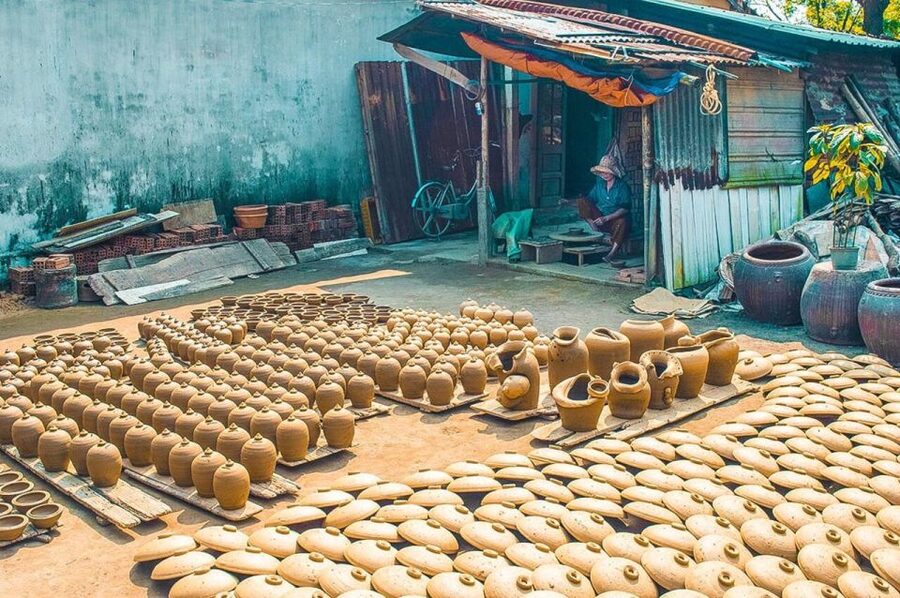
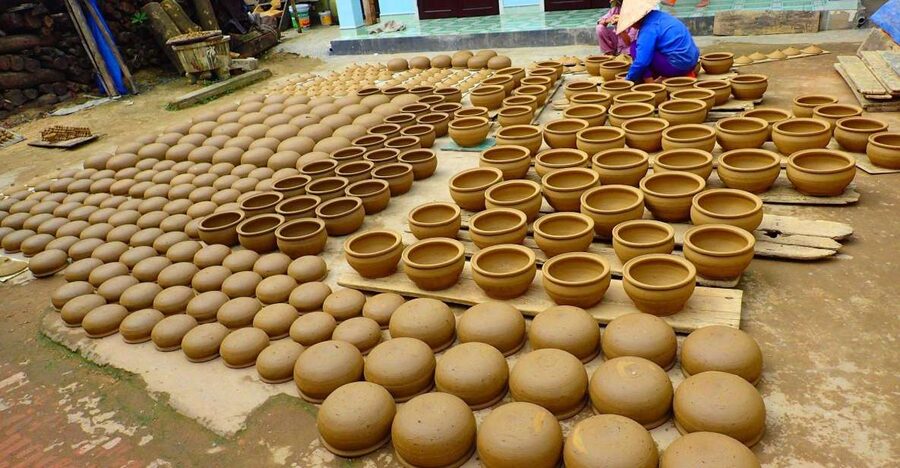
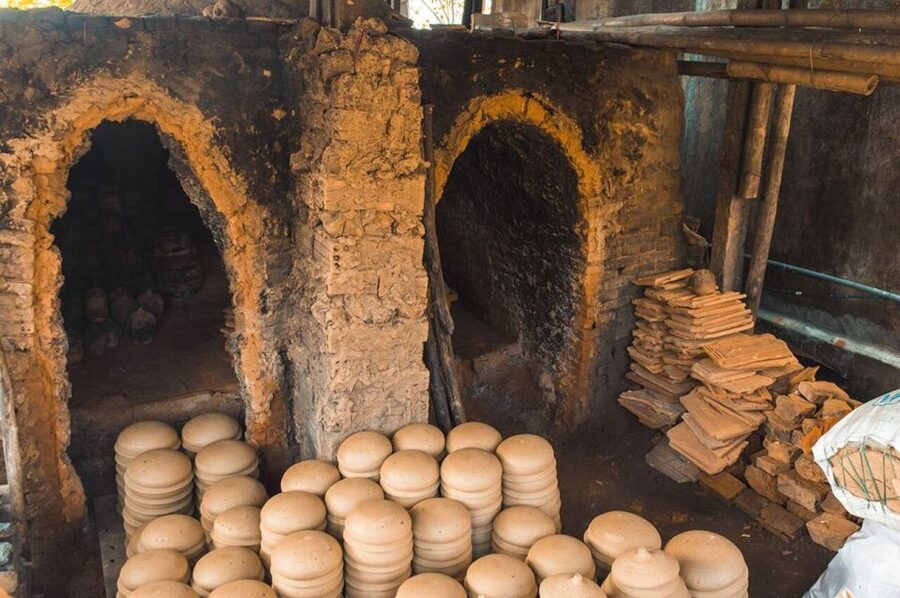
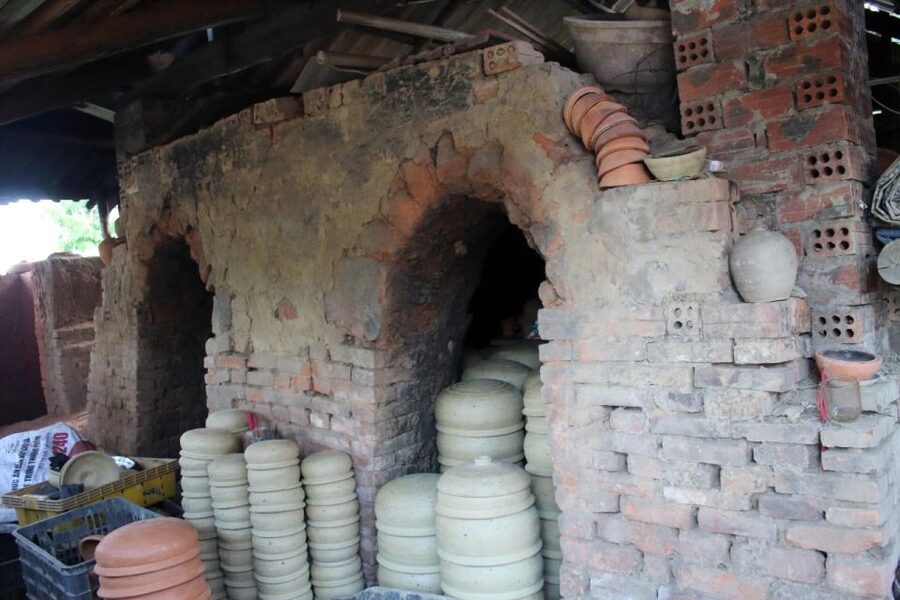
Thanh Ha Pottery Village has a history stretching back about 500 years. The village is made for a slower walk. Narrow brick roads and small alleys lead between pottery homes, displays, and working areas. You get a sense of a place where the craft belongs to ordinary daily life rather than being presented only as a staged show.
I especially like that the visit combines several levels of the story. The museums explain the craft and local traditions. The village shows where the work happens. The hands-on session lets you try the difficult part yourself. Even a simple clay pot gives you more respect for the skill behind the finely shaped pieces on display.
The tour lasts two hours, so it is compact enough to fit into a busy Hoi An schedule. You meet at the gate of Thanh Ha Terracotta Park, rather than receiving hotel pickup. That means you need to arrange your own way there, but it also keeps the tour focused and helps explain the relatively low price.
More craft village workshops in Hoi An:
- Thanh Ha Village: Pottery Workshop with Locals
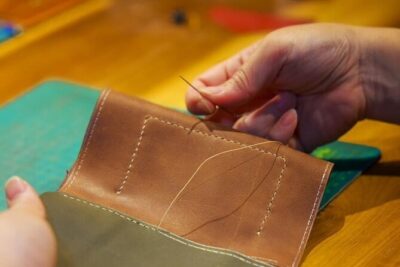
★ 4.4 · 223 reviews - Hoi An: Handmade Leather Crafts Workshop (Starter Course)
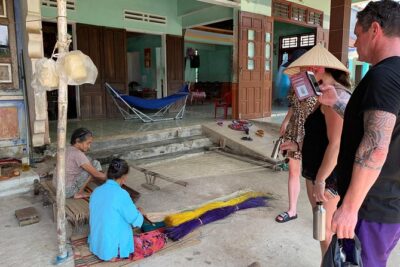
★ 4.9 · 71 reviews - Discover Traditional Silk Process in Hoi An Silk Village
★ 4.4 · 60 reviews
Starting at Terracotta Park
Your guide meets you at the entrance to Thanh Ha Terracotta Park. English-speaking guides have included Dung, Ly, Flower, Nguyen, Yong, and others, with clear explanations and help during the practical parts of the visit. If you have questions, this is a good place to ask them, since the tour is built around conversation as much as looking.
The park is more than a ticket checkpoint. It contains the Terracotta Gallery and Museum, the Thanh Ha Village Museum and History, and the Terracotta Mini Square. These spaces give you an introduction to the scale and imagination of the craft before you enter the village itself.
The Terracotta Gallery and Museum is likely to appeal most if you enjoy design, sculpture, or traditional crafts. You can see how clay is used for more than basic household pots. The displays include intricate terracotta pieces, monuments, and pottery connected with Vietnam and other places.
The Mini Square is particularly good for photographs and for understanding how far clay can be pushed beyond a cooking vessel. The setting also gives the tour a visual lift early on. If you have limited time in Hoi An, the park makes Thanh Ha worthwhile even before the village walk and pottery session begin.
The museum portion may feel less active than the later parts of the tour. That is a fair trade. Without it, the craft session could become a quick souvenir activity with little local context. Your guide helps connect the objects on display with the methods and traditions you see later.
Walking the old pottery village
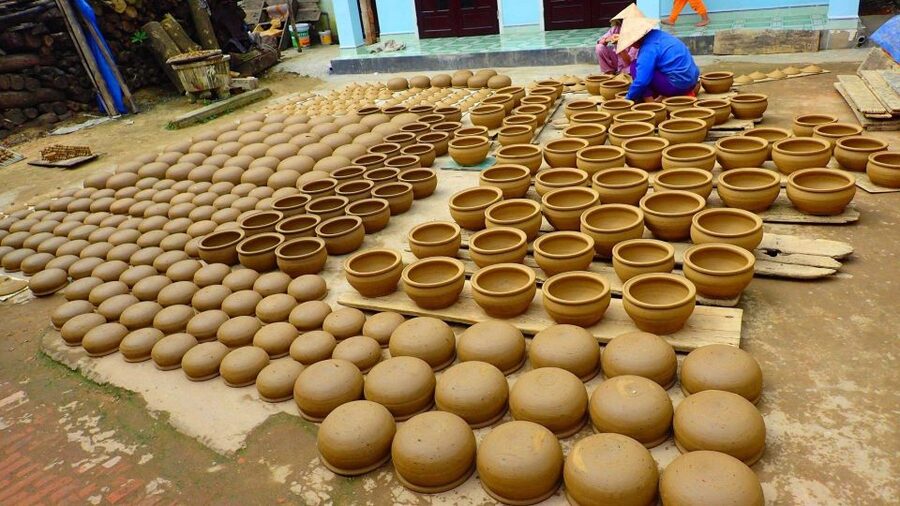
After the park, you walk into Thanh Ha itself. Expect brick lanes, narrow alleys, local pottery houses, and workshop spaces. The village walk is not a grand monument tour. Its value comes from seeing how the craft fits into the shape of the community.
You may see villagers working through traditional pottery-making steps and get a closer look at local pieces. Your guide explains the process and points out details that are easy to miss if you wander alone. Clay preparation, shaping, decoration, and firing all require control, even when the finished object looks plain.
The village also offers a welcome change from Hoi An’s most visited center. You are still close to town, but the setting feels more focused on work and community life. One useful detail from the tour feedback is that guides generally keep the walk relaxed and free from pressure to buy. You can purchase distinctive handmade pieces if something catches your eye, but shopping is not presented as the main purpose.
If you cycle to the meeting point, pay attention at the entrance. One visitor was told by people outside the pottery center that bicycle parking required a fee, then learned that parking was free through the ticket counter. The practical lesson is simple: ask at the official entrance before paying anyone for parking.
Xuan My Temple and the village’s beliefs
The stop at Xuan My Community Temple gives the village walk a cultural layer that a museum alone cannot provide. The temple matters to local residents and their beliefs, and your guide explains its place in community life.
Do not expect a long temple circuit or a major religious complex. This is a short stop within a pottery-focused tour. Its importance lies in showing that Thanh Ha is not only a production site. It is also a settled community with shared customs, places of respect, and local stories.
I like this part because it prevents the outing from becoming only a craft demonstration. You see the connection between work, home, and belief in one small area. The explanation may be especially useful if you have already visited Hoi An’s old town and want a wider picture of life around the city.
Same town, a completely different sort of day:
- Hoi An: Basket Boat Ride in the Coconut Forest
★ 4.9 · 4,956 reviews - Hoi An: Vietnamese Coffee Culture and Coffee Making Class
★ 4.9 · 4,006 reviews - Hoi An: Vietnamese Foldable Lantern Making Class
★ 4.9 · 3,742 reviews - Cooking Class Hoi An:Local Market, Basket Boat, Fishing & Cooking
★ 5.0 · 3,660 reviews
Coconut coffee, cookies, and a short pause
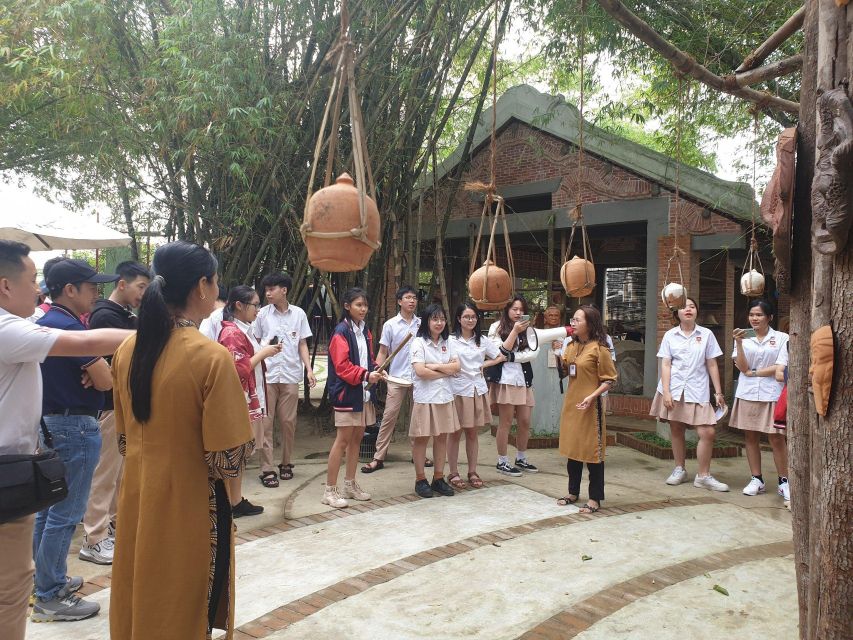
The tour includes a break with coconut coffee or a soft drink, tea, and special cookies. This is a small detail, but it matters during a warm walk and gives you a few minutes to ask your guide questions.
Coconut coffee is a good local touch if you want to try something associated with Vietnam’s café culture. If that is not your preference, a soft drink is available. Additional food and drinks are not included, so treat this as a refreshment stop rather than a meal.
The break also helps balance the pace. The tour moves from displays to streets to a practical activity, and the pause keeps the two hours from feeling rushed. Since the schedule is short, do not expect a long sit-down or a full café visit.
Making a simple pottery piece
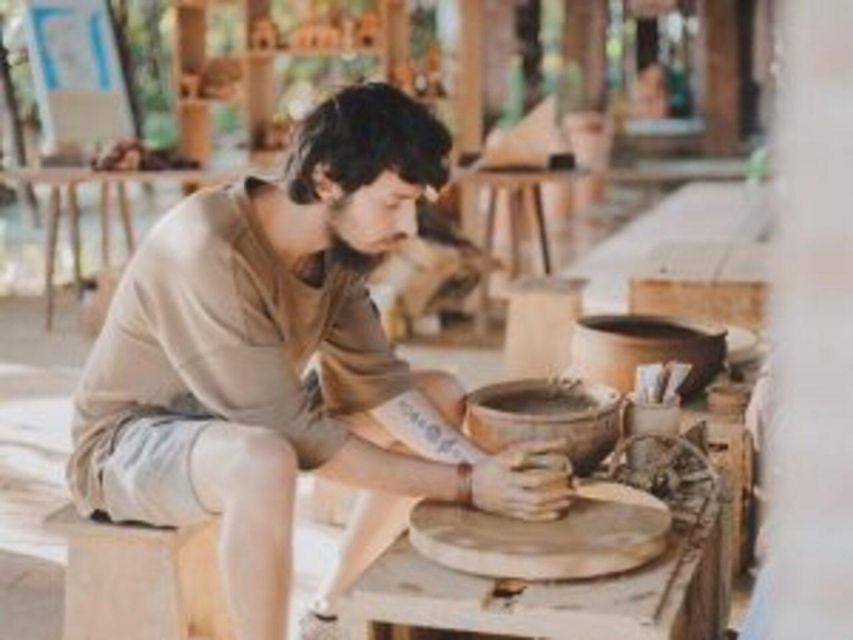
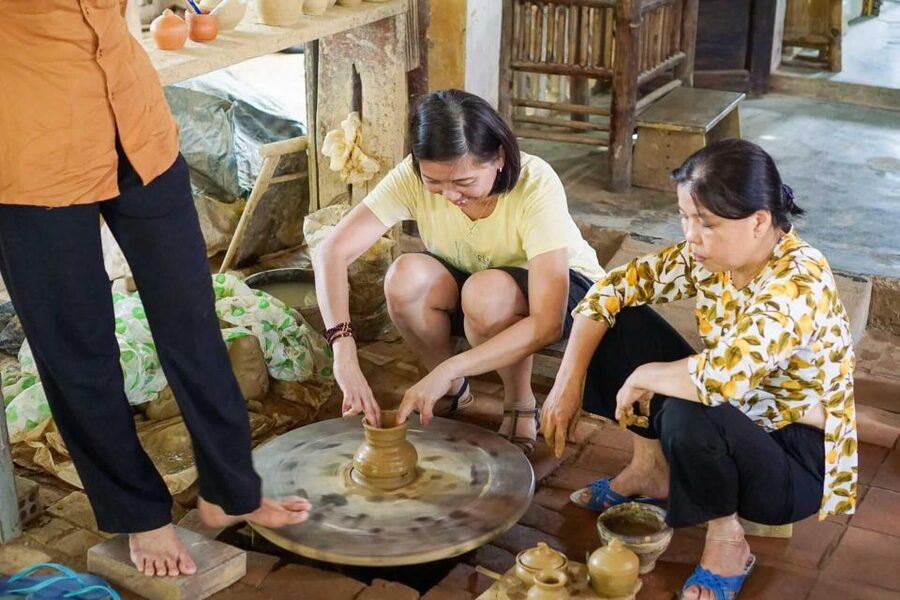
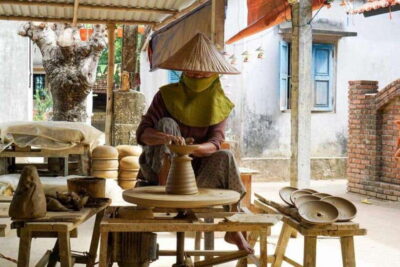
The most anticipated part is the pottery session. You work with clay and receive help from a potter as you try to form a basic piece, often a small pot or vase-like object. You can add a simple pattern or decoration and bring your finished work home as a terracotta souvenir.
You do not need pottery experience. The potter helps you through the process, and several guides, including Ly, Dung, and Flower, have been praised for being patient and helpful during this section. You should still keep your expectations realistic. This is an introduction to the feel of clay, not a professional class in wheel technique, glazing, kiln control, or advanced design.
That limitation is actually part of the charm. You are not signing up for a formal course with technical homework. You are trying a local craft in its home setting, with enough guidance to make something recognizable and personal.
The activity can be especially good for couples, families with older children, and friends who want a shared task. It also works for solo visitors. One person enjoyed having an individual tour and getting time at the wheel, while private bookings have also been reported for couples and small parties.
Your piece may not look like the museum pottery, and that is fine. The point is to notice how hard it is to control a soft lump of clay. A crooked rim or uneven wall becomes part of the souvenir. The gift has more meaning when you have already struggled a little with the same material used by local craftspeople.
The supplied information says you can decorate something on your own pottery and bring it home. It does not specify every firing or collection arrangement, so ask your guide how and when the piece is ready if it needs to be placed in a kiln. Some participants have picked up their small pots after they were fired during the visit, but exact handling may depend on the day’s schedule.
The traditional pot-breaking game
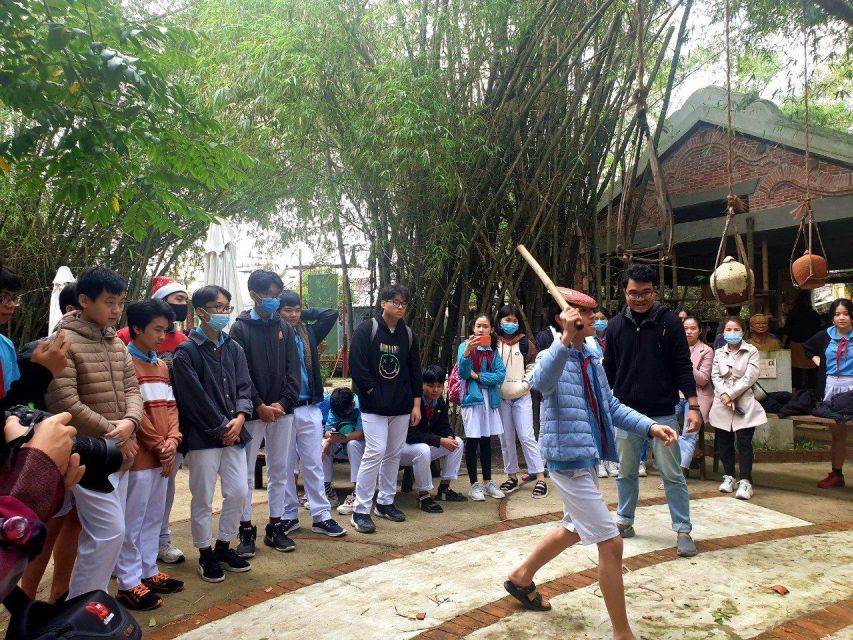
The pot-breaking game is the tour’s lightest moment. After the museum, village walk, and pottery making, you get to take part in a traditional game involving the smashing of a pot.
This is not a serious cultural lecture or a competitive sporting event. It is simply a playful activity that lets you join in rather than watch. The game has been a highlight for many people because it adds noise, movement, and a bit of silly fun to an otherwise educational outing.
There is also a nice contrast here. The tour spends time explaining why pottery matters and how much care goes into making it, then invites you to break one. That change of mood keeps the visit from becoming too formal. If you are taking photos, this is likely one of the easier moments for lively pictures, though follow your guide’s instructions around the activity.
What the $23 price really includes
At $23 per person, this is good value if you want several connected activities rather than a single short craft demonstration. The fee covers the English-speaking guide, village and park admission, museum tickets, pottery making, the pot-breaking game, the refreshment break, and a terracotta gift.
That bundle matters in Hoi An, where small entrance fees and add-on activities can quickly push up the cost of a day. Here, the main expenses are grouped together, and you do not have to negotiate separately for a museum visit, a workshop, or a local guide.
The tour is also a useful choice for a short stay. Two hours gives you a clear cultural outing without committing half a day to transport and sightseeing. You will need to make your own way to the Terracotta Park gate, and hotel pickup and drop-off are not included. Factor in that extra planning when comparing it with a longer tour that includes transport.
There is one holiday surcharge to know about. On Vietnamese public holidays, you are charged an additional 200,000 VND per person in cash for booking. Check the date and payment conditions before you finalize your plans.
Who will get the most from this tour
I would choose this for anyone who wants to get beyond Hoi An’s central sightseeing route without spending an entire day away. It suits craft lovers, families, couples, solo visitors, photographers, and anyone who prefers an activity with some participation.
It is also a strong pick if you enjoy learning through objects. The museums give you visual context, the village gives you a sense of place, and the pottery session gives you a personal connection to the material.
You may want something else if you are looking for advanced instruction. The class is deliberately simple. It will not teach you the full professional process or give you a long block of uninterrupted wheel time.
The tour is not suitable for wheelchair users. The narrow village lanes and activity areas may be difficult to navigate, and the supplied details specifically exclude wheelchair access. Pets are not allowed.
Practical tips before you go
Meet at the gate of Thanh Ha Terracotta Park, and allow enough time to find the entrance without rushing. Since there is no hotel pickup, confirm your route before setting out.
Wear clothes and shoes that can cope with a little dust or clay. The information does not promise that clothing will stay spotless, and hands-on pottery is easier when you are not worried about every mark.
Bring a small bag or protective wrapping for the terracotta gift and your own pottery. Clay pieces can be fragile, especially when packed with other purchases from the village.
If you want to buy local pottery, keep some time and budget available, but do not feel obliged to shop. The tour includes a gift, and the village visit is useful even if you leave with only the piece you make.
Ask questions. The guides are a major part of the value here. Dung has been praised for clear explanations, Ly for her warm and funny manner, Flower for kindness, and Nguyen for combining humor with local insight. Guide assignments can change, but the format gives you plenty of chances to learn directly.
Should you book the Thanh Ha Pottery Village tour?
Book it if you want an affordable, compact visit that combines a museum, a working village, a temple, a beginner pottery session, refreshments, and a playful local game. The strongest reason to go is the balance: you learn first, see the craft in context, then try it yourself.
Skip it if you want a serious ceramics course, guaranteed long wheel time, or included transport from your hotel. You should also avoid it if wheelchair access is essential.
For most Hoi An visitors, I would put this near the top of the short cultural activities list. At $23, the included admission, guide, craft, refreshments, and gift make the price fair. The small handmade piece may be uneven, but that is exactly why it makes a better souvenir than another mass-produced trinket.
FAQ
How long does the Thanh Ha Pottery Village tour last?
The tour lasts two hours.
How much does the tour cost?
The listed price is $23 per person.
Where do I meet the guide?
You meet your English-speaking guide at the gate of Thanh Ha Terracotta Park.
Is hotel pickup included?
No. Hotel pickup and drop-off are not included, so you must make your own way to the meeting point.
What places are included in the visit?
The tour includes Terracotta Park, the Terracotta Gallery and Museum, the Thanh Ha Village Museum and History, Terracotta Mini Square, Thanh Ha village, and Xuan My Community Temple.
Do I need pottery-making experience?
No. The activity is designed as a simple pottery-making session, and a potter helps you create and decorate a basic piece. It is not a professional pottery class.
Can I take home the pottery I make?
Yes. You can make a simple terracotta piece, add a pattern or decoration, and bring it home.
Are food and drinks included?
A tea break with cookies, coconut coffee, or a soft drink is included. Additional food and drinks are not included.
Is the tour suitable for wheelchair users?
No. The activity is not suitable for wheelchair users. Pets are also not allowed.
Just added around Hoi An
- Hoian Old Town – Immersive Free Walking Tour★ 4.3 · 3 reviews
- Da Nang to Hoi An Transfer: Convenient Airport and City Transport★ 3.5 · 3 reviews
- Hoi An City Tour–Boat Ride–Release Flower Lantern on river★ 5.0 · 3 reviews
- Hoi An: Pottery Making Workshop With Local Craftsmen★ 5.0 · 3 reviews
- Hoi An to Nha Trang by Private Car with Professional Driver★ 5.0 · 3 reviews
- Hoi An:Cycling,Traditional Farming & Fishing Life Experience★ 4.0 · 3 reviews
- My Son Half Day Private Tour From Hoi An★ 4.5 · 3 reviews
- Hoi An/ Da Nang: Hue City Tour with HaiVan Pass★ 4.7 · 3 reviews
Hoi An Craft Village Workshops, compared.
Handmade Leather Crafts Workshop (Starter Course)
Read our review →
Discover Traditional Silk Process in Hoi An Silk Village
Read our review →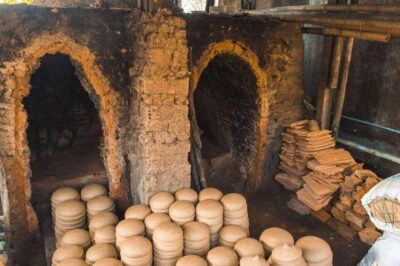
Discover Leather Workshops Experience in Old Town Hoi An
Read our review →
Hoi An Wood Carving: Create Your Art Wood with Master Artisan
Read our review →
Hoi An Ceramic/Pottery/Lantern Making Class Cafe & Basket Boat
Read our review →Browse the lists this tour appears in