
Reviewed · HOI AN CRAFT VILLAGE WORKSHOPS
Experience Making Pottery with Craftsmen in Thanh Ha
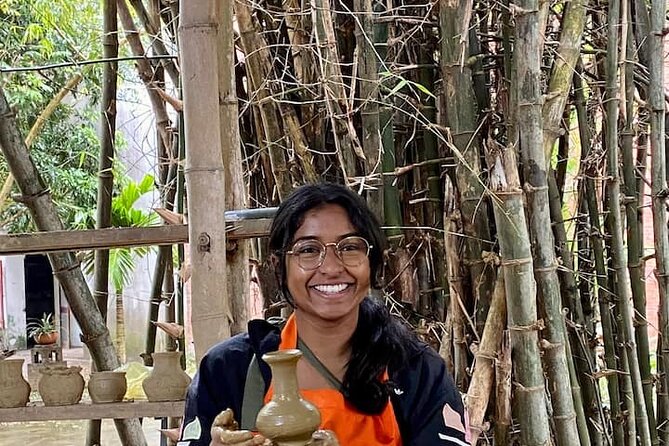
Thanh Ha Pottery Village gives you a chance to do more than look at finished bowls and figures. At the home workshop of local craftsman Nguyen Sau, you sit at the wheel, handle the clay, and make a small piece with help from the craftsman or his sister. The setting is quiet and personal, far removed from a quick stop at a souvenir shop.
I like the hands-on format and the chance to work in a local family home. I also like the flexibility: you can book a session from 8 a.m. to 7 p.m., and the group is limited to 10 people. The main point to consider is the short class. Thirty minutes is enough for a taste of pottery, but not enough for a slow, detailed ceramics course.
In This Review
- Key points at a glance
- Why Thanh Ha Pottery Village makes a good short stop
- Arriving at the Nguyen Sau workshop
- Your 30-minute pottery lesson
- What happens to the pottery afterward
- A look at local ceramics and family life
- Xuan My Communal House and Nam Dieu Temple
- The price and what you receive for $8
- Timing, reservations, and group size
- Who will enjoy this pottery experience
- Practical strengths and possible drawbacks
- Should you book the Thanh Ha pottery class?
- FAQ
- Where does the pottery activity begin?
- Where does the activity end?
- How long does the pottery class last?
- What time can I book the activity?
- What will I learn during the class?
- Is an English guide included?
- Is the pottery included in the price?
- Can I visit nearby cultural sites?
- Is the entrance fee included?
- How many people can join?
- Can I cancel for a full refund?
Key points at a glance
- Make your own pottery: Learn basic clay selection, shaping, trimming, painting, and decorating with help from a local craftsperson.
- Work in a family home: The setting offers a direct look at a small pottery workshop and everyday local life.
- Take home your work: You can make and paint pieces during the session, and the activity also includes a small ceramic gift.
- Add a little independent exploring: Visit Xuan My Communal House and Nam Dieu Temple, dedicated to the founders of the pottery tradition.
- Short and easy to fit in: The pottery class lasts about 30 minutes and ends at the meeting point.
- Budget for the entrance fee: English guidance, pottery making, and a gift are included, but the entrance fee is not.
Why Thanh Ha Pottery Village makes a good short stop
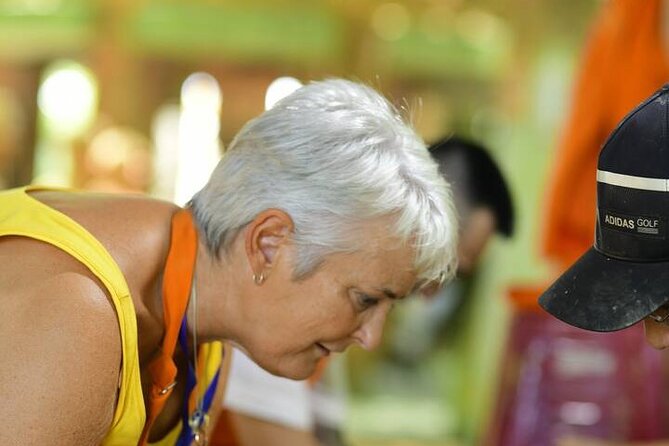
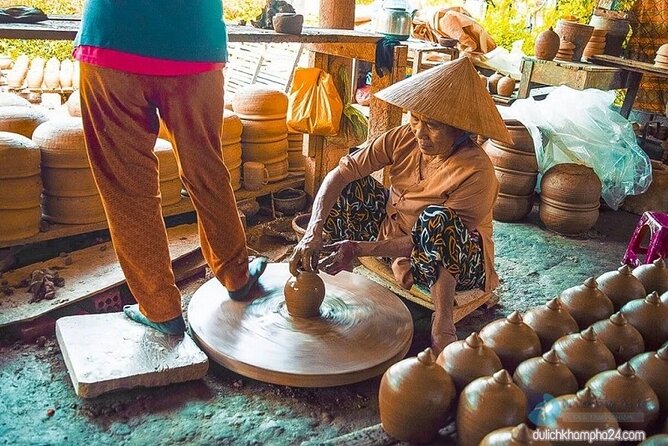
Thanh Ha is one of Hoi An’s traditional craft areas, and pottery here is best understood through your hands. You see the finished ceramics, but the useful part of this visit is sitting down and trying to form clay yourself. Even a simple turtle or small vessel gives you a better sense of the patience and control needed to make everyday pottery.
This is not a long studio course. The advertised pottery-making session takes around 30 minutes, so you should think of it as a brief cultural activity rather than a full lesson in ceramics. That makes it easy to add to a day in Hoi An, especially if you want something quiet between sightseeing stops.
The setting matters. You are welcomed into the home of a local craftsperson instead of being taken through a large commercial attraction. That family setting can feel more direct and human, though it also means the experience is simple. Do not expect a formal classroom, a long lecture, or a carefully timed museum tour.
More craft village workshops in Hoi An:
- Thanh Ha Village: Pottery Workshop with Locals
★ 4.4 · 223 reviews - Hoi An: Thanh Ha Village Tour with Pottery Making and Gift
★ 4.8 · 78 reviews - Hoi An: Handmade Leather Crafts Workshop (Starter Course)
★ 4.9 · 71 reviews
Arriving at the Nguyen Sau workshop
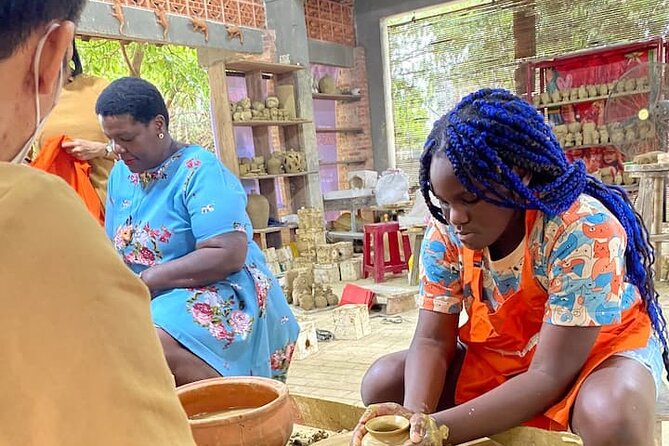
The meeting point is Cơ sở trải nghiệm gốm Nguyễn Sáu, also written as Nguyen Sau pottery village, on Phạm Phán in Thanh Hà, Hoi An. The activity begins and ends at this same meeting point, so you need to arrange your own way there.
Once you arrive, you are welcomed into the craftsman’s home and shown local ceramic products. This first look helps you see the range of objects made in the village before you start working with clay. It also gives you a few minutes to get comfortable with the informal home-workshop setting.
The activity includes an English guide, and instruction comes from the local craftsman or his sister. English ability may be limited in practice. One useful strength of pottery, though, is that the lesson can be shown as well as explained. Hand movements, demonstrations, and simple instructions help bridge the language gap.
If you need detailed technical explanations in English, keep your expectations modest. If you are happy to watch, copy, and learn by doing, the format should work well.
Your 30-minute pottery lesson
The lesson covers more steps than the short schedule might suggest. You are shown how to choose clay, select a pottery-making technique, shape the piece, let it dry, trim it, and add paint or decoration. In reality, the 30-minute visit gives you a quick introduction to several of these stages rather than a full masterclass in each one.
The most enjoyable part is the making itself. You work with the clay and receive help from the instructor as you form an object. The finished shape does not need to be perfect. In fact, a slightly uneven turtle, cup, or figure can be a better reminder of your time in Thanh Ha than a flawless factory-made item.
You may be able to make more than one small item if you work quickly. One person made three pieces and painted all of them during the visit. That result will depend on your pace, the size of your objects, and how much help you need, so treat it as a possibility rather than a promise.
The painting and decorating stage adds color and personality. It also makes the activity suitable for people who do not want to spend all their time at a pottery wheel. Children and adults can take part, and most people can join the activity according to the available participation information.
What happens to the pottery afterward
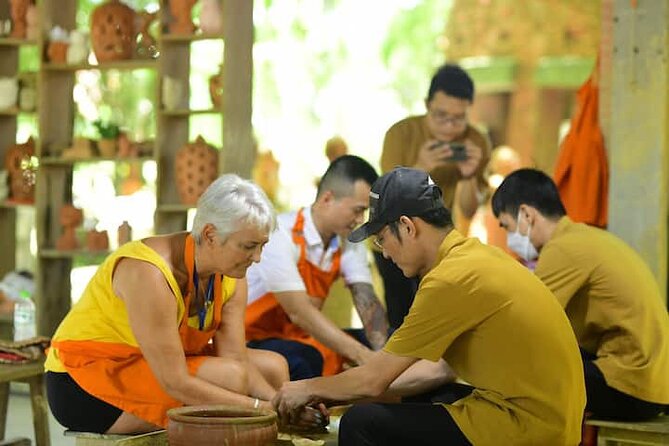
The experience lets you make and paint your pieces, and the activity information says you can take them home right away. This is an important detail for anyone comparing pottery workshops. You are not simply making an object that disappears into a kiln for later collection.
The exact finish of a piece may vary. The class includes shaping, drying, trimming, painting, and decorating, but it does not promise a complete firing process before you leave. Ask the local instructor if you want to know how your particular item will be handled or whether it will remain as a simple finished craft piece.
You also receive a small ceramic gift. It is not the main reason to book, but it adds value to an already inexpensive activity and gives you a second souvenir without needing to buy one.
Same town, a completely different sort of day:
- Hoi An: Basket Boat Ride in the Coconut Forest
★ 4.9 · 4,956 reviews - Hoi An: Vietnamese Coffee Culture and Coffee Making Class
★ 4.9 · 4,006 reviews - Hoi An: Vietnamese Foldable Lantern Making Class
★ 4.9 · 3,742 reviews - Cooking Class Hoi An:Local Market, Basket Boat, Fishing & Cooking
★ 5.0 · 3,660 reviews
A look at local ceramics and family life
Before or after making pottery, you can look around the home workshop and see local ceramic products. This makes the stop more than a craft lesson. You get a glimpse of how pottery fits into a family-run business and how finished objects are displayed and handled.
The experience is deliberately modest. You may see the ordinary conditions of a small workshop rather than a polished visitor center. That can be part of its appeal, particularly if you prefer meeting craftspeople in their working environment.
At the same time, the home setting will not suit everyone. If you want a polished presentation with extensive background information, you may find this visit too basic. The value lies in contact, participation, and quiet observation, not in a large collection of exhibits.
Xuan My Communal House and Nam Dieu Temple
The activity also points you toward Xuan My Communal House and Nam Dieu Temple, connected with the founders of the pottery tradition. These visits are done by yourself rather than as a fully guided part of the pottery class.
That arrangement gives you freedom, but you should plan your expectations carefully. The 30-minute pottery session is the structured portion. The communal house and temple are optional extensions that let you spend more time in the village and consider the religious and community side of its craft tradition.
No detailed guided commentary is promised for these sites. You can look around independently after the workshop, but you should not expect the instructor to lead a long historical tour. Their value is in adding context and slowing down your visit.
If you are in a hurry, you can finish after the pottery lesson. If you have time, walking around the village and visiting these sites gives the short activity more substance.
The price and what you receive for $8
At $8 per person, this is a low-cost activity by Hoi An standards. The price includes an English guide, the pottery-making session, and a small ceramic gift. Since you can potentially create several pieces and paint them during the visit, the cost is fair for a short, hands-on experience.
The value is strongest if you care about doing something rather than simply seeing something. A short craft lesson can feel more memorable than another quick photo stop, especially when you keep a handmade object afterward.
The price does not include the entrance fee. Check the total cost before you go so the inexpensive headline price does not catch you by surprise. The available information does not specify the amount of that fee.
You also need to get yourself to the meeting point. There is no transportation included, and the activity returns you to the same location. For a fair comparison with longer tours, include your local transport and entrance costs in your budget.
Timing, reservations, and group size

You can book the activity between 8 a.m. and 7 p.m., but you are asked to inform the provider at least one hour beforehand. That broad time window makes the workshop easy to place around other Hoi An plans.
The booking confirmation is issued at the time of booking, and the ticket is mobile, so you do not need to carry a printed voucher. The maximum group size is 10 people. That is small enough for the instructor to give hands-on help, although the actual feel will depend on how many people book your time.
The activity is commonly booked about nine days ahead. That does not mean you must reserve that far in advance, but it is a sensible guide if your Hoi An schedule is fixed. A last-minute booking may be possible, but the request to notify the provider one hour before the visit means you should not simply arrive without arranging it.
The pottery portion lasts approximately 30 minutes. Allow extra time if you plan to view ceramics, visit the communal house and temple, or walk around Thanh Ha on your own.
Who will enjoy this pottery experience
I would recommend this workshop to you if you want a short, affordable activity with a personal setting. It works particularly well for families, couples, and friends who want to make something together without giving up half a day.
It also suits anyone who prefers local contact over a polished attraction. You are visiting a family home, learning from a craftsperson, and seeing the village at a relaxed pace. The small gift and handmade pieces add a useful souvenir element.
This is less suitable if you want a serious ceramics course. The class is only about 30 minutes, so there is not enough time for extensive practice or detailed instruction in every stage. It may also disappoint you if you require fluent English explanations or a large, formal tour operation.
People with limited time can treat it as a compact stop. Those with a free afternoon can use it as a starting point for exploring Thanh Ha, including Xuan My Communal House and Nam Dieu Temple.
Practical strengths and possible drawbacks
The strongest feature is the chance to make and paint pottery in a real local workshop. You are not only watching a demonstration, and you are not restricted to buying a finished item. The instructor helps you shape your own work, and the activity includes a ceramic gift as well.
The friendly, family-based atmosphere is another strength. Tea and fruit were offered during one session, which gives you an idea of the warm, informal welcome you may receive. This is not guaranteed as part of the tour, so treat it as a pleasant possibility rather than an included feature.
The short duration is both a benefit and a limitation. You can fit it into a busy Hoi An day, but you may wish for more time once you begin. If you become absorbed in shaping and painting, 30 minutes can pass quickly.
The independent temple and communal-house visits are useful additions, but they are not guided stops. Plan to explore them by yourself, and do not book this activity expecting a full village walking tour.
Should you book the Thanh Ha pottery class?
Book it if you want a simple, hands-on introduction to Hoi An’s pottery tradition at a modest price. The family-home setting, chance to make your own pieces, small gift, and optional village sights make it good value for a short visit.
Skip it if your main goal is an in-depth ceramics lesson, a long guided tour, or a polished attraction with extensive English commentary. For most people, the best approach is to see it for what it is: a friendly 30-minute craft session that gives you clay under your fingernails and a more personal connection to Thanh Ha.
FAQ
Where does the pottery activity begin?
It begins at Cơ sở trải nghiệm gốm Nguyễn Sáu, also called Nguyen Sau pottery village, on Phạm Phán in Thanh Hà, Hoi An, Quảng Nam, Vietnam.
Where does the activity end?
The activity ends back at the meeting point.
How long does the pottery class last?
The pottery-making class lasts around 30 minutes.
What time can I book the activity?
You can book it from 8 a.m. to 7 p.m. You should inform the provider at least one hour before the activity.
What will I learn during the class?
You will receive instruction on choosing clay, selecting a pottery-making technique, shaping pottery, drying, trimming, painting, and decorating.
Is an English guide included?
Yes. English guidance is included.
Is the pottery included in the price?
Yes. Making pottery is included, and the activity also includes a small ceramic gift.
Can I visit nearby cultural sites?
Yes. You can visit Xuan My Communal House and Nam Dieu Temple by yourself.
Is the entrance fee included?
No. The entrance fee is not included in the activity price.
How many people can join?
The activity has a maximum group size of 10 people, and most people can participate.
Can I cancel for a full refund?
Yes. You can cancel up to 24 hours before the experience start time for a full refund. Cancellations or changes made less than 24 hours before the start time are not accepted and are not refundable.
Just added around Hoi An
- Hoian Old Town – Immersive Free Walking Tour★ 4.3 · 3 reviews
- Da Nang to Hoi An Transfer: Convenient Airport and City Transport★ 3.5 · 3 reviews
- Hoi An City Tour–Boat Ride–Release Flower Lantern on river★ 5.0 · 3 reviews
- Hoi An to Nha Trang by Private Car with Professional Driver★ 5.0 · 3 reviews
- Hoi An: Pottery Making Workshop With Local Craftsmen★ 5.0 · 3 reviews
- Hoi An:Cycling,Traditional Farming & Fishing Life Experience★ 4.0 · 3 reviews
- My Son Half Day Private Tour From Hoi An★ 4.5 · 3 reviews
- Hoi An/ Da Nang: Hue City Tour with HaiVan Pass★ 4.7 · 3 reviews
Hoi An Craft Village Workshops, compared.
Thanh Ha Village Tour with Pottery Making and Gift
Read our review →
Handmade Leather Crafts Workshop (Starter Course)
Read our review →
Discover Traditional Silk Process in Hoi An Silk Village
Read our review →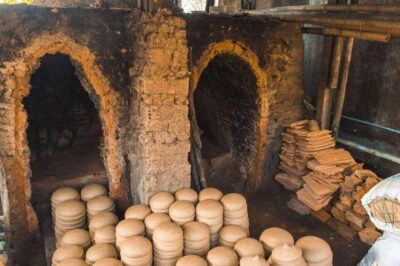
Discover Leather Workshops Experience in Old Town Hoi An
Read our review →
Hoi An Wood Carving: Create Your Art Wood with Master Artisan
Read our review →Browse the lists this tour appears in