
Reviewed · HOI AN CRAFT VILLAGE WORKSHOPS
Private Traditional Silk Process in Hoi An Silk Village
Hoi An Silk Village turns a silk scarf into a story. In about 45 minutes, you move from mulberry leaves and silkworms to cocoons, thread, hand looms, and finished cloth. It is a quick, focused look at one of Central Vietnam’s traditional crafts.
I like the small private format, which lets your group ask questions instead of trailing behind a large crowd. I also like the clear path from living silkworm to woven fabric, plus the chance to learn how to spot pure silk before shopping.
The main drawback is the size. This is not a sprawling working village. It can feel like a few compact rooms arranged close together, and the final exhibition may make the visit feel partly like a shopping stop.
In This Review
- Key points at a glance
- What the 45-minute visit really offers
- Mulberry gardens and the start of the silk process
- From cocoon to thread in the unraveling house
- Champa textiles and Vietnamese hand weaving
- The exhibition and the silk-buying question
- Is $10 a fair price for 45 minutes?
- How the compact setting affects your visit
- Who should book this Hoi An silk experience?
- Timing, meeting point, and cancellation
- The best way to prepare for the visit
- Should you book the Hoi An Silk Village visit?
- FAQ
- Where does the silk village activity start?
- Where does the activity end?
- How long does the silk village visit last?
- What is included in the price?
- Is hotel pickup included?
- Is the activity private?
- Will I have an English-speaking guide?
- What will I see at the silk village?
- Can I learn how to tell pure silk from imitation fabric?
- Can I cancel for a full refund?
Key points at a glance
- Mulberry gardens and silkworm breeding: See the plants and the living source of the silk.
- Cocoon-to-thread demonstration: Follow the unraveling process before the silk reaches a loom.
- Champa and Dai Viet weaving traditions: Learn about handmade textile methods linked to Vietnam’s past.
- Pure silk versus imitation fabric: Get practical guidance before buying scarves, clothing, or fabric.
- Private 45-minute visit: Your group has its own activity, with an English-speaking guide and no hotel transfer.
- A compact, sales-oriented finish: The exhibition is useful for shopping, but it may not feel like a fully rural village experience.
What the 45-minute visit really offers
This is a short craft demonstration rather than a full-day cultural excursion. You meet at Silk Village Hoi An at 28 Nguyen Tat Thanh in Tan An, Hoi An, and return to that same point when the visit ends.
The experience begins with a welcome drink. That small gesture gives you a moment to settle in before the craft story starts. Since there is no hotel pickup or drop-off, you need to arrange your own way to the village and allow enough time to arrive at the stated meeting point.
The tour is private for your group, and an English-speaking guide leads the visit. That format matters most if you want to ask about silk quality, the work involved in raising silkworms, or the meaning of the textile patterns. It is also a good fit for couples or families who want a short activity that does not take over the day.
At the same time, private does not mean spacious or fully exclusive in every moment. A report from one booking described a walk-in couple joining the visit, so I would not assume that the site will feel completely secluded. The activity itself is sold as private, but the village is still a public attraction.
More craft village workshops in Hoi An:
- Thanh Ha Village: Pottery Workshop with Locals
★ 4.4 · 223 reviews - Hoi An: Thanh Ha Village Tour with Pottery Making and Gift
★ 4.8 · 78 reviews - Hoi An: Handmade Leather Crafts Workshop (Starter Course)
★ 4.9 · 71 reviews
Mulberry gardens and the start of the silk process

The first useful stop is the traditional house in Quang Nam. Here, your guide explains the local craft of sericulture, the term for raising silkworms to produce silk.
You then visit the ancient mulberry gardens. These plants are not decorative background. Their leaves feed the silkworms, so the gardens show the first practical step in the production chain. The village is also described as preserving valuable mulberry genetic sources, which gives this stop more importance than a simple garden walk.
Next comes the silkworm breeding house. You learn how the worms are fed and cared for. The attraction here is its plainness: instead of seeing only a finished scarf in a shop, you get a look at the living material behind it.
Do not expect a long agricultural tour. The entire activity lasts roughly 45 minutes, so the guide has limited time at each stop. You will get an introduction to feeding and breeding rather than an extended lesson in every stage of silkworm care.
For children, this may be the most memorable part. Seeing the worms and understanding what they eat makes the finished cloth easier to appreciate. For adults, it gives useful context before the tour shifts to thread and weaving.
From cocoon to thread in the unraveling house
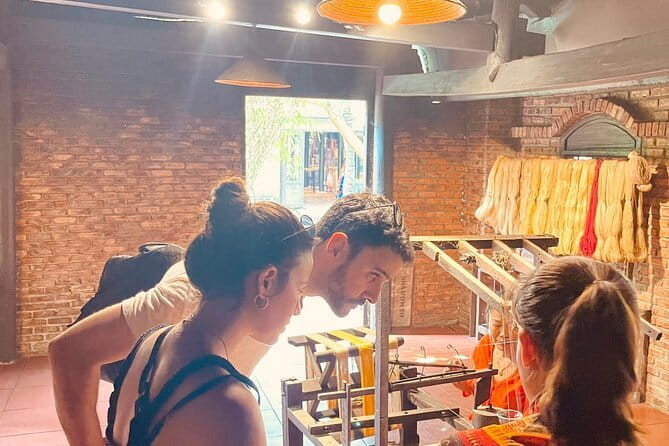
The unraveling house explains how silk thread comes from the cocoon. This is the point where the process becomes more mechanical and easier to follow.
The cocoon contains a long silk filament. At the unraveling stage, the material is prepared so it can become thread for weaving. The guide’s explanation helps connect the cocoon you have just seen with the smooth cloth displayed later.
This stop is especially useful if you have never watched silk production. Finished silk can seem almost too polished to connect with a small cocoon. Seeing the transition helps you understand why handmade silk takes time and why quality can vary.
The demonstration may be brief, and the physical setup is compact. One account described the attraction as three small rooms within a short distance of each other, with weaving shown on demand. That is worth keeping in mind. You are paying for a concentrated introduction, not for a large factory tour with long production lines.
Still, the short format can work well in Hoi An. You can learn the basic process without giving up half a day. If you are already planning time in the old town, this makes a practical add-on, provided you are comfortable getting to the meeting point yourself.
Champa textiles and Vietnamese hand weaving
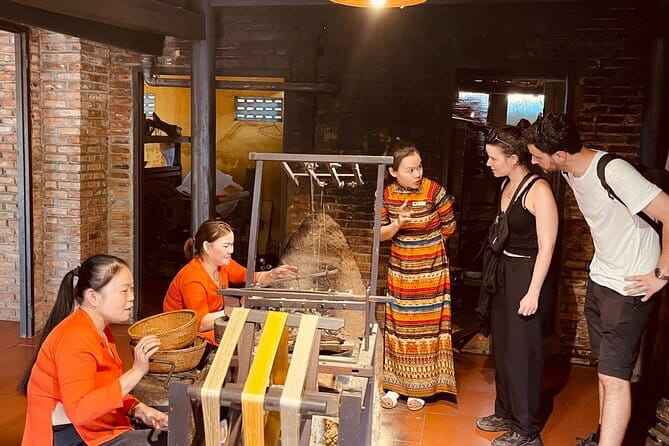
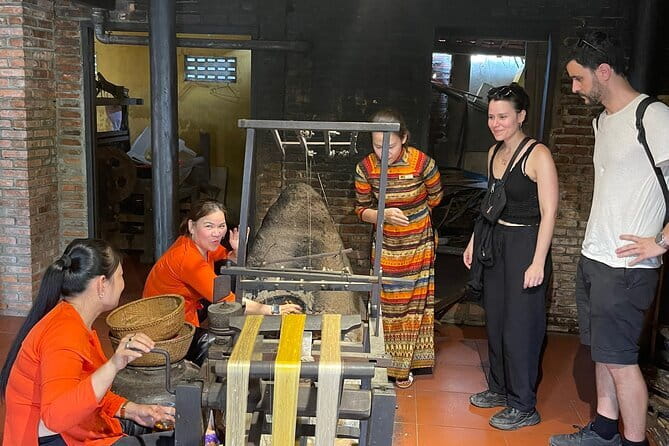
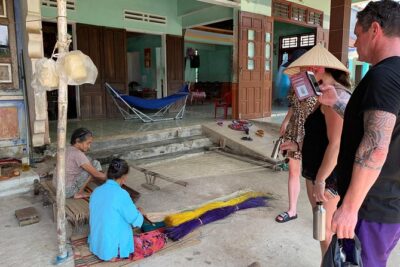
The traditional silk weaving house is the cultural center of the visit. Here, you learn about the handicrafts of the Champa people and the handmade textile methods connected with the Champa and Dai Viet eras.
The wording matters because the village is not presenting silk as just a modern souvenir product. It connects the cloth to older regional methods and to the cultural traditions of Central Vietnam. The guide explains how the fabric is made, while the loom gives you a visual sense of the labor involved.
This is also where expectations need careful handling. You may see a craft worker weaving, but the experience is not described as a long workshop in which you make your own textile. It is a demonstration and explanation. If you want to operate a loom or take a hands-on class, you should confirm that before booking.
Some visitors find the compact weaving rooms charming. Others may find them underwhelming, especially if they expect a large village with many active looms. I would approach this stop for the explanation and the connection to traditional methods, not for the scale of the display.
If your guide is Luni, the visit may feel especially personal. Luni received strong praise for explaining the silk process and helping with buying decisions. Guide assignments can change, so do not treat that name as guaranteed, but it is worth asking when you book.
A few more Hoi An half-days to weigh up
- Hai Van Pass Motorbike Private Tour with Mister T Easy Rider
★ 5.0 · 742 reviews - HOI AN Hidden Gems in Rural Villages & River Islands PRIVATE TOUR
★ 5.0 · 494 reviews - My Son Sanctuary Half-Day Private Guided Tour- Early Tour
★ 5.0 · 222 reviews - Private Hoi An Rosara Spa with Free Pick up or Drop off
★ 5.0 · 188 reviews
The exhibition and the silk-buying question
The final stop is the Hoi An Silk Village exhibition. It covers the difference between pure silk and imitation fabric, then presents silk products for shopping and tailoring.
This section adds real value if you plan to buy something in Hoi An. Silk can look convincing under bright shop lights, and a short explanation about fabric quality gives you a better basis for comparison. You can use what you learn when considering scarves, garments, fabric lengths, or tailored clothing later in your trip.
The exhibition also makes the visit feel commercial. That is not necessarily a problem, especially if you want silk, but you should know what kind of experience you are booking. The tour ends where shopping becomes part of the story.
One useful approach is to visit the village before making a major silk purchase elsewhere. That lets you learn the basic differences first instead of choosing fabric without any context. A strong rating from one booking specifically praised the quality and prices found here, while another described the experience as too focused on selling. Both reactions are possible, depending on your interest in shopping and your expectations for the visit.
You do not have to treat the exhibition as the main point. Think of it as the practical last chapter: first learn how silk is produced, then look at the finished products with a more careful eye.
Is $10 a fair price for 45 minutes?

At $10 per person, this is inexpensive by the standards of a private guided activity. The price includes entrance, an English-speaking guide, and a bottle of water. It does not include transportation to or from the village.
The value depends on what you want from the visit. If you are curious about silk, the price is reasonable because you receive a guide, access to several production stages, and a focused explanation without committing to a long tour.
If you are mainly looking for a scenic village stroll, the value is weaker. The attraction is compact, and the experience is built around demonstrations and interpretation. You are not paying for a broad countryside outing or a full textile workshop.
The private format improves the value for people who want to ask questions. A family can keep the pace together, and a couple can focus on silk quality and tailoring. Solo visitors should remember that the fee is per person, so the private format may feel more worthwhile when shared by two or more people.
The water and welcome drink are modest additions, but they are useful in Hoi An’s warm weather. The real value comes from seeing the full chain from mulberry plant to finished cloth in one short visit.
How the compact setting affects your visit

The site’s compact layout is both its strength and its weakness. You do not waste time walking between distant buildings, and the 45-minute schedule stays easy to manage.
The trade-off is atmosphere. A few small rooms close together may not match your idea of a traditional village. Workers may demonstrate techniques for visitors, and the setting can feel arranged for a tour rather than like an untouched production community.
I would book this for the content, not for the setting alone. The silk process, the Champa textile connection, and the pure-versus-fake silk lesson give you useful information. The physical attraction is more modest.
The current score is 4.3 out of 5 from seven ratings, which points to a generally positive but not unanimous experience. One booking rated it poorly because the site felt like a tourist trap. Another gave it top marks and praised the guide, silk quality, and prices. That split tells you exactly how to make the decision: book if you value a brief craft lesson and may shop, but skip it if you need a large, quiet, working village.
Who should book this Hoi An silk experience?

I would recommend it to you if you fit one or more of these groups:
- You want a short activity between sightseeing stops.
- You are interested in handmade textiles and traditional production.
- You plan to buy silk and want basic guidance on quality.
- You are traveling with children who may enjoy seeing silkworms.
- You prefer a private guide who can answer questions.
- You want cultural context without committing to a half-day tour.
I would be more cautious if you expect a long, rural visit with many workshops. The activity is only about 45 minutes, and the village can feel like a small exhibition site.
It also may not suit you if shopping pressure bothers you. The exhibition is part of the scheduled experience, and silk products are available for purchase and tailoring. You can still treat the shopping section as optional in spirit, but it is built into the route.
Timing, meeting point, and cancellation
You meet at Silk Village Hoi An, 28 Nguyen Tat Thanh, Tan An, Hoi An, Quang Nam, Vietnam. The activity ends at the same meeting point, so plan your next stop from there rather than assuming you will be dropped at your hotel.
Confirmation is provided when you book, and most people can participate. The activity is private, with only your group scheduled to take part, although the compact public setting may not feel fully exclusive at every moment.
You can cancel for a full refund up to 24 hours before the start time. Cancellations or changes made within 24 hours are not accepted for a refund. The cut-off follows local time in Hoi An, so check the start time carefully before making last-minute plans.
The best way to prepare for the visit
Arrive with two questions ready. Ask how the guide distinguishes pure silk from imitation fabric, and ask which parts of the process are done by hand. These questions match the strongest practical parts of the experience.
If shopping interests you, avoid rushing straight to a purchase. First see the cocoon, thread, loom, and fabric comparison. Then decide if the products meet your needs.
You should also leave room for the possibility that the demonstration is brief. The tour covers several stages in less than an hour, so listen for the main sequence rather than expecting every detail of silk production.
Finally, plan your own transport. Since no pickup or drop-off is included, the $10 price is not the total cost of reaching the village. That is easy to manage, but it is an important detail when you are building your Hoi An schedule.
Should you book the Hoi An Silk Village visit?
Book it if you want an affordable, short introduction to Vietnamese silk, especially if you may buy fabric or clothing in Hoi An. The mulberry garden, silkworm house, unraveling process, weaving traditions, and fabric comparison create a clear story in a small amount of time.
Skip it if you want a large working village, a long hands-on class, or a tour with no commercial finish. The compact rooms and exhibition may feel too tourist-oriented for you.
For most visitors with a genuine interest in textiles, I think the $10 price is fair. Go in expecting a concise craft demonstration, not a sweeping rural adventure. That simple adjustment makes the experience easier to enjoy and the silk-shopping advice more useful.
FAQ
Where does the silk village activity start?
It starts at Silk Village Hoi An, 28 Nguyen Tat Thanh, Tan An, Hoi An, Quang Nam, Vietnam.
Where does the activity end?
The activity ends back at the meeting point at Silk Village Hoi An.
How long does the silk village visit last?
The visit lasts approximately 45 minutes.
What is included in the price?
The price includes an English-speaking guide, the entrance fee, and a bottle of water.
Is hotel pickup included?
No. Hotel pickup and drop-off are not included.
Is the activity private?
Yes. It is a private activity intended only for your group.
Will I have an English-speaking guide?
Yes. An English-speaking guide is included.
What will I see at the silk village?
You will see a traditional house, mulberry gardens, a silkworm breeding house, the unraveling process, a traditional silk weaving house, and the exhibition.
Can I learn how to tell pure silk from imitation fabric?
Yes. The exhibition explains the difference between pure silk and fake silk fabric.
Can I cancel for a full refund?
Yes. You can cancel at least 24 hours before the experience start time for a full refund. Cancellations or changes made less than 24 hours before the start time are not refunded.
Just added around Hoi An
- Hoian Old Town – Immersive Free Walking Tour★ 4.3 · 3 reviews
- Da Nang to Hoi An Transfer: Convenient Airport and City Transport★ 3.5 · 3 reviews
- Hoi An City Tour–Boat Ride–Release Flower Lantern on river★ 5.0 · 3 reviews
- Hoi An: Pottery Making Workshop With Local Craftsmen★ 5.0 · 3 reviews
- Hoi An to Nha Trang by Private Car with Professional Driver★ 5.0 · 3 reviews
- Hoi An:Cycling,Traditional Farming & Fishing Life Experience★ 4.0 · 3 reviews
- My Son Half Day Private Tour From Hoi An★ 4.5 · 3 reviews
- Hoi An/ Da Nang: Hue City Tour with HaiVan Pass★ 4.7 · 3 reviews
Hoi An Craft Village Workshops, compared.
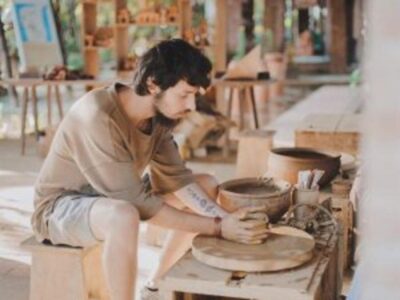
Thanh Ha Village Tour with Pottery Making and Gift
Read our review →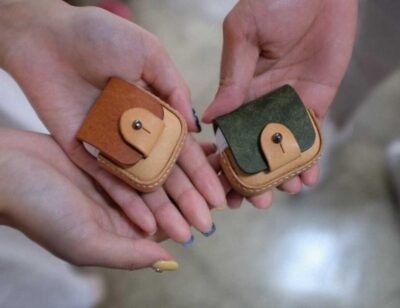
Handmade Leather Crafts Workshop (Starter Course)
Read our review →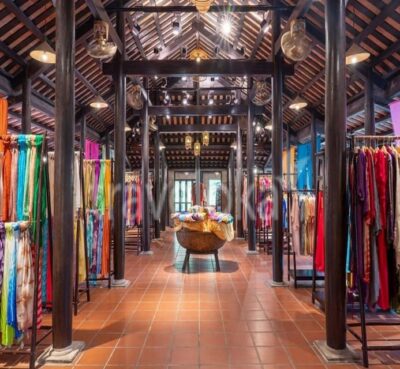
Discover Traditional Silk Process in Hoi An Silk Village
Read our review →
Discover Leather Workshops Experience in Old Town Hoi An
Read our review →
Hoi An Wood Carving: Create Your Art Wood with Master Artisan
Read our review →Browse the lists this tour appears in